
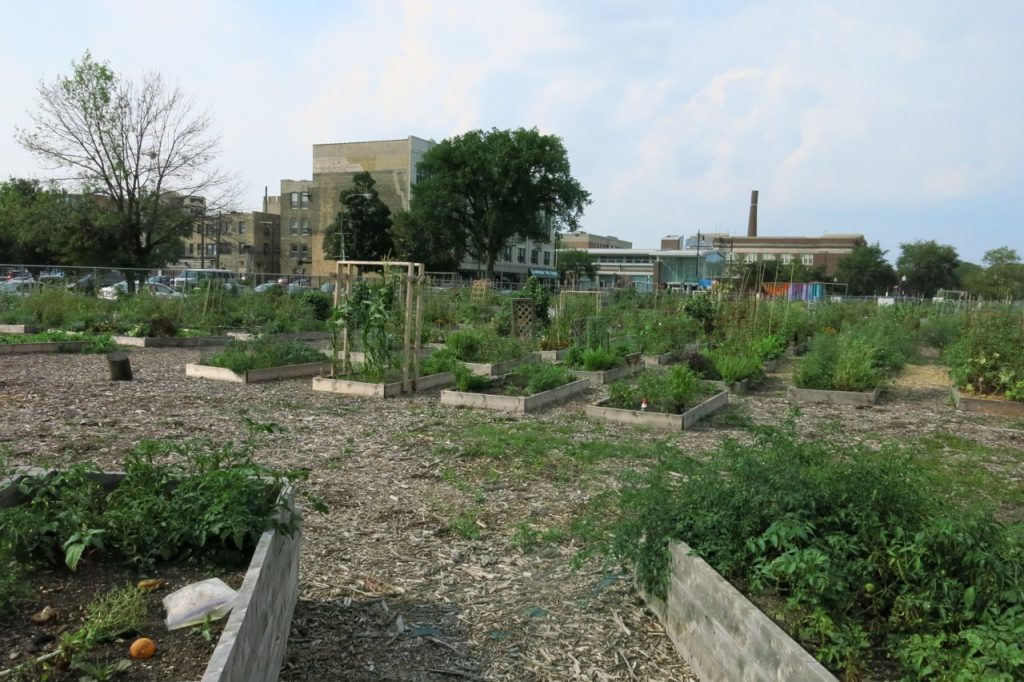
Cook County’s water managers want more vegetables growing where rain now runs off pavement. The Board of Commissioners of the Metropolitan Water Reclamation District of Greater Chicago, known as MWRD, approved a resolution to expand and support urban agriculture projects. The aim is to ease food insecurity while helping with stormwater management across the county.
MWRD’s job is to protect water quality, turn wastewater into clean water and manage stormwater. Two of its programs, the Green Infrastructure Partnership Program and the Real Estate Program, can supply resources through local partnerships to projects such as community gardens.
“By addressing food security through urban agriculture, we can also tackle flooding issues,” said MWRD President Kari K. Steele. “Urban farming can replace impervious surfaces, collect runoff, and improve soil retention, erosion control and water filtration, all while supporting our neighbors living in food deserts and poverty.”
The hunger numbers behind the resolution
The resolution leans on figures from the Greater Chicago Food Depository. The group defines food insecurity as a “lack of consistent access to adequate, nutritious food” and ties it to poverty. Children, working families and older adults face greater risk, it says. Its 2022 Status Report estimated that about 16 percent of households in the Chicago metropolitan area were food insecure.
Feeding America, a 40-year-old national nonprofit, estimates that one in five children in the country may lack adequate access to healthy food. It also found that about 44 percent of people in Cook County, more than 279,000 individuals, were not eligible for help under the Supplemental Nutrition Assistance Program.
MWRD Commissioner Cameron Davis called the move “a great example of how government agencies can be creative in reducing a lot of different stresses on Cook County residents all at once.” He added: “People shouldn’t have to travel long distances to get to high-end organic grocery stores when we have the land for cities and towns to encourage growing healthy, inexpensive food that also helps save the environment.”
Government bodies interested in urban agriculture or community gardens can look at leasing available MWRD land. The district shows the parcels on an interactive map on its website.




