
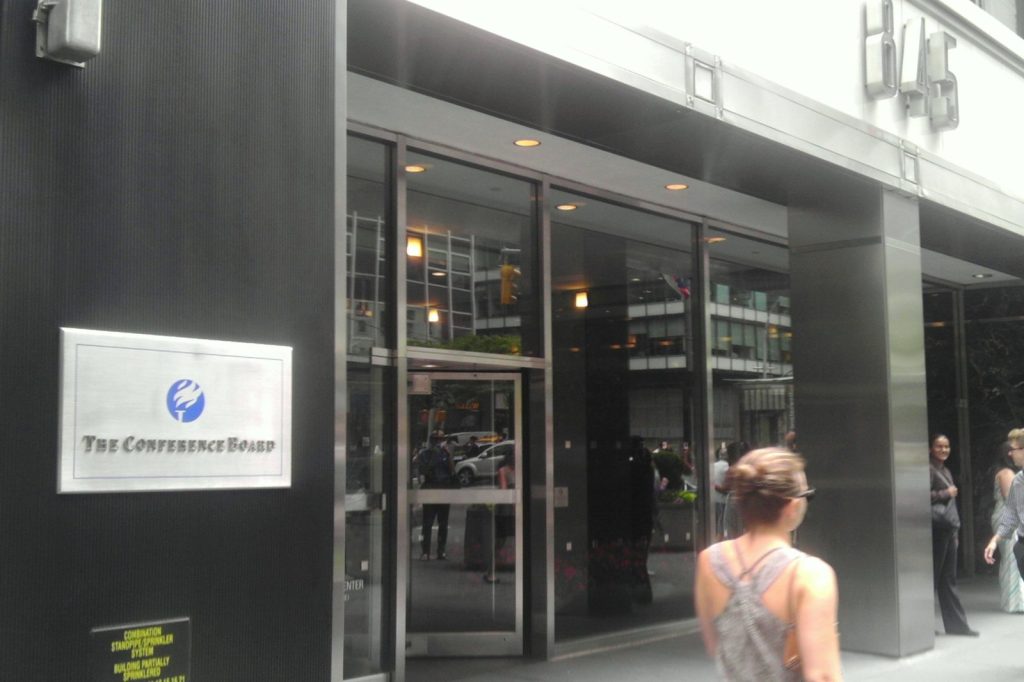
The Conference Board’s consumer confidence index fell 0.8 points to 89.4 in August, from 90.2 in July. The business research group released the figure on a Tuesday late in the month.
That is the second straight monthly dip. Chief economist Dana M. Peterson described it as a slight moderation and said consumers looked gloomier about the next six months. “Looking ahead, consumers were more pessimistic about business conditions and the labor market,” she said.
The detail is not much better. More people described their finances as “bad”. Their view of their family’s future finances was still healthy but a little less upbeat than in June and July. Write-in answers on what is shaping the economy leaned more negative, and mentions of prices, oil and gas in particular, stayed high. Confidence slipped a little in every age group.
Recession worries ticked up. Consumers still saw a low chance of one within 12 months. On interest rates, 61.3 percent expected them to rise over the next year, against 62 percent in July.
What outside economists say
Dean Baker, co-founder of the Center for Economic and Policy Research, told Xinhua that confidence is “low and not getting better.” He singled out spending plans. “Expected spending on most items is trending down pretty steeply. That is not a good story,” he said.
Gary Hufbauer of the Peterson Institute for International Economics was more blunt about the near term. “With real household incomes flat for the year, and job growth is anemic… I don’t expect an improvement in the near term,” he said.
Politics enters the picture
November’s midterms are close, and the GOP faces losses in the House and Senate. President Donald Trump campaigned on bringing down inflation, but most consumers still feel squeezed, which many describe as an affordability crisis.
Darrell West of the Brookings Institution said weak confidence hurts Republicans because it slows purchases. “When people are worried about the future, they are not likely to spend more,” he said. Christopher Galdieri, a political science professor at Saint Anselm College, said voters who lose faith in the economy “tend to blame the party in power and punish them at the ballot box.”
Sources
- U.S. consumer confidence ticks down in August as inflation concerns persist
- US consumer confidence ticks down in August as inflation concerns persist




