Delhi Faces Fifteenth Straight Day of Hazardous Air
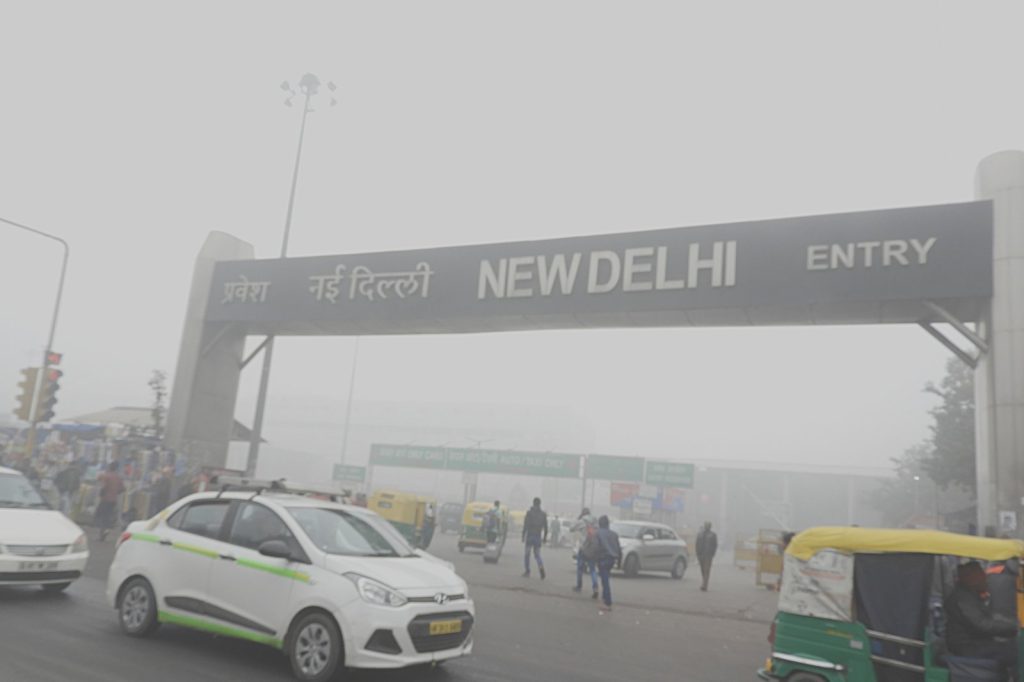
The capital’s air quality index has remained stuck in the “very poor” bracket for fifteen consecutive days, with no improvement since the streak began. During this period visibility has at times fallen to zero metres, forcing drivers to keep headlights on even in broad daylight and leaving pedestrians to navigate a grey haze that irritates eyes and throats.
Health officials describe the situation as a public‑health emergency, noting a rise in complaints of breathing difficulties and other ailments. Hospitals and clinics across the city report an influx of patients suffering from respiratory distress, with children and older adults identified as the most vulnerable groups. The persistent smog is not merely an inconvenience; it poses a direct risk to anyone required to be outdoors.
Geography compounds the problem. New Delhi lies in a basin that traps pollutants close to the ground.
In winter, cold air and calm winds create a lid over the basin, preventing natural dispersal and allowing contamination to accumulate day after day. This meteorological setting explains why the current fifteen‑day spell of hazardous air coincides with the cold season. Pollution sources are well documented.
The city’s roads host millions of cars, trucks and scooters, making vehicular traffic a major contributor. Industrial operations surrounding Delhi add further emissions.
The New Delhi Municipal Council confronts a formidable challenge in trying to curb this mix of pollutants, a challenge that repeats each winter rather than representing an isolated incident. Government action has so far included measures aimed at lowering vehicle emissions and encouraging cleaner fuels. Nevertheless, the available analysis stresses that more comprehensive steps are required.
Underlying causes—particularly the reliance on private automobiles due to inadequate public transport—remain unaddressed. Until mass transit becomes a viable alternative, the fleet of personal vehicles will continue to grow, keeping air quality deteriorating.
Industrial polluters also figure prominently in the crisis. The report calls for stricter regulation of factories and holding companies accountable for their emissions. Current enforcement mechanisms are weak; fines are often low enough that firms find it cheaper to pay occasional penalties than to invest in pollution‑control technology. Renewable energy offers a longer‑term pathway.
Expanding solar and wind capacity could reduce the city’s dependence on fossil fuels, thereby cutting emissions from power plants and industrial units. However, the shift is gradual; coal still supplies the bulk of India’s electricity grid, and a transition will demand years of investment and political resolve.
The ramifications extend beyond Delhi’s borders. Experts characterize the episode as a national concern, noting that the toxic haze drifts into neighboring states, affecting millions across northern India. Health costs mount as more people seek treatment for pollution‑related illnesses, while economic losses arise from lost labour productivity, increased healthcare spending, and a decline in tourism when the city is shrouded in smog.
For residents, daily life has become a cycle of coping strategies. Masks that do not fully filter pollutants are worn, home air purifiers are purchased, and outdoor activity is limited whenever possible.
Yet these measures do not constitute a solution. Marking the fifteenth straight day of “very poor” air is an unwelcome milestone, and there is presently no indication that the streak will break in the near future.