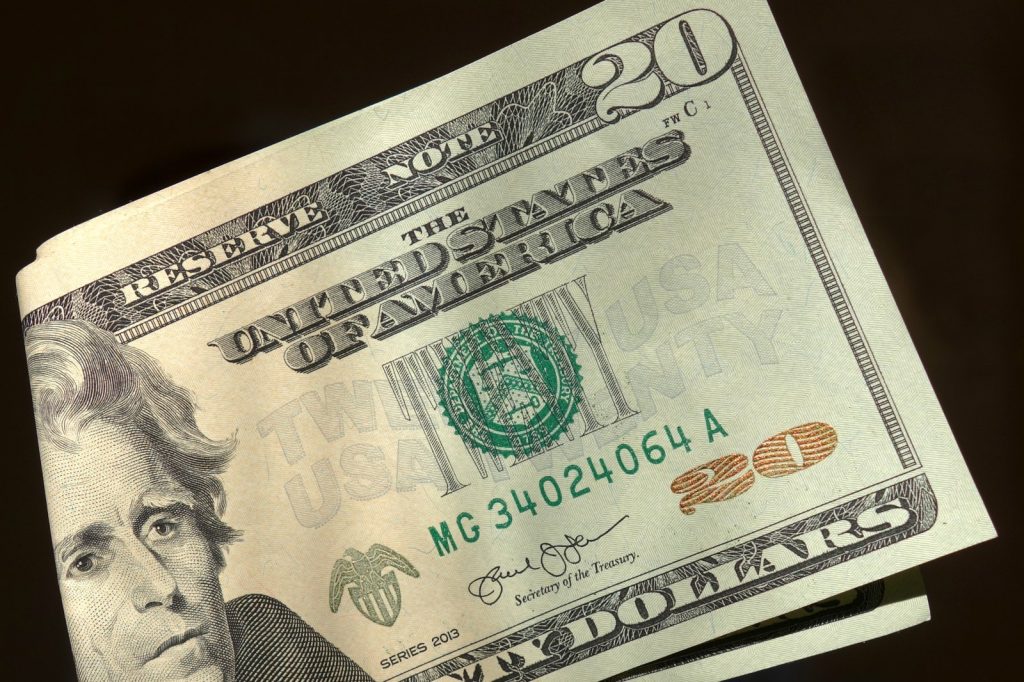
A Baseline From the Fed
In July 2025, three researchers at the Federal Reserve, Carol Bertaut, together with Bastian von Beschwitz and Stephanie Curcuru, published the newest edition of the board’s note on the dollar’s international role. The timing was pointed: Moody’s had just cut the credit rating on US government debt, tariffs were rising, and plenty of observers were asking whether the currency’s long run was ending. Because dollar-usage data arrives with a lag, the note does something quieter. It fixes a baseline: where the dollar actually stood before the doubting began.
Where the Reserves Sit
By the note’s reading, the dollar made up 58 percent of the foreign reserves that governments disclose worldwide, counted for 2024. The euro trailed at 20 percent, the Japanese yen at 6, the British pound at 5 and China’s renminbi at 2. The American share was down from a high of 72 percent hit in 2001, after reserve managers spent two decades sprinkling smaller currencies through their portfolios. The Fed’s frame for that slide is deflating: the dollar has merely returned to roughly the share it held in 1995, and it has barely moved since 2022. Sanctions on Russia, in other words, did not set off a rush for the exits.
Gold tells a similar story with a twist. The metal’s slice of official reserve assets more than doubled, from under 10 percent back in 2015 to above 23 percent now, yet the Fed attributes most of that to a gold price that rose more than 200 percent. The physical quantity of gold actually held grew by less than 10 percent over the same stretch.
Foreign money still piles into Treasuries. In the first quarter of 2025, $9 trillion worth, or 32 percent of the marketable Treasury pile, sat with foreign investors; private domestic holders took 55 percent and the Federal Reserve System itself 13. That foreign share has come down from almost 50 percent in 2014 but has held steady since 2022.
Outside the official sector, the paper travels. More than $1 trillion in dollar banknotes were held abroad in early 2025, roughly half of all such notes, while dollar-anchored stablecoins reached a market value near $220 billion by April 2025. More than half of the world’s countries, on a 2021 academic estimate covering 2019, manage their currencies against the dollar. In trade invoicing from 1999 through 2019, the dollar handled 96 percent of the Americas, 74 percent of Asia-Pacific and 79 percent of the rest of the world; only Europe stayed with the euro, at 66 percent.
Why It Holds, and What Erodes It
Brookings, in an August 2024 explainer by Sam Boocker and David Wessel, walked the same ground and reached a similar verdict. The dollar has been the leading currency since the 1920s, when it displaced the British pound, backed by an economy worth 26% of world GDP and capital markets deep enough to absorb the world’s savings. Its economist Eswar Prasad puts the stubbornness plainly: “Economic and geopolitical turmoil serves only to intensify the quest for safe investments, usually leading investors back to the dollar, which remains the most trusted currency.”
The privilege is real, cheaper borrowing for the US government and its consumers, leverage through sanctions, and so is the bill. The Carnegie economist Michael Pettis argues that with a dominant dollar “the United States must let capital flow freely across its borders and absorb the savings and demand imbalances of other countries”, deficits in plain terms, run to soak up everyone else’s surpluses.
The challenges Brookings lists are familiar: sanctions policy that critics say has “weaponized the dollar”, American fiscal dysfunction, and payment technology. Josh Lipsky of the Atlantic Council puts the technology point sharply: de-dollarization is “less about how countries hold foreign exchange reserves and how much are in dollars” than about how money settles. China built its CIPS payments system in 2015 to route around SWIFT, and digital central-bank currencies could yet cheapen trades between non-dollar currencies.
Steve Kamin and Mark Sobel boil the maintenance job down to “worldwide trust and confidence in America’s ability to act responsibly”. The Fed’s own index, weighted across reserves, trading volume, debt issuance and banking claims, finds dollar usage little changed over five years, and still far beyond America’s slice of world output.
Sources
- The Fed – The International Role of the U.S. Dollar – 2025 Edition
- The changing role of the US dollar | Brookings