
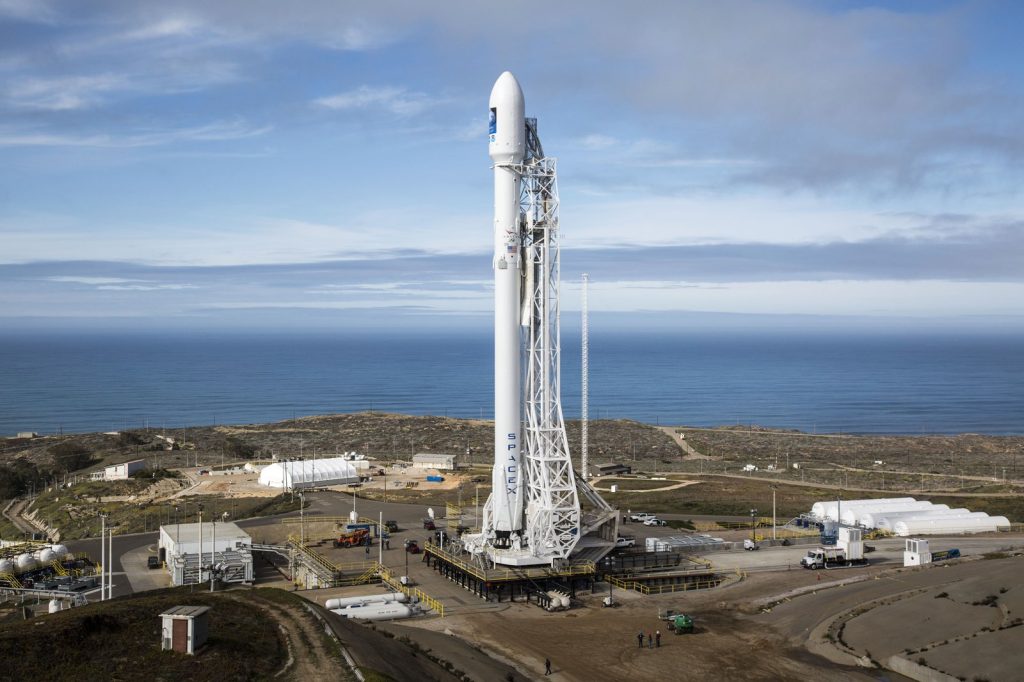
The Federal Aviation Administration issued a grounding order for all SpaceX Falcon 9 launches on August 28, 2024, following a booster rocket fire at Cape Canaveral Space Force Station in Florida. The incident did not involve a crewed flight, but the temporary halt has placed numerous upcoming missions in uncertainty.
The Falcon 9 is not an experimental vehicle. It is a workhorse rocket used for satellite deployments, crewed flights to the International Space Station, and cargo missions for NASA and private companies. It has launched the bulk of Starlink satellites and has a strong track record of successful flights.
The grounding creates a bottleneck, as every mission scheduled on a Falcon 9 is now in limbo. The FAA’s authority to pause operations stems from its mandate to protect US assets during the launch or re-entry of commercial space vehicles.
The agency was created in August 1958 as the Federal Aviation Agency, replacing the Civil Aeronautics Administration. That was the year the US was scrambling to match Sputnik. Its original job was to regulate planes, control airspace, and set safety standards.
In 1967, it became the Federal Aviation Administration. Its responsibilities expanded to cover commercial space vehicle launch and re-entry.
The agency is responsible for regulating civil aviation in the United States and its surrounding international waters. It handles air traffic control, certifies personnel and aircraft, and sets standards for airports. The key phrase for this incident is “protection of US assets during the launch or re-entry of commercial space vehicles.” A booster rocket fire at a federal facility triggers an investigation.
The FAA has the authority to pause operations until it understands what happened. The space community is now waiting to learn the causes and implications.
The timing is uncomfortable. The Falcon 9 has become the backbone of commercial spaceflight. It is not a niche vehicle. It is the one launching the bulk of Starlink satellites, ferrying astronauts, and carrying cargo for NASA and private companies.
A grounding, even a temporary one, creates a bottleneck. Every mission scheduled on a Falcon 9 is now in limbo.
That pressure will test the FAA’s investigative pace. The agency has a broad mandate and a long history, but it is not built for speed. It is built for safety.
The two goals do not always align on a calendar. The incident itself did not involve a crewed flight.
The fire was on a booster rocket at Cape Canaveral. That detail matters because the stakes are different when human lives are on the line. The FAA’s response here is a procedural move, not a panic.
But it is a reminder that commercial spaceflight operates under government oversight. SpaceX does not self-regulate its launch schedule.
The FAA holds the final word. What comes next is an investigation. The findings will determine how long the grounding lasts.
The Falcon 9’s track record is strong, but one fire is enough to pause everything. The industry is watching.
The FAA is acting within its 1958 roots and its 1967 structure. The agency was designed to manage risk in the sky. Now it is managing risk in orbit.
The booster rocket fire is a fact. The investigation is a process.
The grounding is a consequence. The rest is waiting.




