
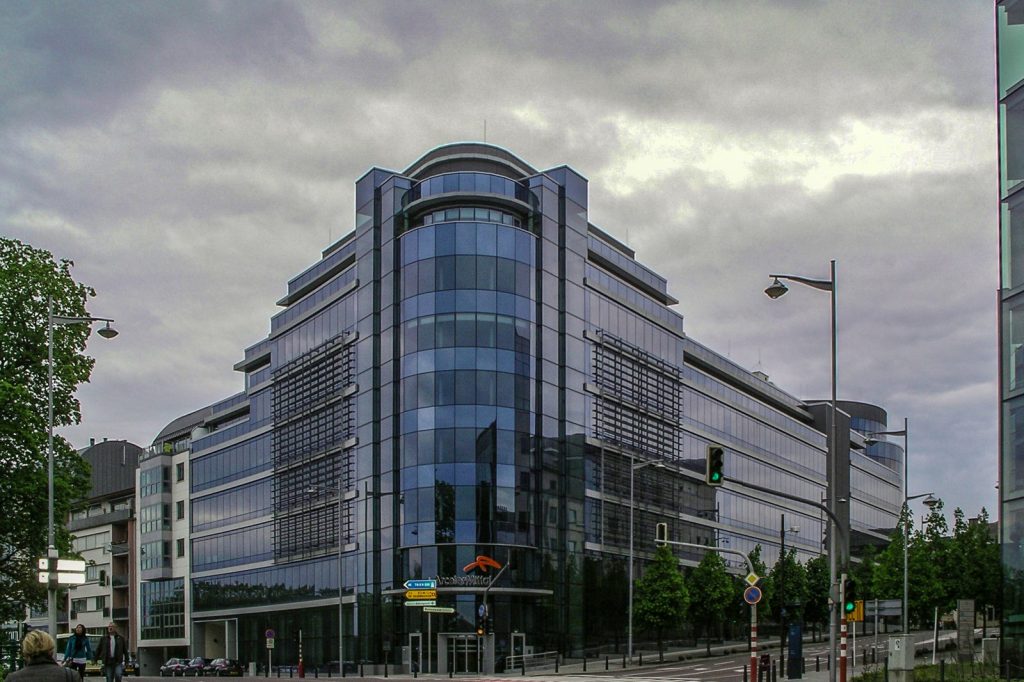
Europe’s biggest steelmakers are ringing an alarm. If the European Union doesn’t change how its carbon market works, they say, the continent’s steel industry will simply cease to be competitive. The cost of making steel in the EU is on track to jump roughly 50% by the early 2030s under the current Emissions Trading System rules.
That is not a forecast the companies can shrug off. ArcelorMittal Europe, thyssenkrupp Steel, and voestalpine issued a joint statement today from Luxembourg.
Together, they account for about 60% of Europe’s integrated steel production. They are not arguing against cutting carbon. They have committed to decarbonising.
What they are arguing is that the policy framework meant to drive that shift is currently set to break them instead of help them. The ETS has cut emissions in the power sector by roughly 49% between 2005 and 2023.
That is a real achievement. But the system was designed for power plants, not for steel mills. Steelmaking is different.
You cannot just plug in a renewable source and keep running. The process itself emits CO2. The technology to change that — green hydrogen, carbon capture, electric arc furnaces fed by scrap — exists, but not at scale.
And it is expensive. The companies list what they need: competitive electricity prices, affordable green hydrogen, Carbon Contracts for Difference, carbon capture and storage, and lead markets for low-carbon steel.
None of those are developed enough yet. Without them, the economics do not work. The ETS, as it stands, adds a carbon cost that keeps rising while the tools to avoid it remain out of reach.
Then there is the trade problem. Steel imports into the EU face no equivalent carbon cost.
European steel exports get no rebate for the carbon price already paid at home. That is a double squeeze. Foreign competitors can undercut European mills on price, and European mills cannot recover the cost of complying with EU climate law when they sell abroad.
The result is not just lost sales. It is lost industrial capacity that may never come back. ArcelorMittal executive chairman Lakshmi Mittal laid out the shared position in a Financial Times article.
The message is blunt: the current trajectory threatens to destroy Europe’s industrial base. That is the stakes.
Not a gentle decline. Destruction. The three companies are not asking for a pause on climate action.
They are asking for a pragmatic reform of the ETS itself — a redesign that actually enables the transformation of steelmaking instead of punishing it before the alternatives are ready. They are urging policymakers to take a path that keeps steel production in Europe rather than driving it offshore, where emissions would simply move to another country’s ledger.
This is not an abstract policy debate. Integrated steel mills are massive, capital-intensive installations. They employ thousands of people directly and support supply chains that run through entire regions.
If those mills shut because the carbon cost makes them unviable, the jobs do not come back. The communities do not recover quickly. The steel itself — needed for cars, buildings, wind turbines, bridges — will be imported from places with looser environmental rules.
The companies are clear: they want to decarbonise. But they need a system that lets them do it without going bankrupt first.
Right now, the ETS is not delivering that pathway. The question for Brussels is whether it can be fixed in time.




