
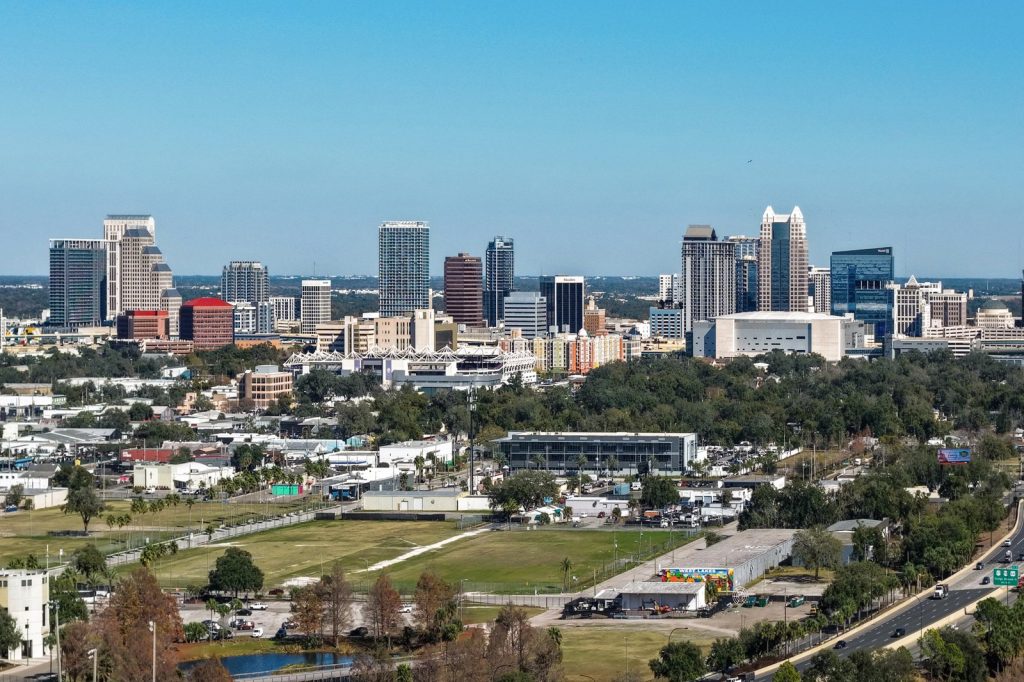
Joseph McCue moved to Florida on a straightforward bet: that an electrician earning nearly $250,000 a year in New York would do even better in a state with no income tax and better weather. He is 45, a New York native, and he arrived with work lined up on a hospital construction project in Orlando and a plan to purchase a home and move his wife and three children south. The job fell through. Three months on, he has not managed to secure even a lower-paid position at Walmart. “I think I gave it enough time,” he said. “Instead of being with my family every night, I’m down here in this rat race where everybody is just trying to make ends meet.” McCue’s experience is the ground-level view of a state whose headline story is still corporate: billionaire Ken Griffin’s Citadel, Wells Fargo and Palantir Technologies keep grabbing attention with marquee relocations to Florida.
Strategically, the backdrop has shifted beneath those relocations. American unemployment has barely moved over the past year, but Florida’s has risen by over a percentage point, to 4.8%, a faster rise than almost any state, leaving it among the highest in the country. Hiring has slowed to a crawl as real estate, retail and tourism, the rate-sensitive core of the state economy, all pull back at once. That is a sharp reversal for a place that came out of the pandemic as one of America’s hottest economies, adding almost a million jobs since 2019, second only to Texas. “By the way its economy is set up, Florida just tends to be more cyclical than the US economy as a whole,” said Revelio Labs senior macroeconomic analyst Jesse Wheeler. “It shares the trends of the US but it tends to exacerbate them.” The calculus of the state’s growth model, in other words, leans on amplification: it cashed in the boom faster than the nation, and it is now billed for the downturn the same way.
The demand side explains the speed. Net domestic migration into Florida totaled just 22,517 people for the year ending July 1, 2025, by Census Bureau count, under a tenth of the 2022 peak. Visit Florida, the state tourism bureau, counted 1% fewer visitors in the first three months of 2026 than a year before. The job losses cluster where consumers spend: furniture store employment is down 3.7%, accommodations headcount down 3%, real estate payrolls down 3.1%. At La Tremenda, a Spanish restaurant in the Miami area, operator Sharell Ledezma has cut staffing by roughly a third since 2024 and now runs 15 employees; rising prices and stricter immigration enforcement, she said, are keeping customers away, though World Cup soccer on two new big screens is helping. Howard Frank, who teaches public policy at Florida International University, drew the straight line: “If people aren’t going out to eat, if people aren’t going to Disney, if people are cutting back on discretionary expenses, well, Florida will be hit quite hard.”
The broader stakes are political as much as economic. Florida elects a successor to Governor Ron DeSantis in November and fills several open House seats shaped by a Republican-friendly redistricting push, and the labor market threatens to sharpen a cost-of-living crisis that was already among the worst in the nation. Senator Rick Scott, governor from 2011 to 2019, has begun publicly pressing the case that tax sweeteners are needed to restart business formation and job creation, a shift in tone that followed Democratic gains in recent special elections. Not everything is contracting: Miami’s unemployment has risen less, supported by finance and technology arrivals such as Palantir, Citadel and BNP Paribas plus Formula 1 and World Cup tourism, and the Space Coast outside Orlando is expanding quickly on the back of Jeff Bezos’ Blue Origin. But diversifying out of tourism and retail is slow structural work. “It’s a hard boat to turn around, and it would not happen in five years,” said Guy Berger, chief economist at Homebase. What McCue’s empty calendar signals is the gap between the two clocks: corporate relocations run on years, while a family’s savings run on months.
Sources
- Florida’s Unemployment Rate Is Surging Even as High-Profile Companies Move In
- Florida’s Once-Booming Job Market Now Faces Surging Unemployment




