
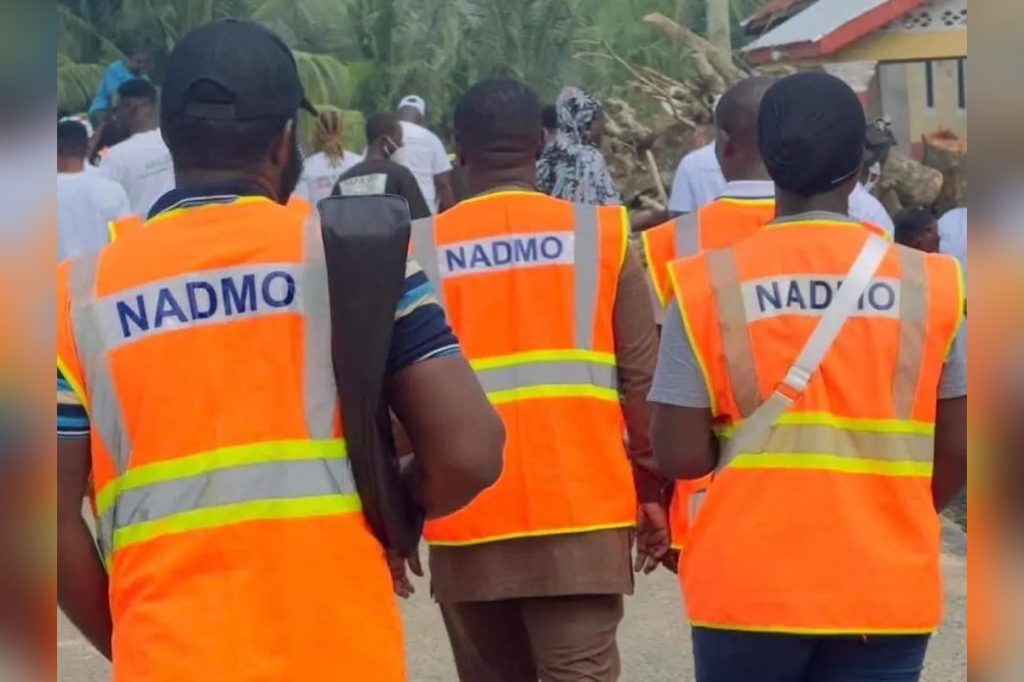
For fourteen months, they have shown up. They have traveled long distances on borrowed money. They have worked in district, municipal and regional offices across Ghana.
They have not been paid. Hundreds of personnel at the National Disaster Management Organisation (NADMO) are caught in a salary backlog that stretches back more than a year, according to an investigation by the Ghana News Agency.
The workers were recruited after the change in government. They have never received a single paycheck. This is not a small administrative hiccup.
It is a structural failure that has been allowed to persist for over a year. The people affected are not desk officers in Accra.
They are the frontline staff who respond when floods hit, when fires break out, when communities need emergency relief. They are the ones who carry out official duties in districts and regions across the country. And they have done so without pay.
The consequences are grinding and concrete. Workers described struggling to cover household expenses, rent, children’s education and healthcare costs. Some have gone into debt just to survive.
Others borrow money each day to pay for transport to work. One group of workers told GNA they had “served the nation diligently despite the difficulties.” Another employee called the situation “heartbreaking and demoralising.” The report does not say exactly how many workers are affected or how much money is owed.
That information was not provided. But the scale of hardship is evident from the accounts of employees who spoke on condition of anonymity, fearing reprisal. What makes this more than a payroll problem is the absence of any clear employment status.
Many workers have not received official staff identification cards. This creates uncertainty about whether they are formally employed at all.
It raises questions about who approved their recruitment, who entered them into the system, and why the system has not paid them for fourteen months. Validation exercises meant to process salaries were arranged and then cancelled, workers said. That pattern suggests disorganisation, not malice.
But the result is the same either way: people who work for the government are not being paid. The GNA investigation did not name any officials or assign blame. It did not need to.
The facts speak plainly. Workers recruited after a change of government have not been paid.
They continue to work. They have no ID cards. The government has not explained why.
This situation points to deeper problems within NADMO’s administrative processes. If workers can be recruited, assigned to posts, and made to perform official duties without ever receiving a salary, then the organisation’s financial and human resources systems are broken.
If validation exercises can be scheduled and then cancelled without explanation, then there is no functioning mechanism to fix the problem. What happens next is unclear. The workers cannot wait another fourteen months.
They have already accumulated debt. They have already borrowed money for transport. They have already gone without healthcare and watched their children’s education suffer.
They have been patient. They have served the nation diligently, as they said.
But diligence has limits. The government’s commitment to the agency is now in question. Not because of what anyone said, but because of what has not happened for fourteen months: no salaries, no ID cards, no explanation.
The workers keep showing up. The system keeps not paying them.
That gap between duty and reward cannot hold forever.




