
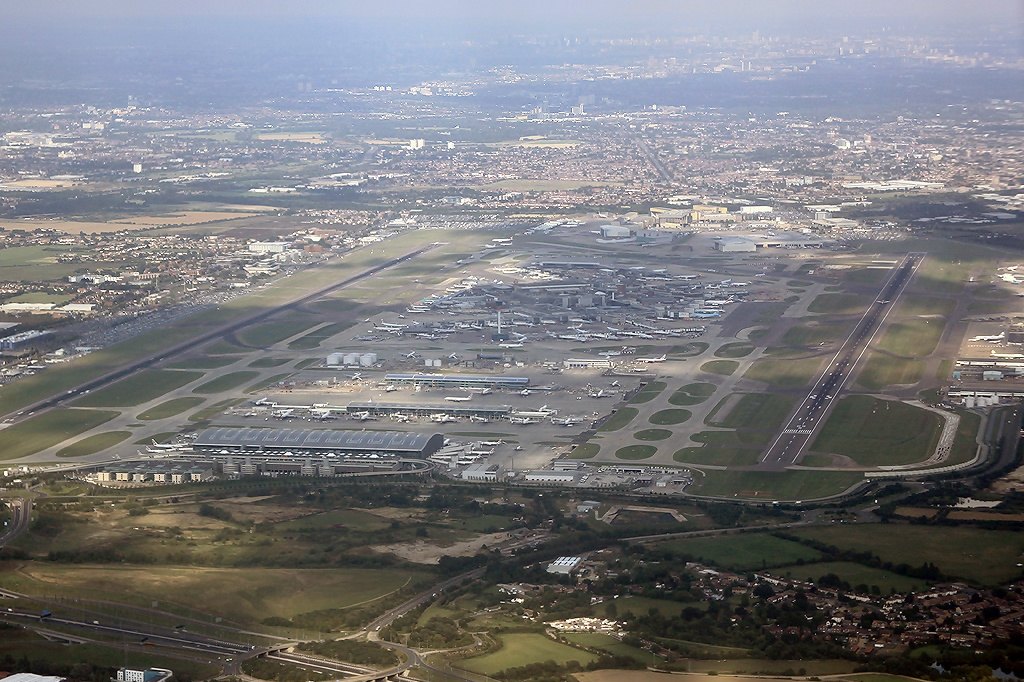
London’s primary international gateway was forced to suspend operations for most of a day after an electrical fire broke out at a substation in Hayes, a suburb located several miles from the airport’s terminals. The blaze knocked out power to the entire complex, leaving the world’s fifth‑busiest airport without electricity and prompting a full shutdown. According to the latest figures, 1,351 scheduled flights were impacted.
Some aircraft were forced to turn back while still airborne and return to their points of origin, while others were diverted to airports that were not equipped to handle the unexpected arrivals. The disruption caused a cascade of delays, stranded passengers and cancelled business meetings across the globe.
Heathrow Airport, owned and operated by Heathrow Airport Holdings, is a critical hub for international travel and commerce. It ranks as the second‑busiest airport worldwide in terms of international passenger traffic, linking London to a vast network of destinations. When its operations were halted, the ripple effects were felt far beyond the United Kingdom.
The incident highlighted a key vulnerability in the airport’s infrastructure. The fire at the Hayes substation eliminated the main power supply, and existing backup systems either failed to engage, were insufficient for the airport’s load, or were simply not present.
The official report makes no reference to generators starting automatically, a seamless switch to reserve power, or a transition to an alternative grid. Instead, the airport opted to close entirely. This single point of failure—one substation—demonstrated how a critical piece of infrastructure can be rendered inoperable by a localized incident.
Heathrow’s history of expansion, including multiple terminal and runway additions since its opening as London Airport and its renaming in 1966, has not eliminated this systemic risk. The findings of the investigation call for a diversification of the airport’s energy sources.
By investing in renewable generation such as solar or wind, Heathrow could reduce reliance on the external grid and mitigate the impact of similar incidents in the future. The report argues that a self‑sufficient power strategy would prevent a fire in Hayes from crippling airport operations. While the airport is expected to reopen and resume normal flight schedules, the backlog of delayed and cancelled services will likely take several days to clear.
The event raises a pressing question for Heathrow Airport Holdings: what contingency plans are in place for future power‑related failures, whether caused by fire, transformer malfunction, or cable damage? Details about the emergency response, the duration of the fire and any injuries were not included in the report, but the core issue remains clear—a single failure point brought a major European transport hub to a standstill.
The incident underscores the need for robust, redundant power solutions to safeguard one of the continent’s most vital aviation facilities.




