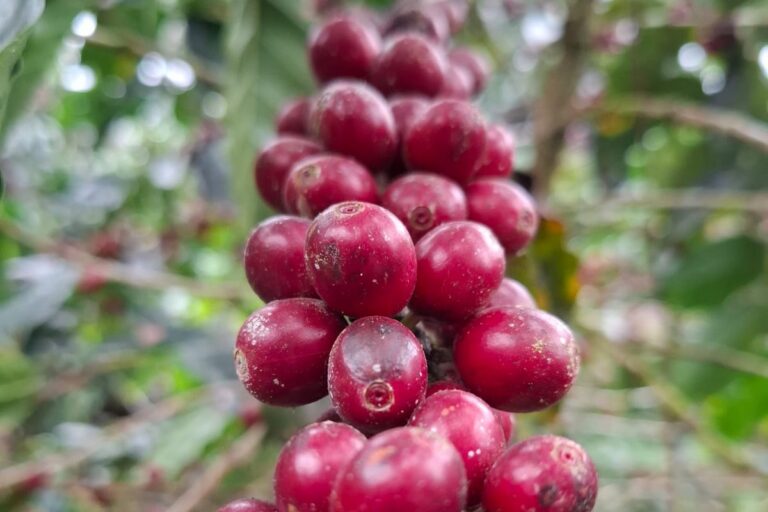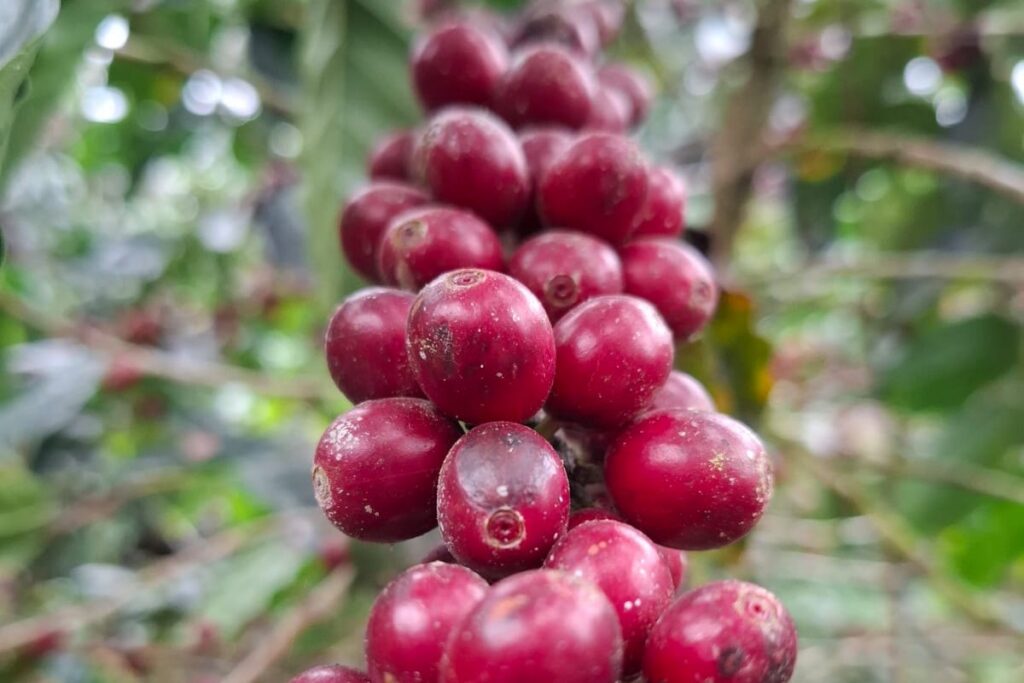
Heavy rain forecasts in Brazil’s Minas Gerais region have driven March arabica coffee prices up +7.00 (+2.67%) as traders confront severe supply and inventory risks.
The Bottom Line on Brazil’s Rains
The figure that matters is the +2.67% surge in March arabica coffee (KCH26), a direct result of short covering sparked by forecasts for heavy rains over a 10-day period in Minas Gerais, Brazil’s largest arabica-growing region. These rains risk flooding coffee farms and damaging developing crops, creating immediate supply concerns for the market. Investors will note that this price action comes against a backdrop of already tight global supplies, with ICE-certified arabica stocks recently falling to 186,414 bags, their lowest level in more than 27 years. The volume of coffee waiting to be graded also rose by 30,396 bags to 196,852, the highest figure in over two years and nine months, further signaling a bottleneck in the supply pipeline.
The Dominant Cultivar
Coffea arabica is the dominant cultivar in global coffee production, representing about 60% of the total. Its natural populations are restricted to the forests of South Ethiopia, South Sudan, and Yemen, and its botanical name was formally published by Carl Linnaeus in 1753. The market’s sensitivity to weather in Brazil highlights the crop’s global importance. The tight supplies pushed the December contract up 0.7% to US$2.81/lb, demonstrating how physical constraints can override other market pressures, like a weakening Brazilian real, which typically encourages more exports and lowers prices.
Tight Supply Dynamics
By the numbers, the supply situation is exceptionally tight. ICE-certified arabica stocks fell to 186,414 bags on November 16, a level last seen in February 1999. This scarcity is compounded by a surge of Brazilian coffee arriving at ICE warehouses. The volume of coffee awaiting grading reached 251,230 bags as of last Friday, the most in 3.75 years, indicating a significant amount of physical coffee is yet to be formally added to the certified inventory. This logistical bottleneck means the actual supply available to the market is even more constrained than the headline stock number suggests. The December contract’s rise to US$2.81/lb reflects this reality, with tight supplies pushing prices higher despite a weaker real.
Outlook for Soft Commodities
Looking ahead, weather remains the primary variable. While global coffee output is expected to rise by 6% to a record 190 million bags in 2026–27, the ongoing strong El Niño presents substantial risks. These include erratic rainfall and higher temperatures in Brazil and Colombia, and crop diseases triggered by heavy rains in Brazil. For arabica specifically, prices are projected to decline by 13% in 2026 as overall supplies recover, but any significant disruption to the Brazilian crop could quickly alter that forecast. The market’s immediate reaction to the rain forecasts shows that even in a year of projected record supply, near-term weather shocks can cause significant price volatility.
Sources
- Heavy Rains in Brazil Boost Arabica Coffee Prices
- Coffea arabica
- Coffee News Recap, 20 Nov: Arabica stocks fall to 27-year low, Clearpath Coffee hosts Colombia Legends auction & other stories
- What Kind Of Coffee Does Burger King Serve? – AOL
- Nodal Culture Enables Rapid Regeneration and Gene Editing in Recalcitrant
- Beverage prices ease as supply prospects improve
Photo: Kızıldeniz (CC BY-SA 4.0)