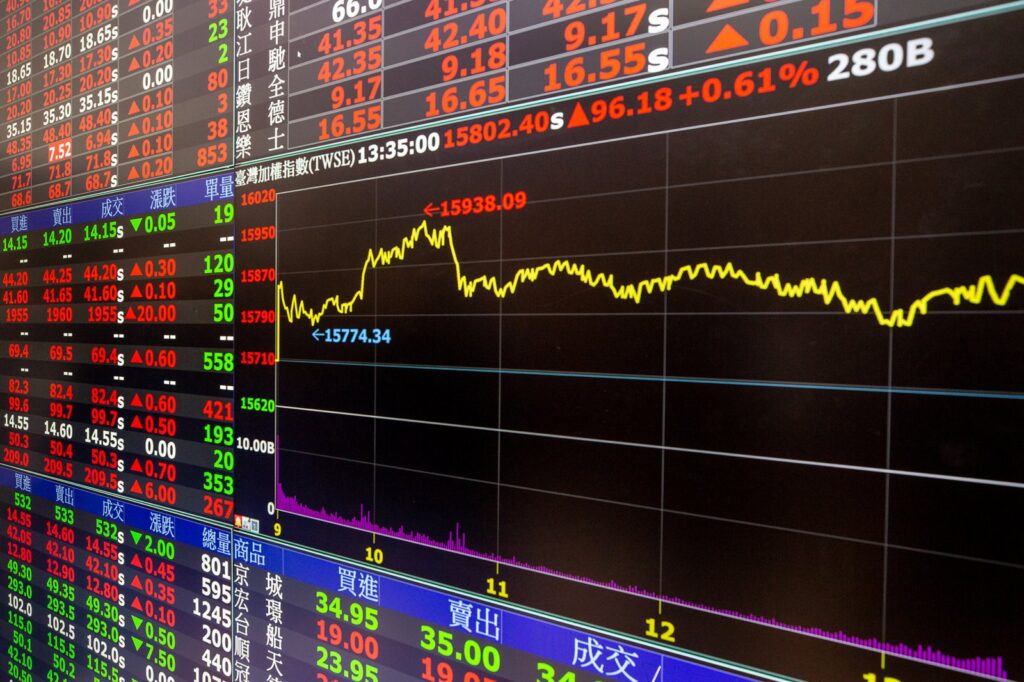
TAIPEI, November 21, 2026 — Taiwan’s Financial Supervisory Commission announced on Saturday it would limit short selling in local markets effective Monday, an emergency intervention triggered by a 17.5% plunge in the main index over five trading days. The move comes as a global rout in technology stocks erased the Nasdaq Composite’s gains for the year and pushed US benchmarks into correction territory.
The Mechanics of the Ban
The regulator stated it was acting “in response to the recent significant fluctuations in the Taiwan stock market.” The restrictions comprise a complete ban on short selling below the closing price, according to the commission’s statement. The catch is that the prohibition does not apply to short selling and borrowing by securities firms and futures companies for hedging purposes, a carve-out that preserves a tool for market makers while targeting speculative bets.
Follow the money and the logic becomes clear: by hobbling the ability to short, regulators force investors who need to raise cash or hedge exposure to sell their long positions instead. The mechanics here risk amplifying the very selling pressure the rule intends to calm. In 2008, the US Securities and Exchange Commission temporarily banned short selling for a slew of financial stocks during the collapse of the housing market. Then SEC Chairman Christopher Cox said the measure “would not be necessary in a well-functioning market.” The intervention largely failed to ease the decline.
Chip Exposure Drives the Damage
Taiwan’s index is heavily weighted toward semiconductor stocks, leaving it uniquely exposed to the AI-driven sell-off rippling from Wall Street. On Friday, Taiwanese stocks dropped 6.7% to hit their lowest point since mid-April, with contract chipmaker TSMC down about 6%, according to The Guardian. The scale of the decline prompted the chair of the stock exchange to pledge to ensure the stable operation of capital markets and reassure investors about the fundamentals of Taiwanese companies.
The contagion spread across Asia. Japan’s Nikkei index fell 5%, while South Korea’s tech-heavy Kospi index lost 5.5%. Shares in SoftBank, an aggressive bettor on AI infrastructure, had their worst day in more than two years, down 14.5% in Tokyo. European markets posted their biggest weekly loss since March 2025, with the pan-European Stoxx 600 dropping 1.9% on Friday and London’s FTSE 100 hitting a five-month low.
US Correction Deepens
The trigger for the global repricing sits in New York. The S&P 500 and the Dow Jones Industrial Average entered correction territory on Friday, having fallen at least 10% from recent highs. The Nasdaq Composite erased all its gains for 2026 and closed down 5% from its value on January 1, wiping out roughly $4 trillion in market value this week, according to the Wall Street Journal.
Anthropic’s record-breaking IPO failed to stem the tide. Shares in the Claude chatbot maker fell 9% on Friday to $88.30, ceding most of the gains from the biggest initial public offering in history. The stock priced at $83, surged nearly 40% on debut Thursday, then reversed sharply. Neil Wilson, a strategist at Saxo, described “just relentless selling in tech” and warned the post-IPO euphoria is giving way to the reality of a steep sell-off that shows no sign of easing.
Liquidity Drain and Valuation Questions
Analysts are dissecting the mechanism of the rout. Chris Beauchamp, chief market analyst at IG, said Anthropic could be “draining market liquidity” as investors sell other holdings to fund positions in the new float. “The slide from yesterday’s highs sends a message that there might be more at work here than investors realise,” Beauchamp said. “That liquidity has to come from somewhere, and the other tech names may be the first ones to feel the pressure.”
Daniela Hathorn, senior market analyst at Capital.com, said the IPO demonstrated demand for AI exposure remains strong but has not overcome concerns about elevated valuations, profitability, and the sustainability of investment spending. “The broader market mood has shifted from buying the dip towards questioning whether the correction has further to run,” Hathorn said. She noted weakness in equal-weighted indices suggests selling pressure is no longer confined to a handful of technology giants.
On Thursday, Michael Burry, the investor made famous by “The Big Short,” posted on X: “Coreweave, Nebius, Nvidia, semis, I tried to warn you all. I didn’t say short. But I provided the information one would need to sell.” Nvidia shares fell 14% on Friday, eliminating hundreds of billions in market capitalisation, after California served the chip company with a subpoena as part of an investigation into whether its advanced semiconductors ended up in China.
Broader Macro Pressure
The tech wreck sits atop a shifting macro backdrop. Fears that US central bankers may raise interest rates to fight inflation have lifted the dollar to a 19-month high and pushed down the gold price, putting bullion on track for its worst week since March. Bitcoin hit its lowest level in four months, dropping below $60,000 for the first time since early July. Britain’s FTSE 100 dropped 5.1% this week, its biggest weekly fall since the start of the Iran war.
Sources
- The AI sell-off now has Taiwan taking emergency steps to calm its chip-heavy market
- Nasdaq erases all 2026 gains as AI sell-off dampens Anthropic’s second day of trading
Photo: 中華民國總統府 (CC BY 2.0)