
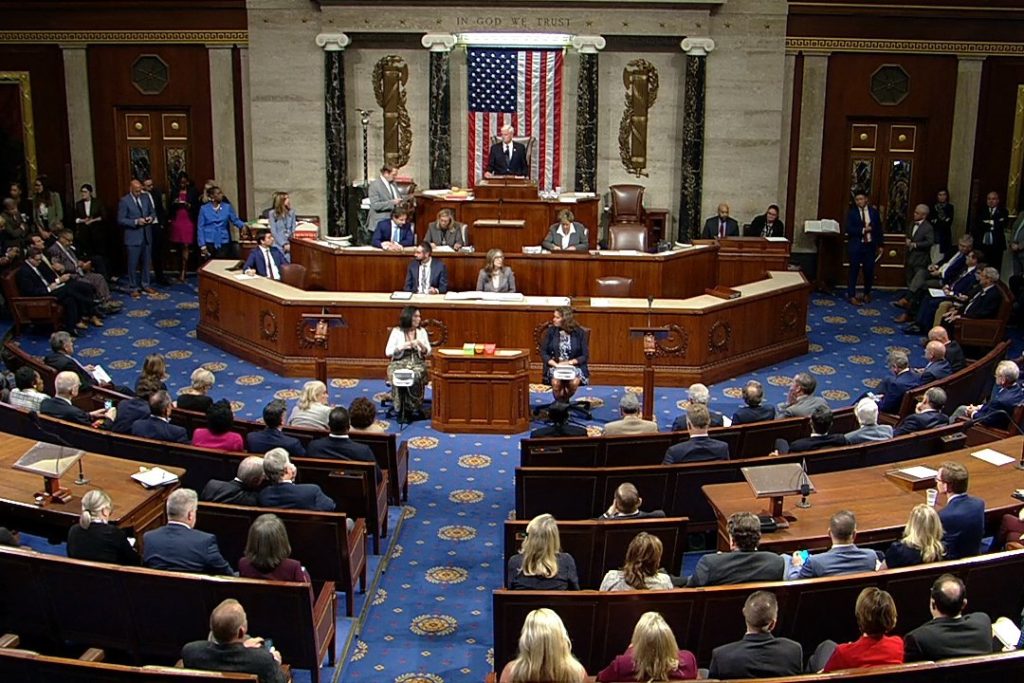
The House voted 396 to 13 on Wednesday to pass a housing bill that would bar corporate landlords from buying up more than 350 houses. Republicans and Democrats both backed it.
The vote is not the last step. The House passed an amended version of a bill the Senate approved two months earlier, and the chambers must settle on a single text before it can go to the president. The bill now returns to the Senate.
Both parties want to show voters they are acting on housing before the midterms. A shortage of homes has pushed the average price to $400,000, beyond what many Americans can afford. Realtor.com estimates a 4 million unit gap between the housing available and the demand. If it becomes law, it would be the largest piece of housing legislation in decades.
The investor ban
Under the House version, any group owning more than 350 houses could not buy more single-family homes. Lawmakers worry that well-financed buyers paying all cash are outbidding families.
The research on prices is mixed. Such purchases can raise selling prices, but they can also lower rents by adding supply. Nationally these investors hold only about 3% of the single-family rental market, though their share is far higher in the Sun Belt and in cities such as Indianapolis and Seattle. President Donald Trump signed an executive order in January telling federal agencies not to support large institutional investors buying single-family homes. Sen. Raphael Warnock, D-GA, pushed for the ban, and it made it into the Senate bill.
The Senate bill left investors one route to large holdings: build the homes themselves. “Build-to-rent” houses, built specifically for renters, have grown from a niche to 7% of all single-family construction over the last decade. But the Senate text required big landlords to sell those homes to families after seven years. An open letter from 79 industry groups said the rule would “effectively eliminate the production of Build-to-Rent housing.” The House version drops that limit.
An earlier House draft had several pages of exceptions to the ban, covering homes owned for under a year, homes that had only ever been rentals, and land trusts and nonprofits. Those loopholes came out the day before the vote.
A policy “meatball”
Elizabeth Warren, D-Mass., co-sponsor of the Senate bill, called it a policy “meatball” in March. “It’s got a lot of different ingredients in it, but it’s the fact that it’s all there together is what makes it so delicious,” she told NPR.
Deregulation runs through many of the provisions. Factory-built homes would no longer need a permanent chassis, the steel frame that lets a home be moved, even though many manufactured homes never are. Environmental review would be streamlined for homes built in gaps between existing buildings. A grant program would help communities create “pattern books” of preapproved designs that need fewer approvals. The Pew Charitable Trusts found cities using ready-made designs saw quicker construction and lower building costs.
Trump recently urged House Republicans to vote for the unamended Senate version. He has not commented on the changed bill.




