
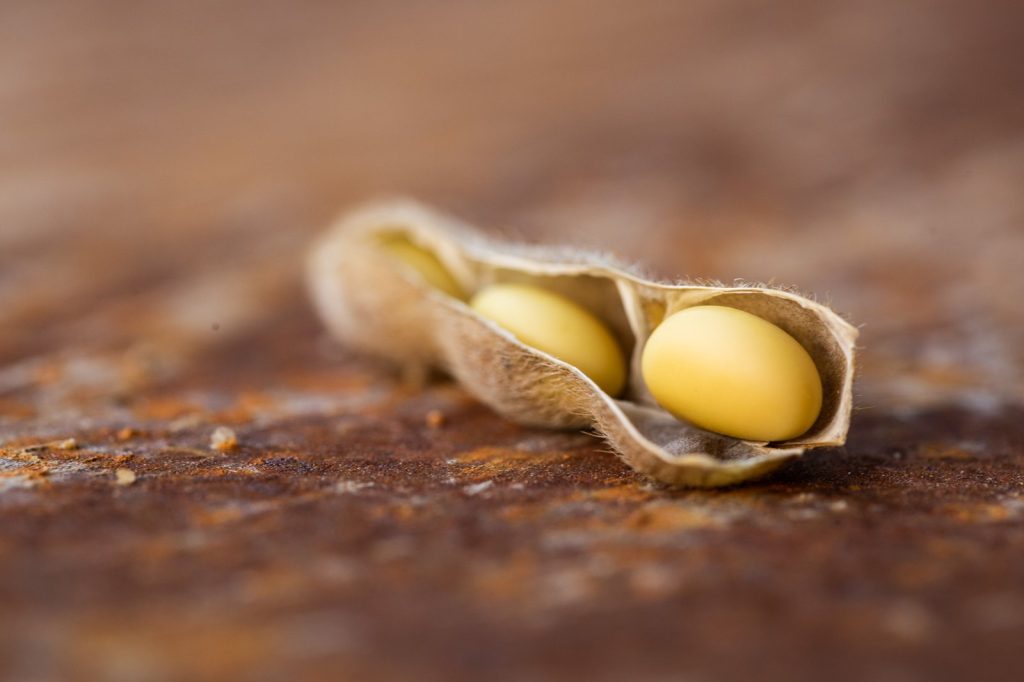
For families who farm an acre or two in Uganda, soybean rust has been the quiet tax on every harvest: a fungal disease that lashes the leaves and shrinks the pod, season after season. On 13 February 2026, a committee sitting at the national agricultural laboratories in Kawanda approved a bean built to pay that tax no longer. MakSoy 7N, bred at Makerere University, resists the rust, ripens in about three months, and yields three to three-and-a-half tonnes per hectare, its developers say.
Behind the breakthrough is a team, not a moment. The variety came out of the Makerere soybean improvement centre, MAKCSID, led by Professor Phinehas Tukamuhabwa, working with breeders, pathologists, seed scientists and data specialists across more than eight years of crosses and trials. Dr. Mildred Ochwo Ssemakula, who heads crop science at the university’s agricultural college, credits that sustained effort, and the training of the agricultural professionals who now staff Uganda’s regulatory bodies, as the quiet infrastructure behind every release like this one.
The science, in plain terms, is a patience test. MakSoy 7N is a cross of two parent lines, 6N and SG, chosen to combine strong traits. It then went through what regulators call Distinctness, Uniformity and Stability testing across six sites, from Wakiso and Jinja to Lira, Arua, Hoima and Kasese, following Uganda’s Seeds and Plant Act and international UPOV guidelines. Inspectors confirmed the newcomer differs from the older MakSoy 3N in pod colour, stem hair and seed hilum, that it met the strict 1% off-type uniformity standard, and that it held its character across seasons and regions. Farmers then grew it under ordinary field management before the National Seed Certification Service recommended release.
What this means at the household level is protein and income in one plant. Soybean runs about 40% protein and 20% oil, feeding families, livestock and agro-processors alike, and it fixes nitrogen in the soil, cutting the fertilizer bill for the next crop. The human side of a rust-resistant, three-month bean is a harvest a family can bank on even in a bad rust year, and a faster turn of the field.
Trust, in seed, is earned by predecessors. Six earlier MakSoy varieties are already on the market, and studies by the Vegetable Oil Development Project found that 93% of Ugandan soybean farmers grow MakSoy lines, one of the strongest adoption records of any university breeding program on the continent. Dr. Joseph Kikafunda, who chairs the release committee, praised the team and pressed for rapid seed multiplication so farmers are not left waiting. The work was backed by the agriculture ministry, the National Oil Seeds Project, IFAD, NARO, RUFORUM, IITA and private seed partners.
The same sitting widened the shelf for rural kitchens beyond soy: three purple-fleshed sweet potato varieties from the national research organisation, NAROSPOT 8P, 9P and 10P, rich in provitamin A, and two high-yielding sorghum hybrids from NASECO, NS1, sold as Tongo, and NS5, as Tara, suited to food, feed, brewing and bioethanol. A country that breeds its own seed, the committee’s approvals suggest, is a country that imports less of its future; for Uganda’s farmers, that future now germinates in rows they can name.
Sources
- MakSoy 7N Released: Makerere University Unveils High-Yield, Rust-Resistant Soybean Variety in Uganda | The Sunrise Newspaper
- Makerere scientists unveil new soybean variety | Pulse Uganda




