
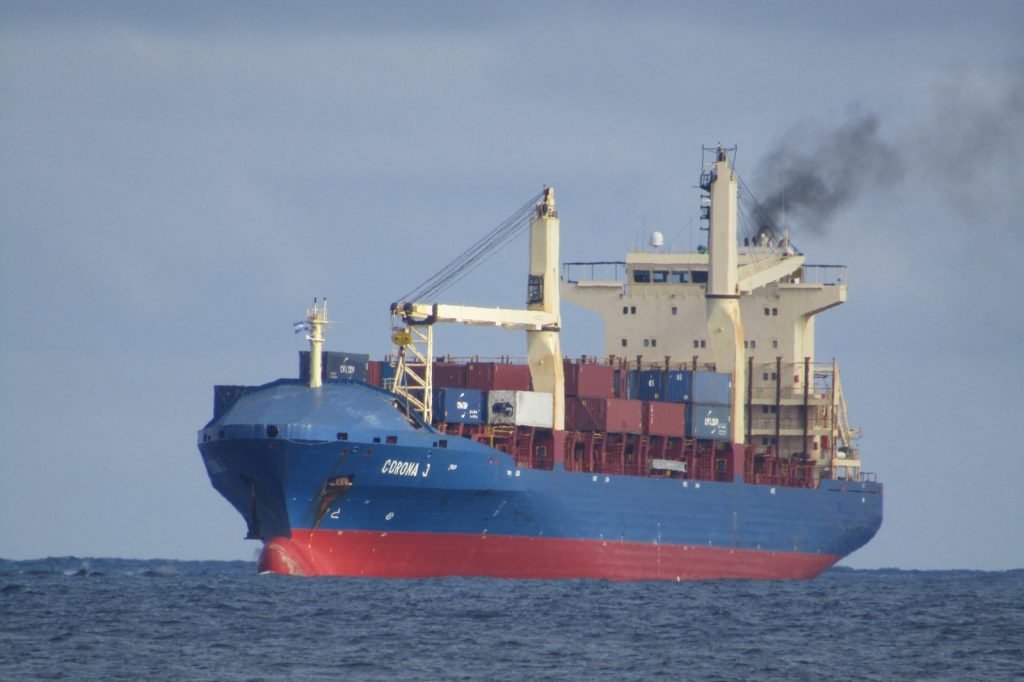
Here is a curiosity for the age of total surveillance: how does anything the size of a ship disappear? The answer, more often than not, is a quiet switch. Vessels carry AIS transponders, the little chatterboxes that broadcast identity and position to anyone listening, and a ship that wants privacy simply silences them. Such dark hulls “navigate without broadcasting their position”, and the blind spots they leave behind have become a genuine headache for everyone from insurers to coastguards. What researchers found, in a Bellingcat investigation whose findings were republished by the Sri Lanka Guardian in February 2026, is that the silence is only half the trick. The other half is paperwork.
A flag state is meant to stand behind a vessel: inspect it, insure it, answer for it. False registries dissolve that responsibility, and one man has allegedly industrialised the practice. Captain Suniel Kumar Sharma has drawn condemnation for more than ten years from a string of governments, Dominica, Guyana, Samoa, Micronesia and Eswatini among them, and from the UN International Maritime Organisation (IMO), for “issuing fraudulent paperwork and false flag certificates to ships”. Despite the warnings and the sanctions, the investigators concluded, his network has grown rather than shrunk.
The cases read like a shipping mystery tour. One tanker, the 38-year-old Basra Star, ran aground off India in June 2020 and simply stayed beached for five years, flying a Samoan flag issued by a Sharma-directed classification society that Samoa and the IMO had both disowned; with the false papers in place there was “no flag state responsible for its deterioration and environmental risk”, and the hulk became a tourist attraction before its demolition in January 2026. In 2022, customs officers at Dakar intercepted the 39-year-old cargo vessel Eolika and found three containers of ammunition reported to be worth US$5.2 million aboard, the ship sailing under another false Guyana flag. And off Penang in Malaysia this year, a sanctioned tanker called Nora and a partner, Rcelebra, were caught mid-transfer loading oil worth roughly US$130 million; fifty-three crew were detained, fined, and the tankers let go.
Intriguingly, the network survives on momentum from a brief spell of respectability. In 2021, Sharma pledged US$35 million toward Guyana’s maritime sector, complete with a Memorandum of Understanding, and Guyana cut all ties within six months. Yet his International Maritime Safety Agency of Guyana went on issuing, with “certificates dated as recently as December 2025”, some for sanctioned vessels. A newer registry, the Nicaragua International Aquatica Transportation Administration, appeared online in July 2025 and was still certifying ships in February 2026, including a tanker detained by the Indian Coast Guard; Nicaragua confirmed no partnership, and the IMO says it authorised no such register. The administrative hub, investigators found, traces back to an Indian company Sharma manages.
How, then, do you watch a fleet whose defining skill is not being seen? The science behind the answer is radar. Synthetic Aperture Radar satellites bounce signals off the sea and read the echoes, working “day or night, through clouds, storms, or signal silence”, which neatly removes every excuse a ghost ship relies on. Satellite operator Capella Space, in a case study published July 2025, describes a January 2025 night image of Mischery Reef in the South China Sea that picked out vessel signatures in the lagoon, and a midnight pass over Nigeria’s Bonny Offshore Terminal that surfaced multiple vessels working off the coast. Partner analytics feed the radar returns into AI that detects and classifies vessels automatically across wide stretches of ocean.
None of this makes the fraudulent flags legal history overnight; national enforcement still strains against operators who fines cannot hold, and the investigators’ closing point stands, that “fraud at sea is not confined to the past”. But the mechanics of evasion, a dark transponder and a borrowed flag, are being met by a machine that needs neither daylight nor cooperation. As the radar operators put it, “Ghost ships don’t need to remain in the shadows.” The curiosity that opened this story now has an answer: ships vanish because we agreed to look away. The looking is rapidly becoming non-negotiable.
Sources
- Ghost Fleets and Fake Flags: The Hidden Empire Endangering Global Shipping – Sri Lanka Guardian
- Tracking Ghost Ships Around the Globe | Capella




