“If India manufactures a football for Rs 100 and Pakistan manufactures it for Rs 85, do you think an international brand is going to buy that football from India? Chances are no.” That was Sanjeet Singh of NITI Aayog, explaining at a New Delhi conclave on Friday why India’s plan to build an $8.1 billion sports-equipment export industry is mostly a problem of cost.
The target comes from NITI Aayog’s March 2026 report on the sector. It sees exports rising from $275 million in 2024 to $8.1 billion by 2036, which would lift India’s share of global sports-equipment exports from about 0.5 per cent to 11 per cent. The report estimates around 54 lakh cumulative jobs could follow. It describes the $8.1 billion as an opportunity, not a measure of today’s sports economy.
India’s starting point is small. Its share was 0.7 per cent in 2014, and Vietnam, which had a similar share about a decade ago, has nearly tripled its presence. At home, about 63 per cent of the sports equipment people use is imported, and China supplies more than 60 per cent of those imports.
The 15 per cent gap
NITI Aayog estimates Indian makers face a cost disadvantage of around 15 per cent against leading Asian rivals such as China and Pakistan. Buyers can switch suppliers over a price difference of 2-3 per cent. The report puts about 77 per cent of the gap down to structural causes like expensive raw materials and machinery.
Carbon fibre, polyurethane sheets, EVA foam and specialised polymers and alloys are largely imported. Duties, anti-dumping measures and Quality Control Order restrictions push up the price. Moulds and machinery are often imported as well, which makes it hard for small firms to mechanise.
Puneet Anand, director at Sanspareils Greenlands, said cricket bats fetch almost 30-40 per cent better realisation in India than abroad. “Globally everything is about price,” he said. “The Indian market will absorb it, but the export market is not able to absorb that.”
Clusters, labs and brands
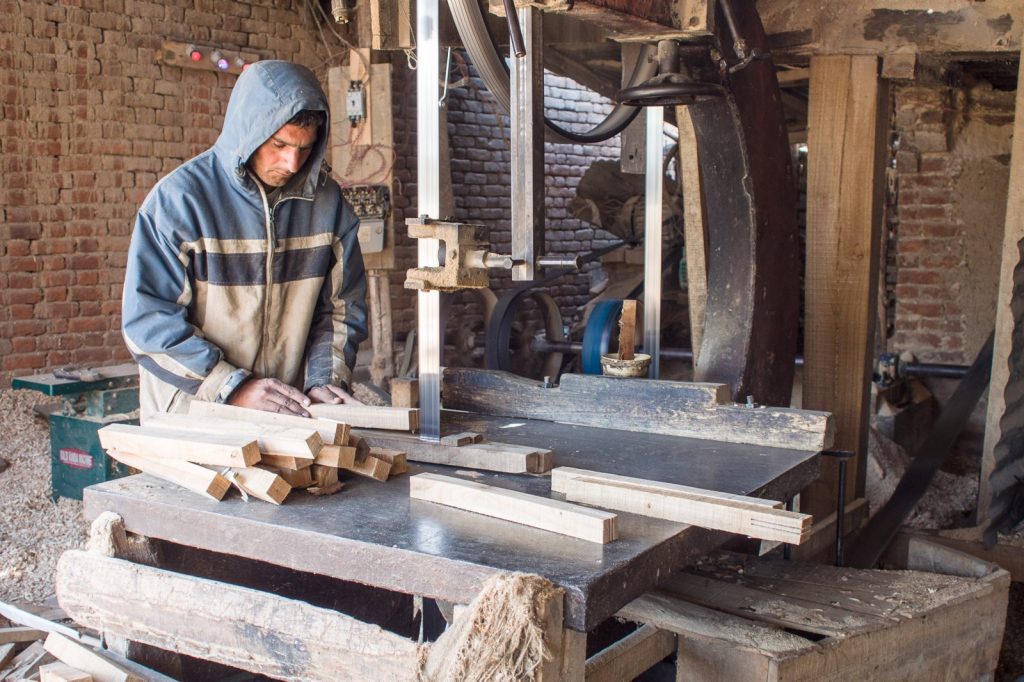
Nearly 90 per cent of production comes from small and micro enterprises, according to the report. Meerut and Jalandhar are the traditional centres, with more than 250 exporting units, over 1,000 domestic-market enterprises, more than 4,000 micro enterprises and nearly 20,000 household units between them. Both are inland, which adds to transport costs and delivery times.
The report recommends Rs 4,000 crore for four new manufacturing clusters near ports and Rs 1,000 crore to modernise Meerut and Jalandhar. Gujarat, Andhra Pradesh and Tamil Nadu are possible sites. Piyush Doshi of The Convergence Foundation said clusters cut costs through co-location. He compared today’s delays to driving with the brakes on: “We need to solve those first before we waste our petrol pushing on the pedal.”
Testing is a second bottleneck. India lacks enough internationally accredited labs, so companies often send products abroad. Anand said India makes about a third of the world’s cricket helmets, yet a manufacturer may need to send as many as 60 helmets to certify one product line. Testing one model can cost Rs 6-7 lakh and take four to six months. The report suggests working with bodies such as Fifa, Fiba and the Badminton World Federation to set up recognised labs in India.
It also proposes a Rs 500 crore Brand India programme and a Sports Manufacturing and Export Promotion Cell in the Ministry of Youth Affairs and Sports. Singh said a missing global brand should not stop production. He pointed to Pakistan’s football manufacturing for Adidas as a model and said India could earn by supplying training and support equipment and acting as an original equipment manufacturer for larger brands.
The report splits the opportunity into phases. The first covers balls, cricket equipment, boxing gear and table-tennis products, worth about $3.4 billion in exports. The second covers rackets, cycling, sports flooring and hockey equipment, with about $2.4 billion.