
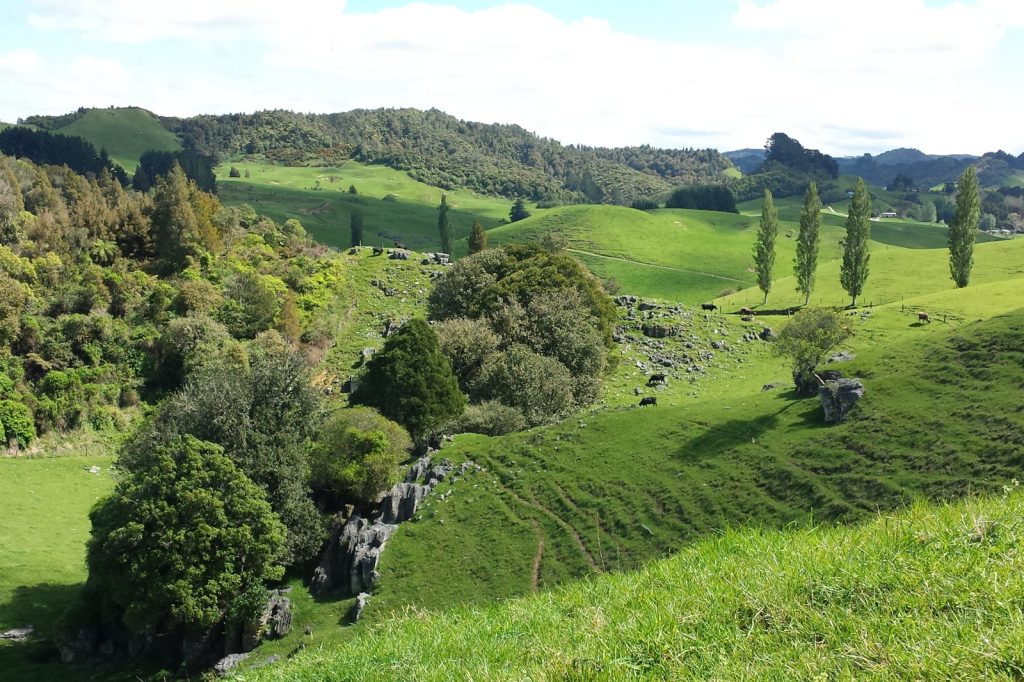
By the numbers: 202 MWp, 330,000 panels, 450 acres, four months early. New Zealand’s largest solar farm, Tauhei near Te Aroha in the Waikato, was energized in August 2026 on a former dairy farm, taking the country’s-largest title from the 47 MW Lauriston farm outside Christchurch, and the opening image is a pastoral one. “The last cow had already left the paddock when the first surge of electricity traveled from 450 acres of Waikato farmland into New Zealand’s national grid.” At 202 megawatts peak it is the biggest solar installation the country has ever connected, on course for an estimated 280 GWh a year, enough for roughly 35,000 homes, against a national grid that consumed about 42,000 GWh last year.
The bottom line for a hydro nation is insurance. New Zealand has run for more than a century, predominantly on rain and mountains, and dry years plus electrification demand plus gas-shortage price spikes made utility-scale solar’s commercial logic unusually clear for a country closer to Antarctica than the equator. Panels, as the trade press likes to note, keep converting photons whatever a drought is doing to the South Island lakes. The build itself was brisk: construction began in April 2025, the first panels went in that October, the last in May 2026, a rate of roughly 15,000 panels a week with a peak of about 350 full-time-equivalent workers, some 40 percent of them hired from the local district.
Investors will note the contracting. A power purchase agreement sells the first decade’s entire output to a major electricity retailer, a separate contract covers generation during commissioning, and full commercial operations are targeted for late 2026 after months of testing inverters and metering; the New Zealand operation’s managing director called it “an important project” in words reported by PV Tech, one that will bolster affordable renewable energy supply. Commercial start landing about four months ahead of schedule compresses the gap between capital committed and revenue flowing, a discipline worth nearly as much as the engineering in a market of tightening auction margins. A 400 MW North Island project already in the pipeline says Tauhei is a milestone, not a ceiling.
The figure that matters for the land debate is that the farm kept farming. The former dairy operation converts to sheep, panels and pasture sharing the same ground in the practice called agrivoltaics, so the site earns two incomes off one 450-acre block while more than 100,000 native plants go in along riparian margins and fence lines, “a long bet on a regenerating landscape” as one account puts it, returning native birds to what was all pasture grass a generation ago. That lands squarely in a fight New Zealand has been losing elsewhere. Between two national policy statements, the 2020 urban development directive demanding cities expand up and out and the 2022 directive ordering councils to protect highly productive land, councils are mediating a contradiction, and a Ministry for the Environment report counted the cost: “The area of highly productive land that was unavailable for agriculture (because it had a house on it) increased by 54% from 2002 to 2019.”
The competition is sharpest at the city edges. Auckland Council voted to shrink the city fringe open to development, on flood-risk and infrastructure-cost grounds, while Christchurch rejected an 850-home development over its “existing rural nature and the lack of public transport and local jobs”. Survey work in Christchurch’s peri-urban zone, published through The Conversation in 2023, found residents want food-producing landscapes nearby, more than 60% feeling “extremely positive” and 32% “mostly positive” toward them, and the design concept they liked best was a multi-functional green belt of community gardens, sports fields, walking tracks and native plantings buffering houses from farms. Greenfield sprawl, the researchers warned, risks irreversible loss of the most fertile soils.
Tauhei is not a green belt, and solar is not food; a sheep station under glass is a compromise, not a restoration of dairy. But on a Waikato hillside the same acreage now ships electrons and lamb, the rain-independent kind of harvest, and the country that ran on weather for a century has a hedge at last. The wider lesson travels: when soil and megawatts stop competing for the title of highest and best use, both can stay in production.
Sources
- Built on a former dairy farm near Te Aroha, 330,000 panels were energized in the Waikato and New Zealand's biggest solar farm began sending power to the grid four months early
- Growing NZ cities eat up fertile land – but housing and food production can co-exist




