
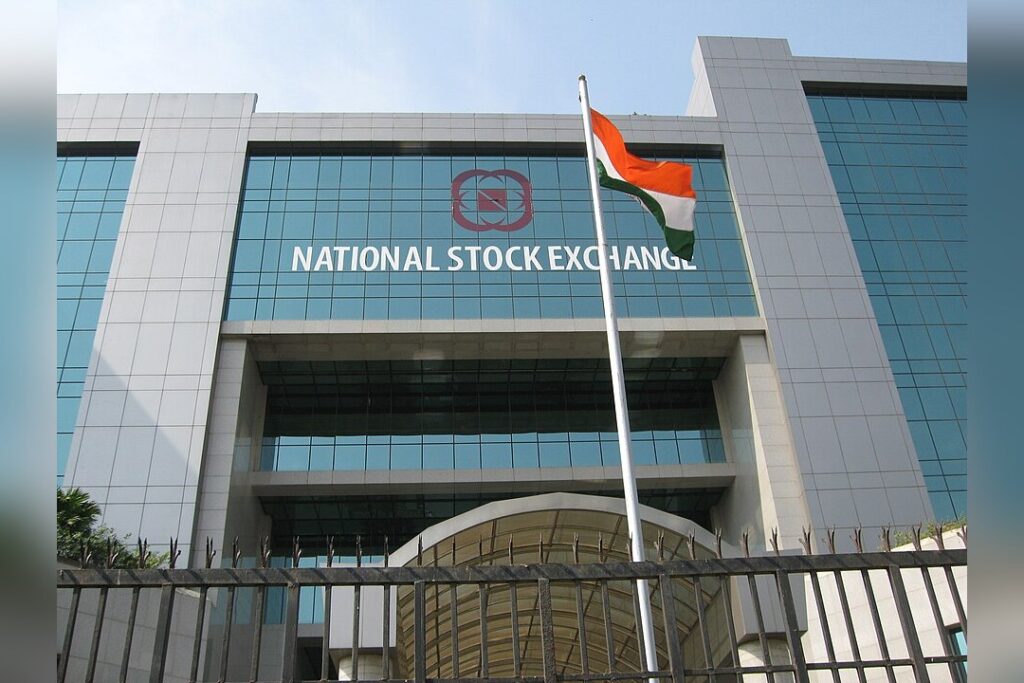
Eight straight weekly losses. That is how long India’s Sensex and Nifty slid before edging higher this week, Reuters reported, the longest losing run in 25 years. It is a strange picture for a country whose economy is growing by more than 7%, despite a global energy shock, higher interest rates, tariff uncertainty and weather disruptions.
Small investors have felt it most. Anyone holding the Nifty has lost roughly 15% since January. South Korea tells the opposite story: the Kospi has returned about 62% since the start of the year and 170% over two years. India may be the fastest-growing major economy, but its shares rank among the weakest of any big market in 2026.
A dollar problem
Foreign investors count their returns in dollars, and the rupee has not helped. The Economic Times calculated on September 30 that the Sensex had fallen more than 20% in dollar terms this year, the steepest drop in 15 years. The Nifty was down 18.6%. In rupee terms the losses were smaller, 14.9% for the Sensex and 13.1% for the Nifty, but the rupee itself has lost 6.4% in 2026. The last sharper fall came in 2011, when both indices dropped nearly 36% each in dollar terms.
Among major markets only Indonesia has done worse; its Jakarta Composite is down 34%. Meanwhile the S&P 500 has gained 12.2%, the Nasdaq 15% and Japan’s Nikkei 30%.
“The rupee’s depreciation has adversely impacted returns in dollar terms, but the main cause of poor year-to-date returns is driven by the weak sentiment towards Indian equities,” said Pratik Gupta, CEO and co-head at Kotak Institutional Equities.
Why money left
Foreign money has drifted away since the end of September 2024. The Economic Times listed slowing earnings growth, a pull toward AI-driven markets such as South Korea and Taiwan, US tariffs and, more recently, the jump in oil prices after the war in West Asia.
Domestic savers have limited the damage. Over the past year, foreign portfolio investors pulled out more than ₹2.17 lakh crore, while mutual funds took in ₹4.98 lakh crore. That cushion may not last, warned Saion Mukherjee, head of India equity research at Nomura. “People have been coming in and supporting the market whenever there is a fall. Will they continue to do that?” he said. Fresh investors, he added, would need the market to be a bit supportive before they keep putting money in.
Mukherjee also played down the 20% line as a bear-market threshold. “The bigger point is how this correction impacts investor sentiment and domestic flows,” he said.
Where the losses sit
The Sensex’s market capitalisation in dollars has shrunk by more than $372 billion this year, and ten stocks account for about 80% of that erosion. Reliance Industries lost nearly $70 billion, HDFC Bank about $54 billion and TCS about $52 billion. Infosys gave up around $32 billion and ITC around $22 billion.
Sources
- Five reasons India's stock market is sinking even when its economy is growing
- Sensex falls over 20% in dollar terms in 2026 as weak sentiment, rupee drag returns – The Economic Times




