
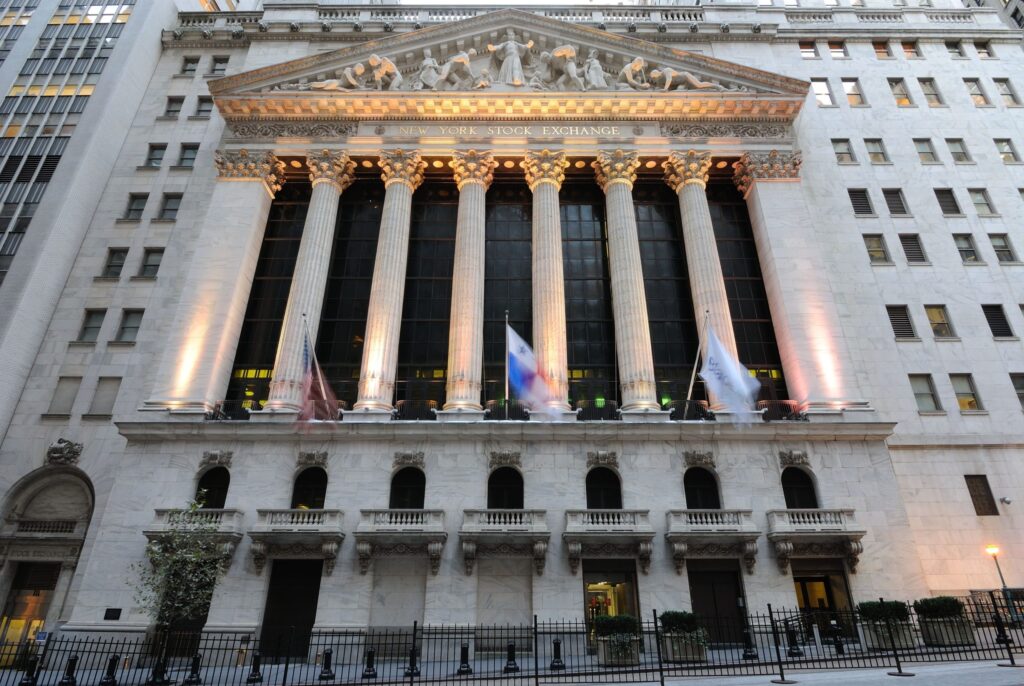
The S&P 500 Industrials index added 1.8 % by Thursday’s close, extending a steady climb that began a month ago. Gains were led by machinery makers, freight providers and aerospace suppliers, suggesting the equity rally that has been dominated by mega‑cap technology stocks in 2023 may finally be expanding.
The rally arrives just days before the Federal Reserve’s policy meeting on 13 June. Futures pricing implies a 75 % chance that the Fed will keep its target range at 5.00‑5.25 %. At the same time, the New York Fed’s recession‑probability model shows the odds of a downturn in the next twelve months falling to 25 % from 39 % in March.
Market participants are also reacting to a softer inflation outlook. A Bloomberg poll expects May’s consumer‑price index to rise 4.1 % year‑on‑year, down from April’s 4.9 %. “The data pipeline is giving the Fed room to skip,” said Art Hogan, chief market strategist at B. Riley Financial. He added that three‑month annualised core inflation has already slipped below 3 %, the slowest pace since late 2021, and that a pause would likely be viewed as the start of an extended hold rather than a one‑meeting breather.
Expectations of steady rates have already pushed the two‑year Treasury yield down about 25 basis points since late May, easing the financing pressure on cyclical firms that typically carry more debt than their tech counterparts.
Within the industrial sector, transportation stocks have outperformed the broader group. The Dow Jones Transportation Average is up roughly 6 % over the past two weeks, driven by strong moves in UPS and Union Pacific. Machinery giants Deere and Caterpillar posted gains of 5 % and 4 % respectively, reversing earlier declines that were tied to concerns over weaker farm and commodity markets.
Freight activity is showing signs of revival after a year‑long slump. The American Trucking Associations reported a 2.7 % rise in its for‑hire truck tonnage index in May versus April – the biggest monthly gain since October 2021. “Goods are moving again,” said Bob Costello, the association’s chief economist, noting that retailers have largely cleared excess inventories and are beginning to restock, even as volumes remain below 2022 peaks.
Airlines are also joining the upward trend. Delta Air Lines lifted its second‑quarter earnings guidance to the top of its prior range, forecasting adjusted profit of $2.25‑$2.50 per share, up from $2.00. The update sent Delta’s stock up 4 % and lifted the NYSE Arca Airline index to a three‑month high.
Corporate sentiment is improving as well. A Business Roundtable survey released on 7 June showed CEOs turning positive on capital spending for the first time since late 2022, with the economic outlook index climbing to 86 from 79. The National Federation of Independent Business reported that its optimism index rose in May, and 3 % of small firms now plan to add workers – the strongest reading since August.
Banking stress that flared in March appears to be abating. Regional‑bank deposits stabilized in April and May, while usage of the Fed’s emergency Bank Term Funding Program fell below $100 billion, according to Federal Reserve data. The reduced focus on lender failures is allowing investors to concentrate on earnings fundamentals, a tailwind for industrials that rely on steady working‑capital lines.
Nevertheless, headwinds remain. The U.S. dollar has appreciated about 2 % on a trade‑weighted basis since mid‑May, potentially curbing overseas revenue for exporters such as 3M and Honeywell, which generate roughly 40 % of S&P 500 industrial sales outside the United States, per FactSet. China’s post‑COVID recovery is uneven; the official PMI slipped to 48.8 in May, marking a second consecutive month of contraction. Caterpillar noted a 14 % year‑on‑year drop in Asia‑Pacific dealer machine sales in March, reflecting weak construction demand.
Higher energy prices are also a concern. Brent crude breached $76 a barrel after Saudi Arabia announced an additional one‑million‑barrel‑per‑day cut for July, tightening margins for airlines and truckers.
Despite these risks, valuations suggest room for further upside. Industrials trade at a forward‑earnings multiple of 17.5×, about 10 % lower than the broader S&P 500, according to Refinitiv. “The group is priced for a recession that may not arrive,” Hogan said. “If the Fed pauses and the dollar stays below recent highs, we could see a 10‑15 % catch‑up before year‑end.”
The sector’s trajectory will hinge on next week’s inflation data and the Fed’s dot‑plot projections. A modest CPI print combined with clear policy guidance could cement the rotation into economically sensitive names and sustain the industrial rally through the summer.




