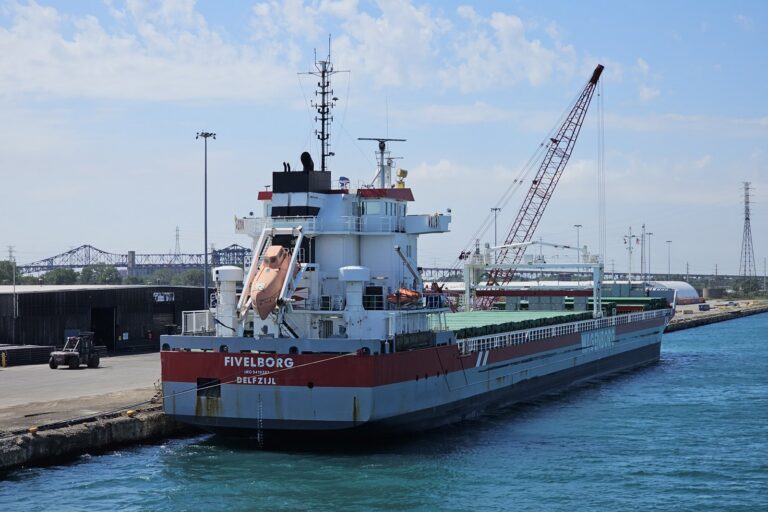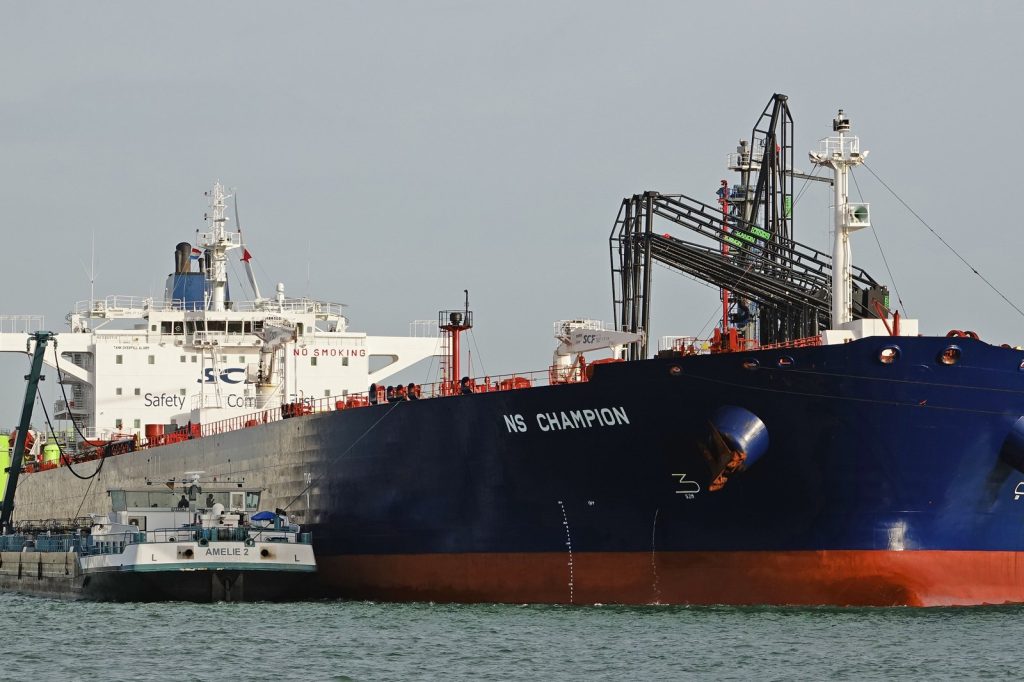
Russia’s shadow fleet is less a fleet than a supply chain. On paper it is a scattering of ageing tankers; in practice it is a coordinated system of owners, operators and enablers that keeps Russian oil moving despite the sanctions imposed after the 2022 invasion of Ukraine. The scale, set out in an April 2026 analysis by the Geopolitics and Security Studies Center: roughly 600-800 tankers worldwide, or about 10-15 percent of the world’s crude and product tankers.
The mechanics here start with the price cap. Since 5 December 2022 for crude and 5 February 2023 for refined products, the G7 coalition has barred its shipping services from carrying Russian oil above a set price. Russia’s answer was a parallel logistics network: second-hand tankers, opaque ownership, insurers outside the coalition and registries that ask few questions. Ownership is routinely routed through offshore structures tied to the Marshall Islands, Panama, or St. Kitts and Nevis, while insurance and brokerage have drifted to firms in India, China and the United Arab Emirates. Before the war, EU and G7 companies insured roughly 90 percent of the world’s tanker fleet — exactly the leverage this network was built to dodge.
The catch is that listing ships barely slows the system. As of February and March 2026, 623 tankers carried designations from one regime or another, yet 111 of them kept loading Russian oil. In February 2026, 143 shadow fleet tankers moved Russian crude and products from Russian ports, a drop of 22 vessels; 78 carried crude and 65 carried products. Strip out one hull and it is sold, renamed and re-flagged, or a substitute slides into its berth. By early 2026, sanctioned tankers were still hauling about 68 percent of Russian crude exports, while ships fully inside the price cap regime carried only 23 percent.
Follow the money and the fleet’s purpose is obvious. Russian fossil fuel exports still earn around €464 million a day, with seaborne crude alone worth roughly €156 million daily. Sanctions have raised costs rather than choked supply: February 2026 exports fell 9.2% against the previous month and 5.3% against the prior year, and revenue slid to about $9.5 billion, among the lowest levels since the invasion — yet the barrels keep moving.
The fleet’s weak point is age. Average vessel age runs 15-25 years against a global tanker average of 13-14 years; 96 percent of its crude tankers and 92 percent of its product carriers are past fifteen years old, and ships over twenty years now make up nearly a third of the tankers lifting Russian crude. Old hulls burn through parts — pistons, bearings, cargo pumps, inert gas systems, navigation electronics — and cargoes that can exceed 700,000 barrels per ship make mechanical failure catastrophic. That is where the enablers matter most. Specialized marine components come from a concentrated base of manufacturers in Europe, Japan and South Korea, which is why analysts argue for extending export controls, already in force for navigation gear under Article 3f of EU Regulation 833/2014, to safety-critical machinery and the spare parts that keep these hulls seaworthy.
Naval interdiction is the other track. In June, French forces intercepted the tanker Deliver off the coast of Sicily; the vessel was sailing “in violation of maritime law,” Macron said at the time. On closer reading, the network’s real armor is paperwork: decentralized ownership that regenerates faster than sanctions lists, serviced by insurers and brokers the coalition cannot reach. Target the services and the spare parts, the argument runs, and the hulls will age out on their own.
Sources
- French navy intercepts and boards 'shadow fleet' ship, Macron says | Euronews
- What is Next for Russia’s Shadow Fleet: Closing the Gaps in Maritime Sanctions Enforcement | Geopolitics and Security Studies Center, GSSC