
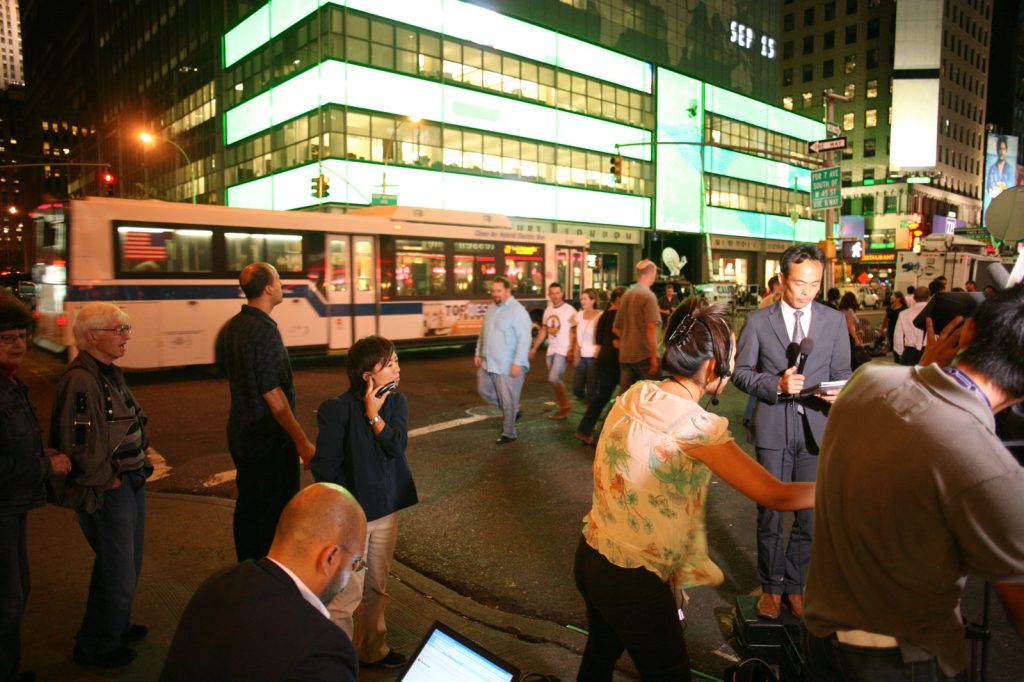
Employees walked out of Lehman Brothers’ Seventh Avenue headquarters on a Sunday night in September 2008 carrying boxes, tote bags, rolling suitcases and framed artwork. Some had moist eyes. Across the street, TV trucks lined the curb and a man leaving the building shouted at onlookers snapping photos: “Are you enjoying watching this? You think this is funny?”
On 15 September 2008, Lehman Brothers Holdings filed for Chapter 11 protection in the Southern District of New York. At the time it was the largest bankruptcy filing in US history, with reported assets north of US$600 billion. The firm had been in business for 158 years.
A weekend of failed rescues
The talks began Friday night at the New York Fed. Treasury Secretary Hank Paulson and New York Fed president Timothy Geithner were there, along with the chiefs of Citigroup, JPMorgan Chase, Morgan Stanley, Goldman Sachs and Merrill Lynch. Barclays and Bank of America were the potential buyers. Bank of America left to buy Merrill Lynch in an all-stock deal valued at US$50 billion. Barclays dropped out after UK regulators would not approve a quick deal. And the US Treasury refused to provide takeover aid, as it had done six months earlier when Bear Stearns faltered.
That last decision is still argued over. Paulson and Fed officials later said they lacked the legal authority to guarantee Lehman’s trading book, since the firm lacked adequate collateral. Critics, including some members of the Financial Crisis Inquiry Commission, said policymakers also wanted to show that the government would not back every Wall Street firm.
Lehman had burdened itself with $60 billion in soured real-estate holdings, AP reported. Insurer AIG, meanwhile, was seeking a reported $40 billion in emergency funds to avoid a credit rating downgrade.
How leverage did the damage
Under chief executive Richard Fuld, Lehman had leaned into the US mortgage market harder than most rivals. It bought subprime lenders including BNC Mortgage and Aurora Loan Services and packaged mortgage securities at scale. By 2007 its leverage ratio sat around 30 or 31 to 1, by some calculations. That meant a drop of three or four per cent in the value of its mortgage assets could erase the entire equity base.
Anton Valukas, the bankruptcy examiner, later described the Repo 105 maneuver. Lehman temporarily moved roughly US$50 billion off its balance sheet at quarter-end to flatter its leverage, then reversed the trades days later. The Financial Crisis Inquiry Commission’s 2011 report found that senior management had repeatedly overridden Lehman’s own risk controls in the push for growth.
The shock spreads
Markets reacted fast. The FTSE 100 fell 3.42 percent, the CAC-40 4.27 percent and the DAX 3.38 percent. India’s Sensex sank more than 5 percent. A group of ten banks, from Bank of America to UBS, each agreed to put up US$7 billion toward a $70 billion lending pool. The Fed widened the collateral it would accept from investment banks.
The Reserve Primary Fund, a money-market fund holding Lehman paper, “broke the buck” within a day, and credit markets froze almost overnight.
“It’s clear we’re one step away from a financial meltdown,” said Nouriel Roubini of RGE Monitor.
Barclays bought Lehman’s North American investment banking business out of bankruptcy within days, and Nomura took most of the Asian and European operations. Roughly 25,000 people worldwide lost their jobs in the initial collapse.
Sources
- Lehman Brothers And The Day Wall Street Broke | NeTT Business News
- Financial Meltdown: Lehman Brothers files for Chapter 11 bankruptcy – WELT




