
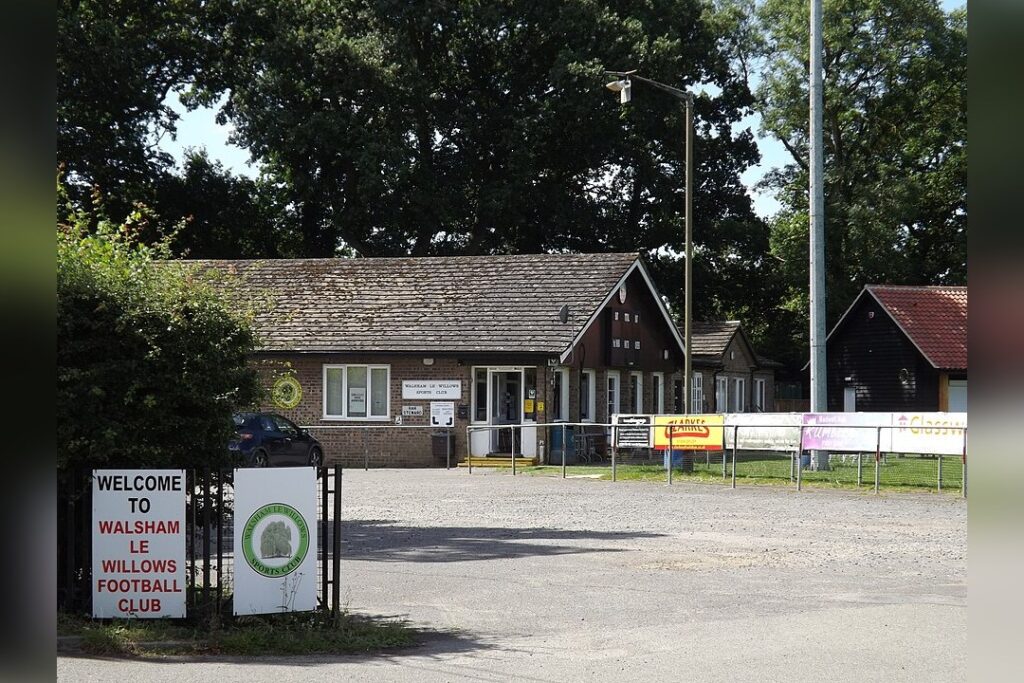
The mechanics here start with a rejection no human appears to have made. Walsham le Willows Sports Club, founded in 1892 around a thatched cricket pavilion and volunteer-run for more than 130 years, has taken Lloyds to the Financial Ombudsman after the bank’s automated system locked it out of its account — because certified identification supplied by one of its trustees was rejected without a word of explanation. The club had banked with Lloyds for more than 70 years.
The sequence, as GB News reports it, is a study in system logic. The trigger came last summer, when a compliance request arrived from the bank. Ian Campbell MBE, the 83-year-old treasurer who has looked after the club’s finances since 2009 without incident, supplied everything asked for. More demands arrived after that, among them certified identification covering three trustees. Those papers were submitted — and rejected. No reason was given. When Campbell drove to a branch for answers, staff told him branches no longer deal with business accounts. Then came the cascade: bouncing direct debits, grant payments that dried up, VAT refunds that never arrived, and the disappearance of online banking access.
Two letters to Lloyds chairmen in May went unanswered. Branch visits, Campbell told them, were futile — staff no longer handle business accounts — and the phone line only repeated what he already knew. As he put it in writing: “The phone call to business banking only yields the information we already know – that the account is closed.” He added in the same letters: “The silence was deafening; there were no replies.” A formal complaint followed. Lloyds upheld the complaint, set up a replacement account and dropped £300 compensation into it — which Campbell refused before escalating to the Ombudsman. “£300 is a smack in the face,” he said. “The damage to our reputation, the online bank details not available, direct debits failing, and the days and days of voluntary work trying to sort it out.”
The catch is timing. Britain’s new protections took effect in April: banks must now give 90 days’ notice plus a written reason before shutting an account. The catch, per critics, is that the regime covers only new accounts — which could leave millions whose banking predates April this year with no protection at all. The Ombudsman case therefore tests two questions in one: will the watchdog sanction conduct that predates the rules, and do the rules themselves reach far enough?
Follow the money and the scale is stark. By the figures, 453,230 British accounts were shut last year — nearly tenfold the count a decade ago — while Financial Ombudsman de-banking complaints have climbed almost 70 per cent since 2020, reaching nearly 4,000. Critics lay the blame on local branch managers — people who knew their customers — giving way to automated compliance machinery that flags accounts with no human oversight, so nobody retains the authority to step in or explain.
The human side is a retired volunteer out of his depth by design. Campbell says the ordeal nearly made him quit: “One of the things that impacted me most was that I thought I had to stop being treasurer. At 83, with IT skills somewhat limited, I began to think I was the problem.” He never was given an answer: “I never got any answers. I could get no information.” For small charities run entirely by volunteers, often past retirement stage, he argues, navigating the computer systems can feel impossible — a warning for every treasurer of his generation. What kept him going, he says, was one thing: “The sight of hordes of children of all ages and genders enjoying sport – not an iPad or iPhone in sight”.
The backdrop is well worn. Banks, meanwhile, retain the right to shut accounts without explanation on suspicion of financial crime, with no obligation to reveal what that suspicion rests on; research suggests they routinely use automated risk algorithms and can shut an account rather than manage a flagged risk, even where the customer has committed no crime. Nearly 1,900 charities answered a Charity Finance Group survey published last November; nine in ten reported at least one banking problem across the previous two years, and over a quarter never got a clear explanation from their bank. The row first detonated in 2023, when Nigel Farage went public on Coutts closing his accounts over his political views — a scandal that cost two bank chief executives their jobs — in a year when major UK banks shut north of 140,000 small business accounts. Earlier still, PayPal froze UsForThem, the Free Speech Union and the Daily Sceptic before admitting it was over their Covid-vaccine and school-closure views; the regulator intervened and the accounts returned after 22 days.
Lloyds, for its part, says such checks are simply regulatory housekeeping: “we sometimes need to carry out checks to confirm how an account is operated”, a spokesperson said, while conceding “we are sorry for the distress and disruption this caused” and that the experience fell short of what it should have been. The bank says the episode has been reviewed, an apology delivered and compensation paid for the service received — and that the account stands open again, running normally. The club, meanwhile, keeps its side of the bargain: some 24 youth teams across cricket and football, four grass pitches, a tennis court and an artificial pitch — a village institution that began when players pulled a two-wheeled water cart across to the pavilion, now waiting on a watchdog to decide what a bank owes it.




