
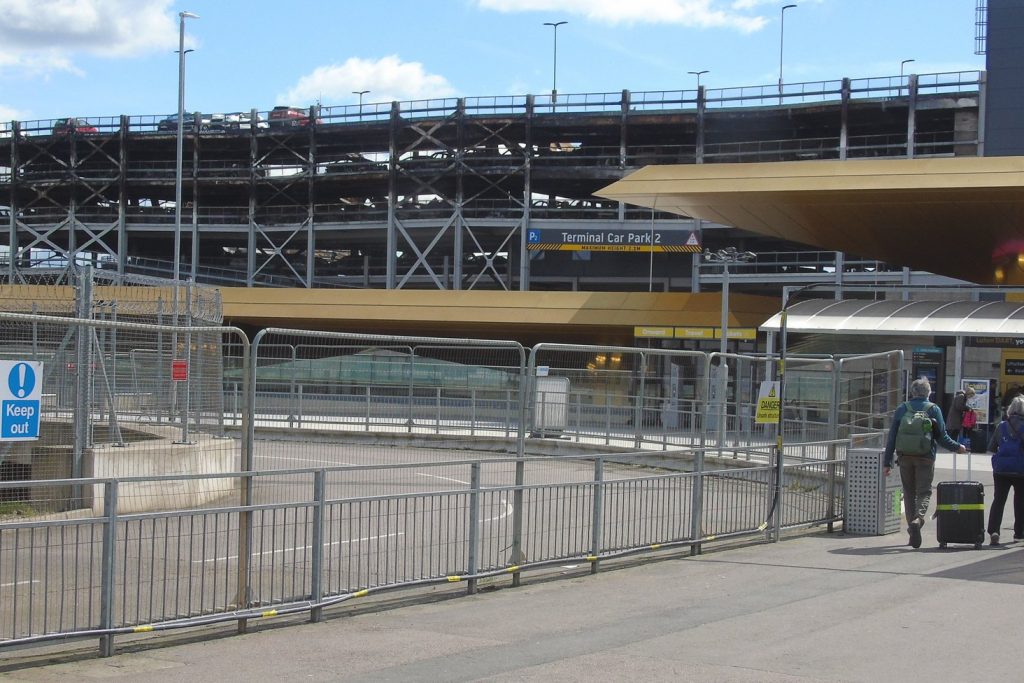
A fire that erupted in a multistorey car park at London Luton Airport on October 11, 2023, has brought all flight operations to an indefinite halt, leaving thousands of passengers stranded and exposing vulnerabilities at one of the United Kingdom’s busiest transport hubs. The blaze, now contained to the car park, prompted airport authorities to suspend all departures and arrivals. No aircraft are moving, and no passengers are boarding.
For those already inside the terminal, the immediate consequences are severe: missed connections, canceled holidays, and lost business meetings. The airport, the fourth-busiest serving London, handles a high volume of travelers, and the disruption has created a ripple effect across the region.
Hotels near the airport are preparing for an influx of stranded passengers. Airlines are working to rebook travelers on alternative flights, while car rental desks face a surge in demand from customers seeking ground transportation. The suspension of flights, however, is not merely a logistical inconvenience—it underscores a deeper risk.
Airport infrastructure operates as a chain, and a single broken link—whether a car park, runway, or control tower—can paralyze the entire system. Emergency services remain on site, and the cause of the fire is under investigation.
As of now, no official explanation has been provided for what sparked the blaze. This uncertainty compounds the problem: without a known cause, there is no quick fix, and without a fix, there is no timeline for reopening the airport. London Luton Airport has a long history, having first opened in 1938. During World War II, it served as a base for Royal Air Force fighters.
After the war, it transitioned back to commercial activity and general aviation flight training. By the 1960s, it had expanded into the package holiday business, eventually becoming the busy, modern airport it is today.
The facility is owned by London Luton Airport Limited, which is wholly owned by Luton Borough Council. The council now faces the challenge of answering to the public after a fire shut down the airport. The stakes extend beyond today’s passengers.
The airport’s operations rely on a complex interplay of air traffic control, ground handling, and passenger services—all of which have been halted by a fire in the car park. This raises questions about safety and security: if a car park fire can shut an entire airport, what other vulnerabilities might exist?
The investigation will need to address that. Airport authorities are collaborating with emergency services and other stakeholders to assess the situation and mitigate the impact on passengers. However, mitigation is a temporary measure, not a solution.
There is also a longer-term risk. Airports like London Luton face increasing pressure to reduce their carbon footprint through renewable energy sources such as solar and wind power.
But a fire that shuts down operations diverts focus from sustainability to immediate safety, creating a potential conflict between the two goals. For now, the fire is out, but the flights remain grounded. Passengers are left waiting.
The airport has survived war and commercial upheaval over its 85-year history, and it will survive this fire. But the cost—in missed trips, lost revenue, and shaken confidence—will be real.
The investigation continues, and until the cause is found, the airport stays shut.




