
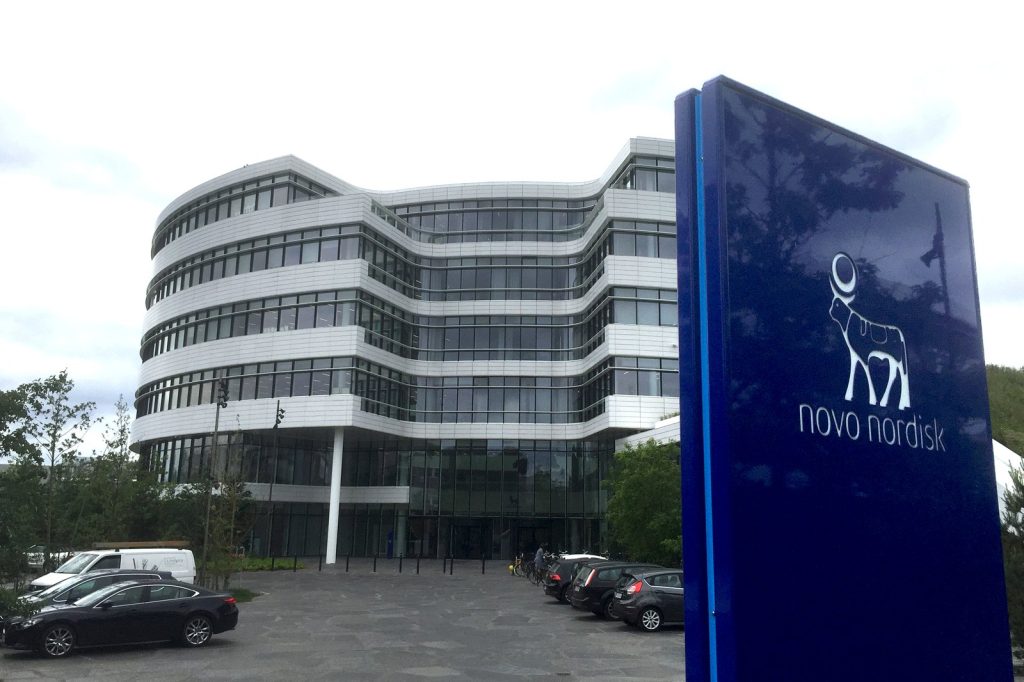
The maker of nearly half the world’s insulin answers to no activist, no family and no bank. Novo Nordisk, the Danish healthcare giant, has been under the control of a nonprofit foundation for the better part of a century, an arrangement the 1989 merger locked in place. For diabetes patients everywhere, the oddity is not trivia; it is why the pipeline can think in decades.
The origins are a love story with a balance sheet attached. Insulin was discovered in Canada in 1921, its inventors selling their patent to the University of Toronto for one dollar. August Krogh, a Nobel laureate physiologist, and Marie, his wife, a physician living with type 2 diabetes, secured Nordic rights in 1922; with physician Hans Christian Hagedorn they built Nordisk Insulin Laboratorium under a charitable foundation. In 1925 the Pedersen brothers, Harald and Thorvald, left after a dispute over production scaling and set up Novo Terapeutisk Laboratorium; in 1951, nearing retirement, they handed their shares to a foundation of their own.
Two rivals, two foundations, one small country. By the early 1980s Novo was bigger, $100 million in insulin revenue against Nordisk’s $30 million, but short of capital; Nordisk declined a merger offer, upgraded alone and grew 30% a year until, by the late 1980s, they held 30% and 20% of the world insulin market respectively. Danish law let same-purpose foundations merge, and the two did, companies following: Novo Nordisk A/S debuted as the largest insulin producer on earth, 12,000 employees strong, roughly half the world market, past Eli Lilly at 35% and Hoechst at 15%. Its chief executive called the result a “specialized dwarf”, ready to “create a certain furore on the global stage”.
Under the hood, control sits in the Novo Nordisk Foundation, which owns through Novo Holdings A/S, a subsidiary created in 1999. Novo Nordisk stock comes in A and B shares, the A-shares carrying ten times the votes, held exclusively and indefinitely by Novo Holdings: in late 2024, 28.1% of the capital but 77.1% of the votes. Its board must keep the voting majority, block any sale of A-shares and follow a charter that pairs scientific, humanitarian and social purposes with the commercial one. The B-shares trade freely, and dividends flow, but only after growth and competitiveness are funded.
The model was tested in 2004, when executives chased a merger with Switzerland’s Serono and the foundation board, citing growth and market strength, killed the deal to stay independent. Analysts note the compounding since: the world’s wealthiest charitable foundation, a net worth put at US$167 billion, booked a $4.6 billion return on its investments in 2023: $2.8 billion came in as Novo Group dividends, another $1.8 billion from the rest of its portfolio. Control that cannot be bought, it turns out, compounds too.




