
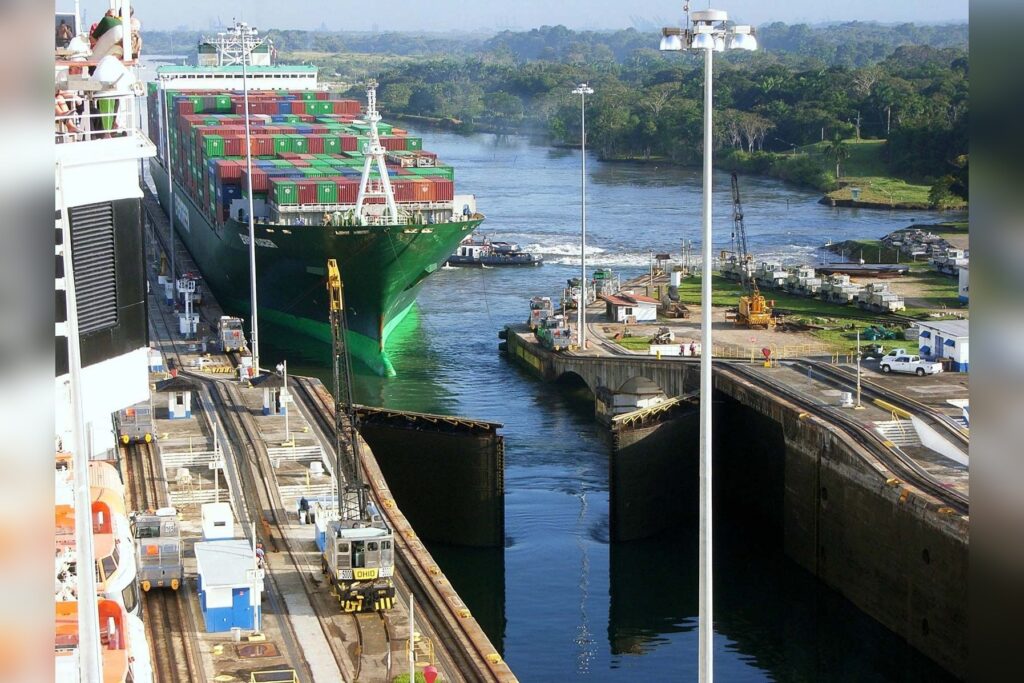
The Panama Canal’s locks work like elevators. Each one fills with water to lift a ship 26 meters, or 85 feet, up to Lake Gatun, and the ship comes back down to sea level on the other side. That water comes from rivers feeding the lake. This year, not enough of it has fallen from the sky.
Officials said the watershed received less rain than forecast in September. Analysis cited by Maritime News put rainfall from May through August at roughly a third below normal, which wiped out the reservoir gains made earlier in 2026.
Fewer slots, shallower ships
The canal has been squeezing traffic in steps. Daily transits fell from 36 in August to 32 in September. A draft plan submitted to Panama’s parliament, the Guardian reported, would allow an average of 29.5 vessels a day from October, an 18% drop from August.
Maritime News reported that the 32-ship ceiling breaks down into nine slots a day in the Neopanamax locks and 23 in the Panamax locks. The maximum draft has also been trimmed, from around 15.24 meters to 14.63 meters. Some vessels now sail with lighter loads or look for another route.
Waits are getting longer. In August, ships queued for 10 days to enter, the longest since May, and one container ship reportedly paid about $4 million to jump the line. Operators usually pay a flat fee to reserve a slot, but a daily auction lets shipowners bid to skip ahead, and bids rise when demand is high.
What it costs
The canal handles 5% of global maritime trade and about 40% of US container traffic. Shippers like it because it usually cuts cost and transit time, especially on trade between China, Asia and the US. The US and Israeli war on Iran and the disruption to the Strait of Hormuz have already complicated logistics and added costs for companies using the canal.
Carriers are passing the strain along. Maritime News reported that major container lines have added surcharges on routes from Asia to US East Coast and Gulf Coast ports. One carrier introduced a Panama Canal Adjustment Factor of several hundred dollars per TEU, effective September 10.
Traffic held up in the first half of fiscal year 2026, with more than 6,200 transits and cargo tonnage up five percent, per an industry report released around September 11.
It may get worse. El Nino is expected to peak later this year and is forecast to be the strongest in four decades. In 2023, with lake levels at a low, authorities cut daily transits from 38 to 22, and ships bunched up as companies scrambled for other routes. Officials said rainfall from September through November would decide whether further cuts come, though none beyond mid-September had been formally announced.
Sources
- Panama canal traffic facing further cuts as drought from El Niño worsens
- Panama Canal Tightens Transit Slots As El Nino Drought Deepens




