
In late April 2020 most of Luzon sat under an “enhanced community quarantine”, and the arithmetic of it was stark: 57m residents confined to homes and neighbourhoods, security personnel watching the exits, and restrictions set to hold until at least April 30. Cebu’s provincial capital had followed on March 28 with a lockdown set to run a month. By April 21 the country had logged 6599 Covid-19 infections and 437 deaths, with testing capacity lifted by the procurement of almost 3m additional kits. A presidential decision on extending or phasing the measures was, at that point, widely expected within days.
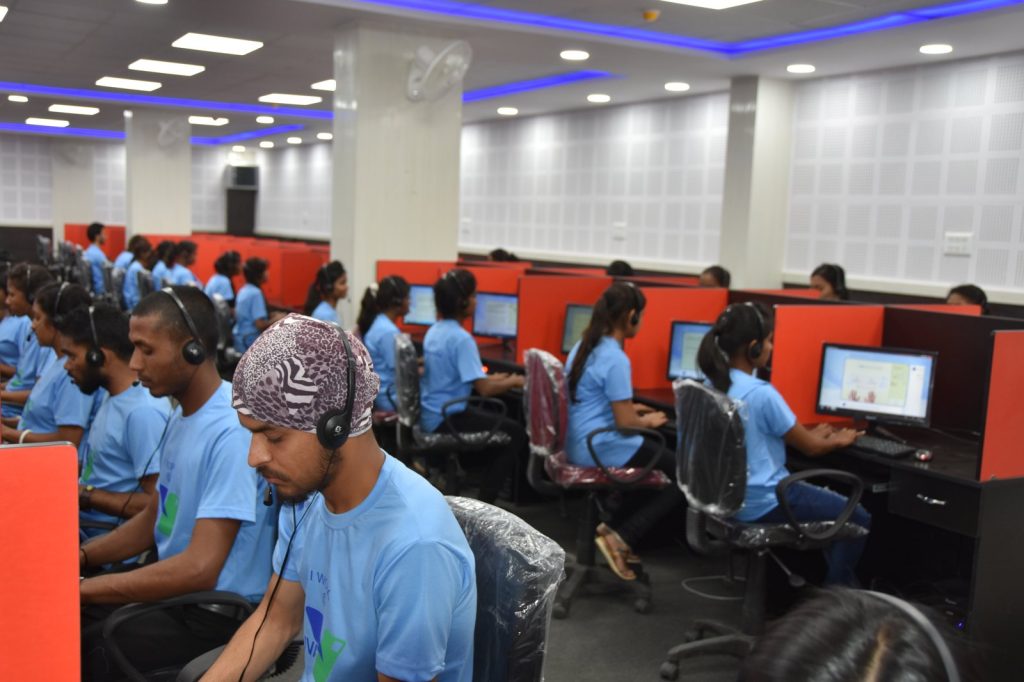
For all the noise of a global shutdown, the salient point for Manila was narrower. Business process outsourcing is habitually called one of the economy’s two “legs”, remittances from overseas Filipino workers being the other. The industry employed around 1.3m workers and, with indirect and induced multiplier effects counted, contributed approximately 9% of GDP. Losing it to a quarantine was not an option, so BPO firms won exemptions from the lockdown to spare the wider economy.
The strings attached told their own story. When quarantine measures first landed across Luzon on March 17, BPO companies could keep operating only under conditions: a skeletal workforce, social distancing, and temporary accommodation or a dependable shuttle service to homes nearby. Otherwise they faced a deadline to put satisfactory work-from-home arrangements in place. The scramble exposed how little had been prepared. Firms wrestled with patchy internet access, the logistics of moving equipment out of offices, and clearance requirements from clients. It would seem an unpromising foundation for a remote industry: in the Speedtest Global Index released that March, the Philippines ranked 104th out of 139 countries for average fixed broadband speed. “Telecommuting would be much more viable over the long term if broadband connectivity improves in terms of speed and price,” Junar Amador, who heads Ingram Micro Philippines as managing director, told OBG.
Not every firm started from the same place. Beng Coronel, president of the local IT/BPO firm Pointwest, said initial work-from-home capacity varied sharply with size and service line; global in-house centres embedded in international companies made the switch fastest, their clearance procedures being simpler. Pointwest itself ran at 100% capacity the moment it switched on its existing disaster recovery and business continuity playbook. Capacity, though, was only half the test. Once firms cleared it, some ran into declining demand as projects were deferred or cancelled outright. Spikes in cancelled flights, online orders and banking enquiries gave some contact centre operators a temporary lift, yet a significant share of Philippine BPO work is imported from the US, then suffering the world’s highest infection count and record jobless claims. The concentration looked, notably, like the industry’s quiet structural flaw.
The government’s support bought time; the industry’s own plan was meant to buy a future. Basic call centre work still made up some 50-60% of the country’s customer contact operations, and demand for it was already under pressure from AI-powered chatbots before anyone had heard of this coronavirus. The industry association, IBPAP, had seen that in 2016, when it unveiled Roadmap 2022 to steer members toward automation and toward more technical and creative kinds of work. Managed correctly, with technology investment and upskilling, its forecast ran to 388,000 new mid-skilled roles and 309,000 high-skilled ones by 2022, set against 40,000 low-skilled positions going away. “We see intelligent processing automation and analytics as the next drivers for growth,” Coronel told OBG. “Now is the time to prepare, in terms of capability building and developing the services that will be needed moving forward. More than ever, cost will become a major factor in any decision that a business leader makes, and this is where our country can have an advantage: innovation at competitive cost.”
The growth bets sat in the emerging segments the roadmap already tracked: health care, gaming and animation. IBPAP’s November 2019 assessment put health care revenue growth at 7.3-10.8% through to 2022, with gaming and animation pegged at 7.3-12.3%, against 3.3-7.4% for contact centres. A pandemic raising global demand for health care and home entertainment, the analysts noted, could push those segments past their projections.
Sources
- COVID-19 Causes Philippines BPO Industry To Change – Way We Do
- What does the Covid-19 outbreak mean for the Philippines’ BPO industry? – Oxford Business Group




