The confirmed facts first: on Wednesday, June 24, 2026, Rural Development Secretary Rohit Kansal chaired a high-level consultation at Kartavya Bhavan in New Delhi, with representatives and nodal officers from 18 ministries and departments in the room. The subject was the draft convergence framework for the 2025 rural jobs law known by its shorthand VB-G RAM G, which per the ministry’s announcements replaces MGNREGA as the country’s rural jobs architecture when it takes effect on July 1.
Why “convergence” is the operative word, according to state media accounts of the session: the Act rests on a whole-of-government reading of rural development, and Kansal told the gathering that bringing ministries onto one planning page is the key pillar for challenges that do not respect departmental boundaries, water security among them, along with infrastructure, livelihoods, climate resilience and local economic growth. The mechanism officials sketched is a “Single Plan – Multi Funding” approach, under which separate schemes and programmes would be steered toward shared development outcomes while each keeps its own mandate and its own funding line. On the timeline, that is less a new budget than a new way of steering the existing ones.
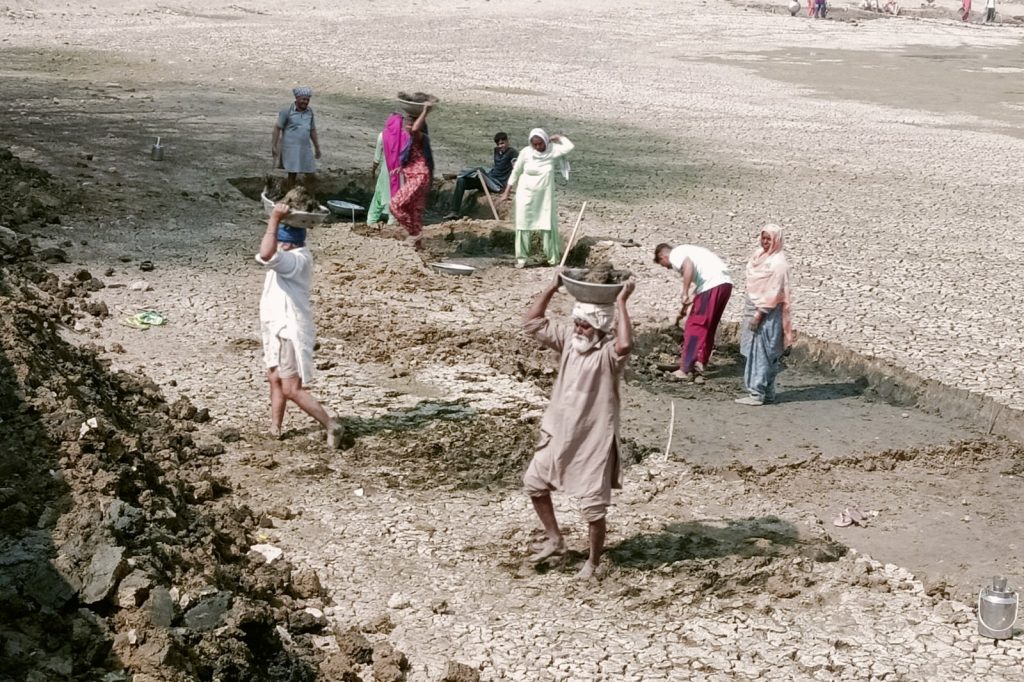
The planning machinery underneath is deliberately local. The framework builds rural planning around a village-level document, the Viksit Gram Panchayat Plan or VGPP: prepared with community participation, approved by the gram sabha, and meant to marry village-level priorities with the resources available under central and state schemes. Village plans would then be consolidated upward through the Panchayati Raj Institutions and connected to the sector programmes of individual ministries. Interventions have been sorted into four focus areas, core rural infrastructure, water security, rural livelihoods, and special works for mitigating extreme weather events, and to make the scheme workable from day one the department has already notified 318 permissible works on an interim list, spanning irrigation and natural resource management, rural connectivity, community infrastructure, disaster preparedness and climate resilience, and assets that support livelihoods.
What remains claim rather than settled fact is the hard part. The account indicates detailed discussion of technical and financial convergence, of identifying which schemes lend themselves to integration, of digital interoperability, and of the institutional machinery for coordinated implementation and monitoring; ministries offered suggestions for strengthening the draft. Officials frame the framework as the instrument that will deepen decentralised planning, optimise public spending and speed integrated rural development, and it is slated to come into force together with the Act on July 1. The even-handed reading is that a meeting of 18 ministries agreeing on a draft is the easy milestone; whether 18 separate mandates and funding structures actually bend toward one gram sabha-approved plan is the test that begins at launch.
Sources
- High-level consultation reviews convergence framework ahead of VB–G RAM G rollout from July 1 – DD India
- Govt holds inter-ministerial meet to operationalise G RAM G Act convergence framework ahead of July 1 rollout – The Economic Times