
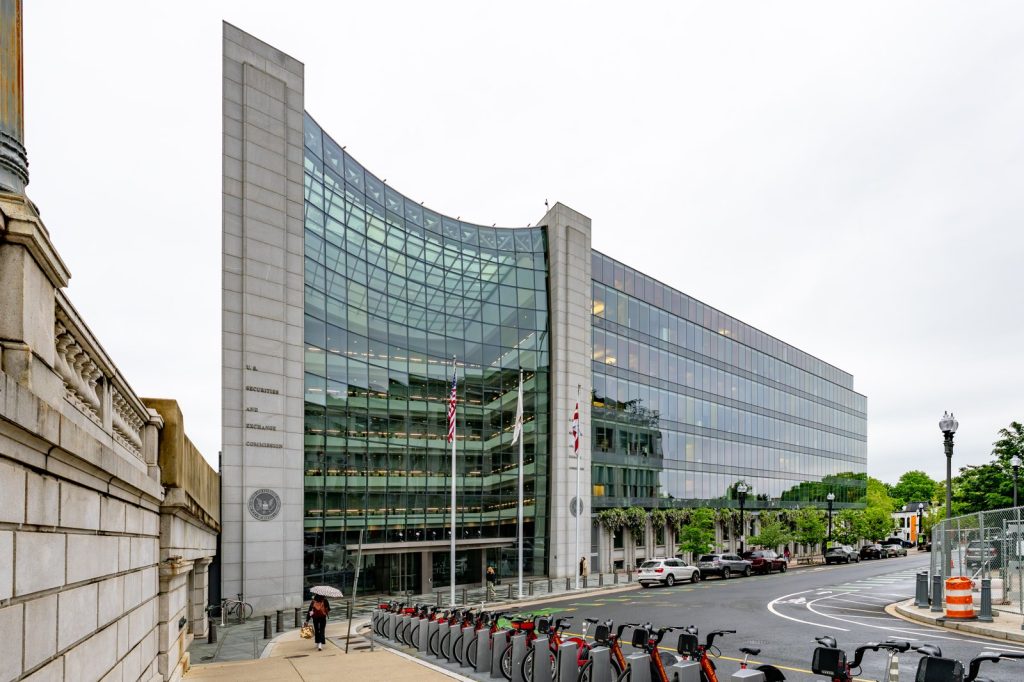
WASHINGTON, July 18 — The United States Securities and Exchange Commission is a creature of crisis. Formed in the wake of the Wall Street crash of 1929, it was established by Section 4 of the Securities Exchange Act of 1934, part of Franklin Roosevelt’s New Deal. The agency still operates under the same broad mandate: to enforce laws against market manipulation.
Its authority rests on a stack of Depression-era statutes — the Securities Act of 1933, the 1934 Act — and later additions such as the Sarbanes–Oxley Act of 2002. The SEC’s three-part mission has never changed: protect investors; maintain fair, orderly, and efficient markets; and facilitate capital formation.
That mandate rests on a single, blunt idea: mandatory disclosure. Unlike bank deposits, investments in stocks and bonds carry no federal guarantee. The SEC’s answer is transparency.
Every public company and regulated entity must file quarterly and annual reports, plus a narrative account called the management discussion and analysis (MD&A). That document forces executives to explain how the previous year went and what they plan to do next.
Quarterly and semiannual reports give investors the raw numbers. The theory, as outlined in the agency’s own founding statutes, is that mandatory disclosure puts private individuals and large institutions on the same footing, reducing insider trading and fraud while increasing public scrutiny. On the ground, that scrutiny flows through a single database: EDGAR — the Electronic Data Gathering, Analysis, and Retrieval system.
Any investor with an internet connection can pull up a company’s latest filing. The same system accepts tips and complaints. The SEC encourages those tips; they help the agency track down violators.
The agency also publishes educational materials on investing. But it maintains a strict policy: it will not comment on the existence or status of any ongoing investigation.
So the public watches the filings, waiting for the next red flag. The SEC enforces a long list of laws beyond the original 1933 and 1934 acts: the Trust Indenture Act of 1939, the Investment Company Act of 1940, the Investment Advisers Act of 1940, and the Sarbanes–Oxley Act of 2002, among others. Its reach extends across all public companies, broker-dealers, investment advisers, and mutual funds.
The agency’s structure is peculiar. It is a quasi-independent agency of the U.S. federal government.
On occasion, it has been represented by staff and by financial firms as overseers instead of by Congress. That makes the SEC something of an anomaly in Washington — a regulator that sometimes answers to entities other than Capitol Hill. The details of those arrangements are rarely discussed in public; the agency’s own policy of silence on investigations keeps much of its work opaque.
By nightfall on this mid-July day, the SEC’s EDGAR system will have logged another round of corporate filings. Somewhere in the database, a tip from an investor may be waiting. The agency won’t talk about it.
But the machinery built in the 1930s keeps turning.
Sources
{“@context”: “https://schema.org”, “@type”: “NewsArticle”, “headline”: “SEC Formed In 1934 Enforces Disclosure Rules Under Depression-Era Statutes”, “description”: “WASHINGTON, July 18 — The United States Securities and Exchange Commission is a creature of crisis. Formed in the wake of the Wall Street crash…”, “datePublished”: “2026-07-18T09:30:00+00:00”, “author”: {“@type”: “Person”, “name”: “Isabella Moore”}, “publisher”: {“@type”: “Organization”, “name”: “InfoPulse Today”, “url”: “https://newsfeed.infopulsetoday.com/”}, “citation”: [{“@type”: “CreativeWork”, “url”: “https://en.wikipedia.org/wiki/United_States_Securities_and_Exchange_Commission”}]}




