
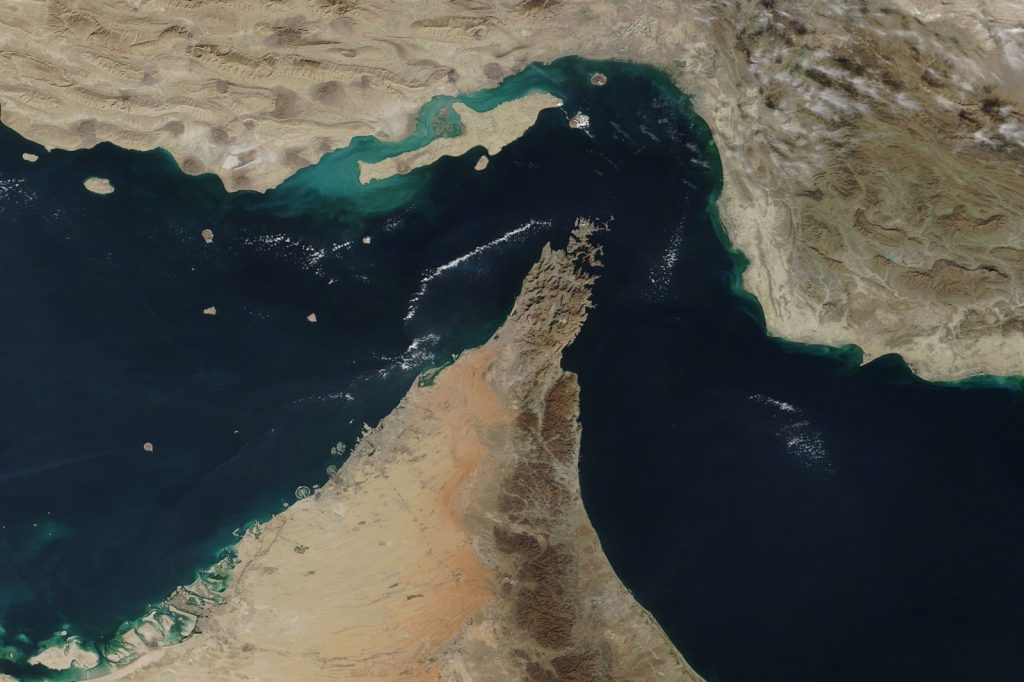
The Strait of Hormuz felt emptier Sunday evening. Vessel-tracking services logged the drop. Fewer ships moved through the narrow channel between Iran and Oman.
The Saturday strike on a commercial vessel had done its work. Shipping firms have paused new bookings for Hormuz transits.
Internal notices went out. Security assessments are underway. At least two major oil tanker operators have already diverted vessels to longer routes.
Those diversions cost time and fuel. Insurance premiums for any ship still willing to transit have climbed sharply.
The strait carries roughly a fifth of global oil consumption every day. That flow depends on a narrow stretch of water where the Islamic Revolutionary Guard Corps keeps a heavy presence along Iran’s northern coast. The Saturday strike has not been claimed by any group or state.
Regional security officials treat it as deliberate. A deliberate act against commercial navigation. Industry analysts reviewed shipping data after the attack.
The numbers showed the first measurable disruption to the waterway since the strike. Traffic in both directions declined.
Inbound. Outbound. The pattern was clear by Sunday evening.
The U.S. Navy’s Fifth Fleet, based in Bahrain, has not issued a formal statement on the traffic drop. A defense official familiar with the matter said the Navy is monitoring.
It maintains its regular patrol posture. No change announced. Washington has long warned that any sustained disruption to Hormuz would spike global energy prices.
So far crude benchmarks have not moved. Traders are watching the next 48 hours. They know what a prolonged closure means.
The vessel that was struck Saturday was a commercial ship transiting the strait. Sources familiar with the incident described the attack as a precision strike.
The vessel’s name and flag have not been released. Casualties, if any, remain unconfirmed. Iran’s Revolutionary Guard Corps controls the northern coastline of the strait.
Its fast boats and anti-ship missiles are a known factor. The Guard has threatened to close the strait before, during periods of tension with the West.
Saturday’s strike appears to have put that threat into practice, even without a formal claim of responsibility. For shipping companies, the calculus has shifted. Pausing new bookings means no new cargoes committed to the Hormuz route until security assessments are complete.
That could take days or weeks. In the meantime, oil tankers already at sea are being rerouted. The alternative paths add significant transit time.
The costs will show up somewhere. Insurance firms have responded quickly.
Premiums for vessels entering the strait have risen sharply. That is the market’s way of pricing risk. The risk is now higher than it was before Saturday.
The Fifth Fleet’s silence is notable. The Navy has not confirmed any change in patrol patterns.
But a defense official said monitoring is ongoing. The official did not rule out future adjustments. Global oil markets have not reacted yet.
That could change. Traders are watching for any further incidents. A second strike would likely trigger a price jump.
Even without one, the drop in traffic through the strait is a concrete disruption. The first measurable one since Saturday’s attack.
For now, the waterway is still open. Fewer ships are using it. The ones that do pay more for insurance.
The ones that don’t take longer routes. The strait handles a fifth of the world’s daily oil.
That flow has been reduced. How much and for how long remains to be seen.
{“@context”: “https://schema.org”, “@type”: “NewsArticle”, “headline”: “Shipping firms pause Hormuz bookings after Saturday vessel strike”, “description”: “The Strait of Hormuz felt emptier Sunday evening. Vessel-tracking services logged the drop. Fewer ships moved through the narrow channel between Iran and Oman. The…”, “datePublished”: “2026-06-29T18:27:00+00:00T09:30:00+00:00”, “author”: {“@type”: “Person”, “name”: “Ariel Antonio”}, “publisher”: {“@type”: “Organization”, “name”: “InfoPulse Today”, “url”: “https://newsfeed.infopulsetoday.com/”}}




