
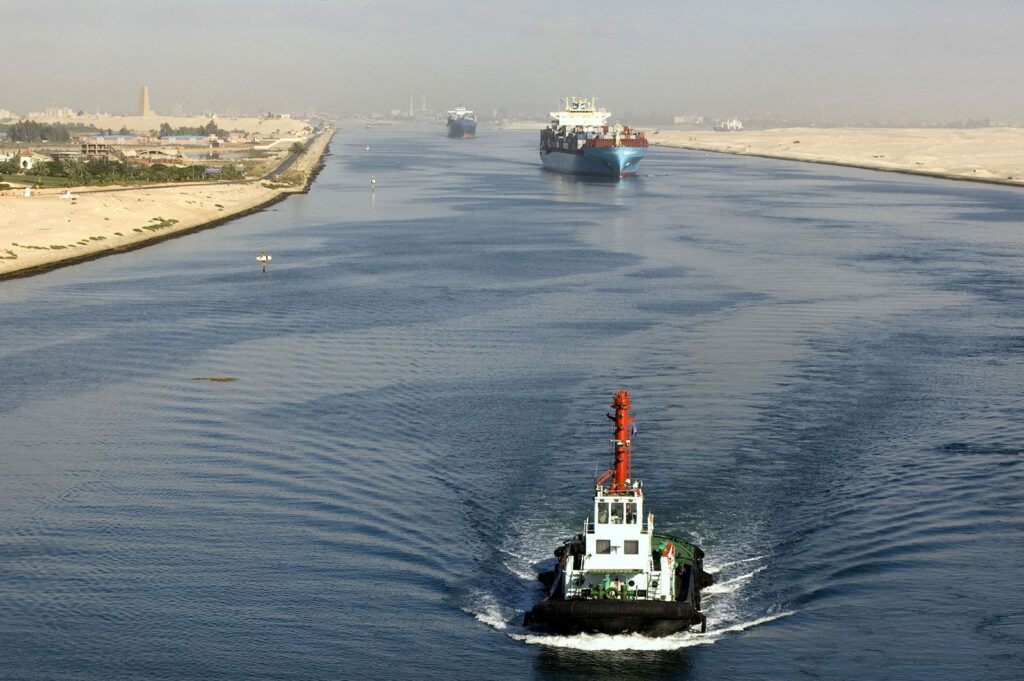
The Suez Canal, normally the fastest link between Europe and Asia, is still out of reach for many shipping companies. Houthi attacks on vessels turned the Red Sea into a high-risk zone throughout 2024, and the carriers that rerouted have mostly not come back.
Those carriers send ships around the Cape of Good Hope instead. The longer trip pushes up sea freight rates, according to Röhlig Logistics, a freight forwarder that published an update in March 2025. Think of a closed highway: everyone takes the long way, and the delivery bill grows.
New strikes, same risk
The situation worsened in March 2025 after a series of US military strikes on Houthi positions in Yemen. The aim was to degrade the group’s capabilities and discourage more attacks on commercial ships. Röhlig noted that earlier operations against the Houthis had not stopped their attacks on merchant vessels, and said the rebels’ persistence and ability to adapt keep the risk to ships “extremely high.”
Fewer commercial ships are now choosing the Red Sea and Suez route, the company reported.
The Bab el-Mandeb problem
The Bab el-Mandeb Strait, at the southern tip of the Red Sea, is the sore spot. Drones and missiles have raised the threat level there, and it is hard to secure. Because nobody is sure the military response will work, most shipping lines are reluctant to restore normal transit.
The region’s politics add to the doubt. A six-week ceasefire between Israel and Hamas in early 2025 raised hopes of calmer waters. By Röhlig’s March account, talks on a longer truce were fragile and both sides were holding firm to their demands, with mediators working to secure a lasting deal. The outcome could affect security in the Red Sea.
What the forwarder expects
Unless there is a diplomatic breakthrough or sustained military deterrence, Röhlig expects container shipping to stay heavily disrupted in the Red Sea. Carriers are likely to keep the Cape of Good Hope as their fallback for the foreseeable future. That could squeeze freight capacity and equipment availability and keep market rates elevated. If the region does stabilise, the company said, costs and transit times could eventually return to normal.




