
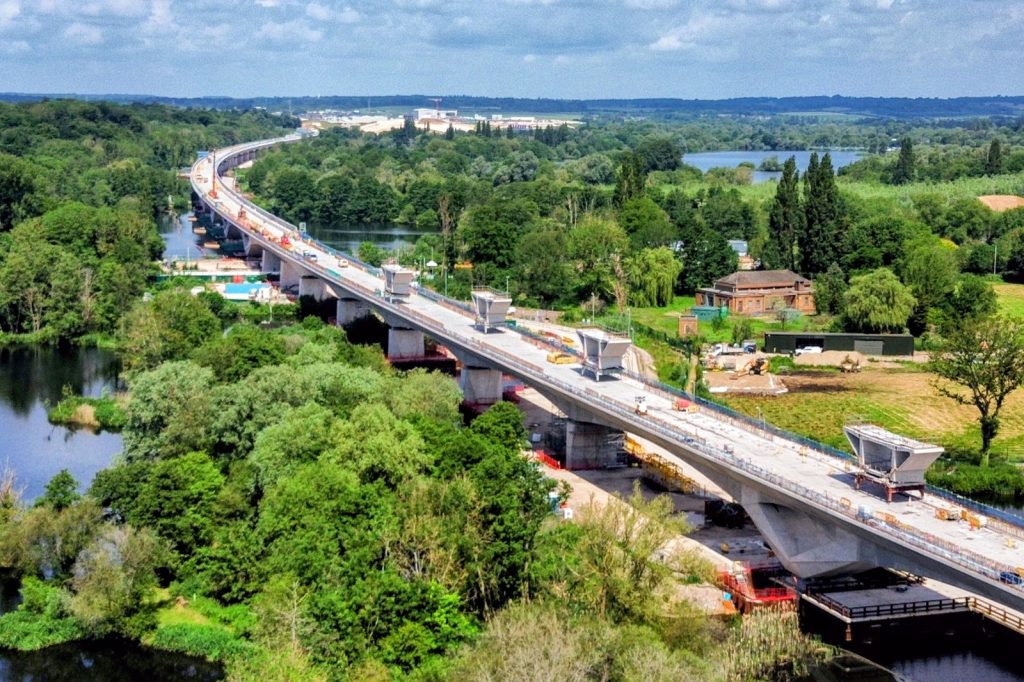
How does a railway triple its price? That was the question hanging over HS2 in the first week of January 2020, when the man brought in to help review the project said the arithmetic had gone badly wrong. Lord Berkeley, deputy chairman of the government’s Oakervee review, put the likely bill at over £108bn for a line priced at £55bn when MPs approved the idea in 2015, and said there was “overwhelming evidence” that costs were “out of control” while the benefits had been oversold. He believed parliament had been misled about the price all along.
The mechanics of the row were unusual. Berkeley had sat on the independent panel set up to advise ministers on whether to build at all, but he withdrew his backing, said the review had been effectively terminated on 31 October, and disagreed with the draft of the official report so completely that he published his own version instead. That dissenting document, he told the BBC, was prompted in part by a feeling that the final report had been unduly influenced by HS2’s promoters, and that HS2 Ltd and the Department for Transport alike had failed to co-operate properly with the review when it tried to test their cost and benefit claims. HS2 Ltd denied the charge and insisted it had given the reviewers its full co-operation.
What researchers found, in his telling, was a project over-engineered for a small country. The official schedule had trains running between London and Birmingham in 2029; Berkeley saw little prospect of that before 2031, with high-speed services not reaching Manchester and Leeds until 2040. “The real cause is [HS2] has been over-designed. You do not need to go 400kph in a country as small as ours… The higher the speed makes a big difference to the cost.” What people actually wanted, he added, was simpler: “People want a reliable, frequent service on which they can get a seat.” His alternative was to build only part of the network and spend the £50bn saved upgrading existing lines in the Midlands and the north, giving those areas the same standard of commuting service as the south east. Northern rail improvements, he told the BBC, mattered more, because, in his words, that is where the really bad railway quality sits, and a complete upgrade could probably be delivered for half the cost of HS2.
The government’s answer was procedural rather than numerical. A Department for Transport spokesman said the Oakervee review had been commissioned to advise on how, and whether, to proceed, with an independent panel representing a range of viewpoints, and that Berkeley’s report represented his personal view. HS2 Ltd went further on the merits, calling the line critical to the UK’s future low-carbon transport network and integral to rail improvement in the Midlands and the North, and said the economic case remained strong.
The north, intriguingly, pushed back hardest. A coalition of northern council leaders and business figures rejected Berkeley’s criticism outright. “We need HS2 and Northern Powerhouse Rail delivered together, in full,” said Sir Richard Leese, leader of Manchester City Council, part of the Connecting Britain campaign, who called the line a once-in-a-generation chance to transform capacity and level up communities across the North. He added a barb of his own: “We don’t much appreciate being told by a peer, who divides his time between London and Cornwall, what the North wants.” The critics had their say too. Penny Gaines, chair of Stop HS2, said the case for the project had always been poor and was getting worse, and that “It is time for this white elephant of a project to be cancelled as quickly as possible.” Greenpeace’s John Sauven said protecting ancient woodlands had to take priority in any rail build-out if the government’s climate talk meant anything.
For all that, the building went on. Construction had begun at Euston, and Foreign Secretary Dominic Raab, asked on Sky’s Ridge On Sunday whether the government was still committed, said yes: the prime minister had made that clear, with the review under way to find the best value for money and the best connectivity, east and west as well as north. Panel members had told the BBC in November that the draft report recommended building HS2 with only minor alterations, trimming the planned service from 18 to 14 trains per hour, in line with other high-speed networks. The Times reported the same draft warned of large ticket price rises to manage peak demand if the line did not go ahead.
Sources
- HS2 | DfT slams review deputy’s £170bn cost estimate as ‘baseless’ and ‘false’ | New Civil Engineer
- HS2 costs out of control, says review's deputy chair – BBC News




