
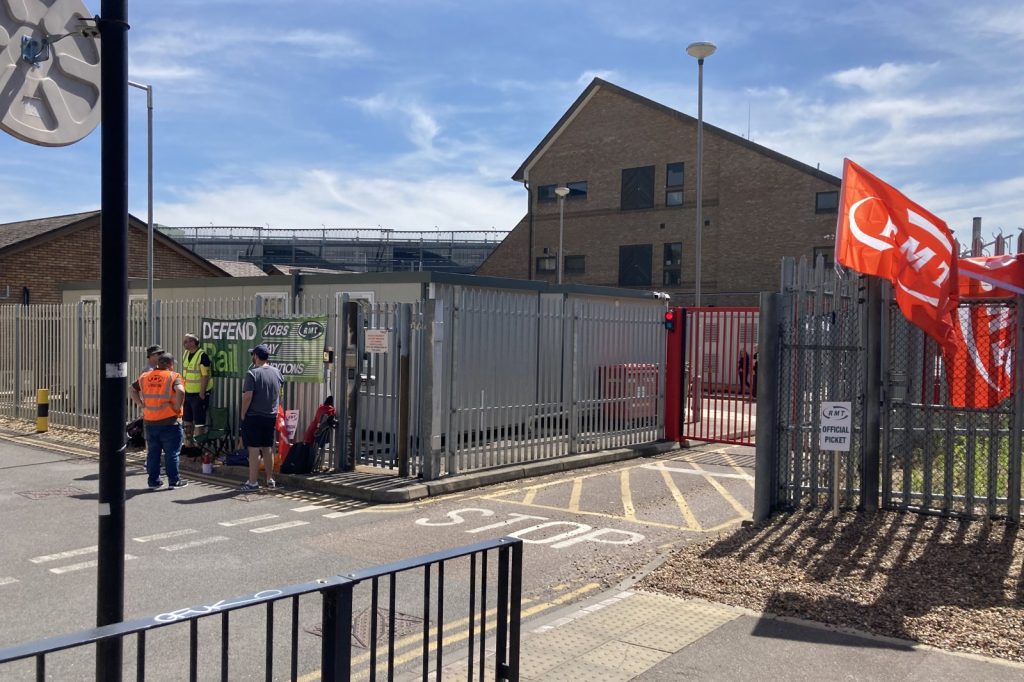
Long queues built at bus stops on the edge of London shortly after 6:00 am on Tuesday, June 21, 2022. Many people gave up. The buses were already full and kept driving past.
It was the first of three RMT strike days that week, billed as the biggest on Britain’s railways in more than three decades. More than 50,000 RMT members walked out after last-ditch talks broke down on Monday, AFP reported. Stations on the rail network and the London Underground, normally packed at rush hour, were deserted or locked.
A railway at one in five
Only about 20 percent of services ran and half of all lines were closed. Network Rail staff were joined by workers from 13 operators, Metro reported, and the knock-on effects of strikes on June 21, 23 and 25 were expected to last until Sunday. Tube workers staged a separate 24-hour stoppage on the Tuesday. The RMT said it was the biggest dispute on the network since 1989.
The union’s case was simple. Wages had not kept up with UK inflation, which had reached a 40-year high. General secretary Mick Lynch called below-inflation offers from both the train operators and London Underground “unacceptable.” Cab firms reported a surge in demand. Thousands of teenagers taking national school exams were hit too, and the Glastonbury music festival faced disruption.
The public was split. A snap YouGov survey put 37 percent in favour of the strikes and 45 percent against.
Politicians dig in
Transport Secretary Grant Shapps said he “deplored” the walkouts and compared them to the “bad old days of the 1970s.” The people being hurt, he told Sky News, were those who had to turn up for work, “maybe on lower pay, perhaps the cleaners in hospitals.” Prime Minister Boris Johnson urged “the union barons to sit down with Network Rail and the train companies.” The government’s position was that private operators and unions had to settle it between them.
Lynch gave no sign of backing off. He told the Financial Times: “Until there is a settlement there will be a campaign of strike action, and other unions will join us.” The RMT warned the action could continue until Christmas, and an RMT source said it held a mandate for six months.
Other unions waiting
Rail was not the only front. Aslef members were due to strike later in June at Hull Trains, Greater Anglia and Croydon Tramlink. The Transport Salaried Staffs Association was balloting at four companies. Teachers in the National Education Union, 450,000 strong, had warned of a walkout over a 3% pay offer. The Criminal Bar Association had voted to strike from the following week over legal aid funding. Civil servants, BT engineers, postal workers and traffic wardens were also on the summer strike watchlist.
The Bank of England expected inflation to reach 11% by the end of the year. Ministers and some leading economists argued for wage restraint, warning that big pay deals would feed inflation and prolong the squeeze on low earners.
Sources
- Commuters Stranded As UK Hit By Biggest Rail Strike In Over 30 Years
- Rail strike: RMT threatens to continue train walkouts until Christmas




