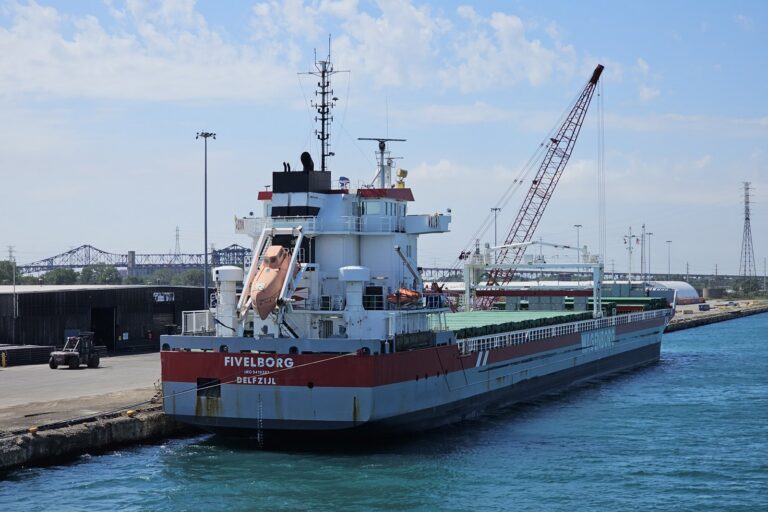
Since July 22, vessel traffic through Ukraine’s Black Sea ports has largely stopped. Grain exports in the first two weeks of August fell 75 percent compared with the same period of 2025, according to an analysis from the Center for Strategic and International Studies. Russia’s own grain terminals are not working normally either.
The war at sea has reached grain on both sides. CSIS called the recent attacks on shipping and export infrastructure in the Black Sea and Sea of Azov an escalation not seen before in agriculture-related strikes.
What each side has hit
Ukrainian officials say Russia has attacked at least 57 cargo vessels in the Black Sea since June, some carrying Ukrainian grain. Russia has also stepped up drone strikes on Ukrainian railways and regularly hit the Danube ports of Izmail and Reni. Ukraine’s Black Sea ports used to handle about 90 percent of its agricultural exports.
Ukraine has answered with attacks on Russian ports. Officials in Kyiv say Ukrainian forces struck 76 vessels between July 6 and July 11. In mid-July Russia suspended exports through the Don-Azov Channel; the Sea of Azov handled roughly a quarter of its wheat exports. A strike on the Taman port’s grain terminal followed on July 29, and a sunflower oil plant there was hit the next day. On August 12 Ukraine struck Novorossiysk, which accounts for 40 percent of Russian grain exports, and halted all three of its grain terminals. CSIS says Russia’s only operating Black Sea port is now the secondary port of Tuapse.
CSIS estimates Ukraine’s attacks have removed about 70 percent of Russia’s grain export capacity. Russian strikes took roughly 90 percent of Ukraine’s grain shipments offline.
Prices and detours
Russia usually ships an average of 5 million tons of wheat in August. Estimates for this August run from 3.0 million to 1.5 million tons, a drop of as much as 70 percent. Ukraine’s August exports are expected to reach about a third of last year’s level.
Russia and Ukraine together supply about 27 percent of the world’s wheat exports, according to the U.S. Department of Agriculture. Wheat futures on the Chicago Board of Trade have reached their highest level since 2023. The UN Food and Agriculture Organization’s index put world wheat prices 15 percent higher in August than a year earlier. Drought and El Niño are cutting crops at the same time, and the USDA expects the top seven exporters’ combined output to fall 11 percent in the 2026/2027 marketing year.
Alternative routes exist, but they are small. Ukraine’s agriculture minister says rail, road and the Danube could handle only half of what the Black Sea ports did. Record-low water levels on the Danube are making it worse, forcing barges to carry lighter loads. Russia is rerouting grain toward the Baltic, where volumes could approach 10 million tons, about a fifth of the 46 million it shipped through its southern ports in the 2025-2026 season. It has also paused export duties on wheat, barley and corn through the end of the year. CSIS says the disruption could cost Ukraine’s farm sector up to $3 billion.
On August 13, Ukraine proposed through a third party that both sides halt attacks on civilian targets in the Black Sea. Russia dismissed the offer the next day. President Volodymyr Zelenskyy said Moscow wants to extend a ceasefire on grain ships to cover its energy infrastructure, without offering to stop attacking Ukraine’s energy system.
Sources
- How Do the Latest Black Sea Attacks Affect Global Food Security?
- Grain Prices Rise on Black Sea and European Supply Pressure