
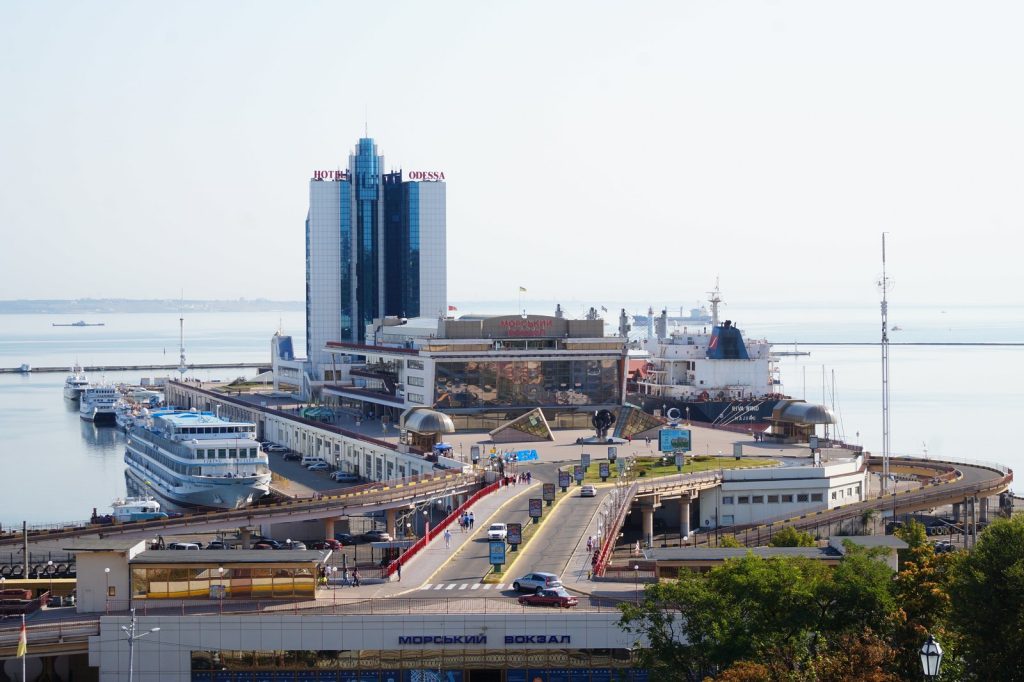
“Today zero vessels passed through Ukraine’s Black Sea maritime corridor, right at peak harvest.” That was Acting Foreign Minister Andrii Sybiha, and he did not soften it. “Russia is holding global food security hostage,” he said, calling the timing “deliberate economic and humanitarian terror.”
The corridor is the protected sea route Ukraine built for itself after Russia pulled out of the Black Sea Grain Initiative in 2023. It has since carried more than 197 million tons of cargo, over 117 million tons of it grain. This summer it went nearly idle.
Ships hit, calls suspended
Russian missile and drone strikes on Ukraine’s deep-water ports and on commercial shipping have intensified in recent weeks, with the Odesa region’s main terminals the focus. Between June 20 and July 20, Ukrainian officials reported 28 civilian vessels struck and 21 people killed.
The worst single incident came on July 19. A Russian missile hit the Golden Leo, a Turkish-owned bulk carrier flying the Guinea-Bissau flag, shortly after it left the Odesa area loaded with grain. Ten crew members died. Other foreign-flagged ships were damaged in strikes on port infrastructure at Odesa, Chornomorsk and Mykolaiv, and Maersk and Hapag-Lloyd suspended services via Chornomorsk.
Agriculture Minister Taras Vysotskyi confirmed that vessel calls had stopped as of July 22. “This is a decision made by the shipowners,” he said, stressing that Kyiv had imposed no restriction. President Volodymyr Zelenskyy put it more bluntly: “They will do everything to block our grain corridor. Yesterday, not a single vessel was able to enter our port. They attacked all the ships.”
Moscow says it is hitting vessels that support Ukrainian military logistics. Russia’s Defense Ministry reported strikes on dry-cargo ships, fuel storage and loading facilities it called military-related.
What the loss means
Traders and the Ukrainian Agrarian Council say Ukraine has lost roughly one-third of its prewar grain-export capacity through these ports. Monthly throughput is estimated to have dropped from about 6 million tons to around 4 million. Before the full-scale invasion, Ukraine supplied roughly 10 percent of global wheat exports, 15 percent of corn exports and more than 45 percent of sunflower oil exports.
Danube ports and rail offer other routes, and Ukraine has asked for an urgent UN Security Council meeting. Officials admit neither can fully replace deep-water capacity. Longer overland routes cost more, and the strain could reach farmers through lower domestic prices.
Ukraine is hitting back at sea. Under Operation MoLoChKa, its drones have gone after Russian-linked vessels in the Sea of Azov and the Black Sea, and Kyiv claims strikes on nearly 200 ships since early July. Russia answered with restrictions on navigation through the Kerch Strait and the Sea of Azov. The consultancy SovEcon says that cut projected Russian wheat exports by about one-third in July.
Arsenio Dominguez, Secretary-General of the International Maritime Organization, condemned the attacks on civilian merchant ships and said they endanger seafarers. Andrii Klymenko, who heads the Black Sea and Baltic Strategic Research Monitoring Group, reads the shipowners’ pause as a risk assessment rather than a permanent exit from the route.




