
China ran a $1.1 trillion trade surplus in 2025, according to figures cited by the Council on Foreign Relations, even after the steepest tariffs in modern US-China history. Over the same year, US trade with China, imports and exports both, fell by more than 25 percent, Peterson Institute research found. Tariffs cut the flow. They did not close the gap.
The US side of the ledger
The United States still runs a $202 billion goods deficit with China, its largest with any country, though the lowest in two decades. It also posted a $33 billion services surplus with China in 2024, which several experts say shrinks the overall shortfall. Many economists doubt that trade deficits hurt an economy at all, and warn against trying to “win” a bilateral relationship.
The two economies are too large to treat as an afterthought. Together they made up 43 percent of world GDP and nearly 48 percent of global manufacturing output in 2023, according to the World Bank. China is the third-largest export market for American goods, above $195 billion in 2024, and holds about $760 billion in US Treasuries, second among foreign creditors to Japan.
How it got here
Washington and Beijing normalized relations in 1979. China joined the World Trade Organization in December 2001 on condition of sweeping reforms, including steep tariff cuts, intellectual property protection and transparency. US goods imports from China rose from about $100 billion in 2001 to more than $400 billion in 2023. Chinese factories assemble goods from components sourced across Asia, which is part of why the numbers grew so large. Economists Xavier Jaravel and Erick Sager found in a 2019 study that cheaper Chinese goods raised the average US household’s purchasing power by $1,500 a year between 2000 and 2007. China’s economy has grown more than five-fold since 2001, adjusted for inflation.
The costs landed on American workers, through import competition, automation and companies moving production overseas. Many in Washington also expected China to open up after joining the WTO. Those reforms did not materialize.
Tariffs and what they changed
The trade war began in 2018, when the US deficit with China peaked at more than $377 billion. Trump promised tariffs would shrink it, bring back factory jobs and force reforms on China’s trade practices, including intellectual property theft. Few of those promises materialized; studies found US companies bore most of the cost. Phase One, the 2020 deal, committed Beijing to buy an additional $200 billion of US goods, which it failed to do. Biden kept some $360 billion in tariffs, quadrupled those on Chinese electric vehicles and added export controls on advanced chips.
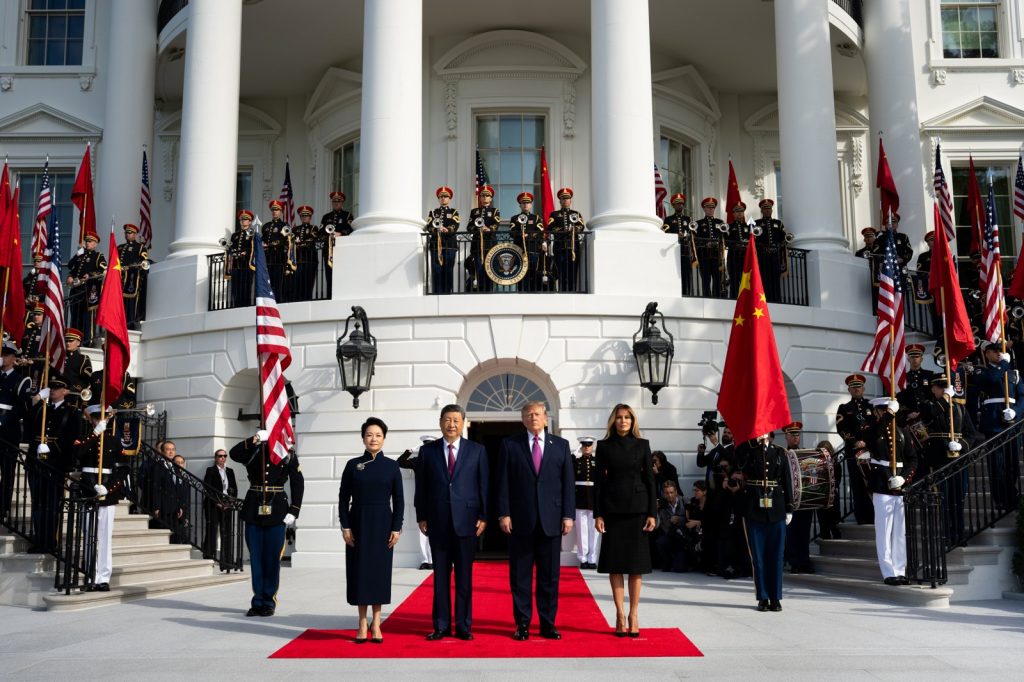
Trump’s second term pushed further. By April 2025 US tariffs on Chinese goods hit 145 percent and China’s on US goods 125 percent. Trump and Xi met in South Korea that October and extended a trade truce by a year. By the end of November the rates were down to 30 percent and 10 percent. After the Supreme Court struck down his emergency tariffs in February 2026, Trump imposed a 10 percent across-the-board tariff for 150 days. Trump and Xi met again in Beijing in May, the first visit there by a sitting US president in nearly a decade, with few breakthroughs. China agreed to buy 200 Boeing jets.
Inu Manak, a senior fellow at the CFR, says the tariffs largely fail to cut China’s exports. Production moves to other countries, and the US ends up buying Chinese goods through partners such as Mexico and Vietnam.




