
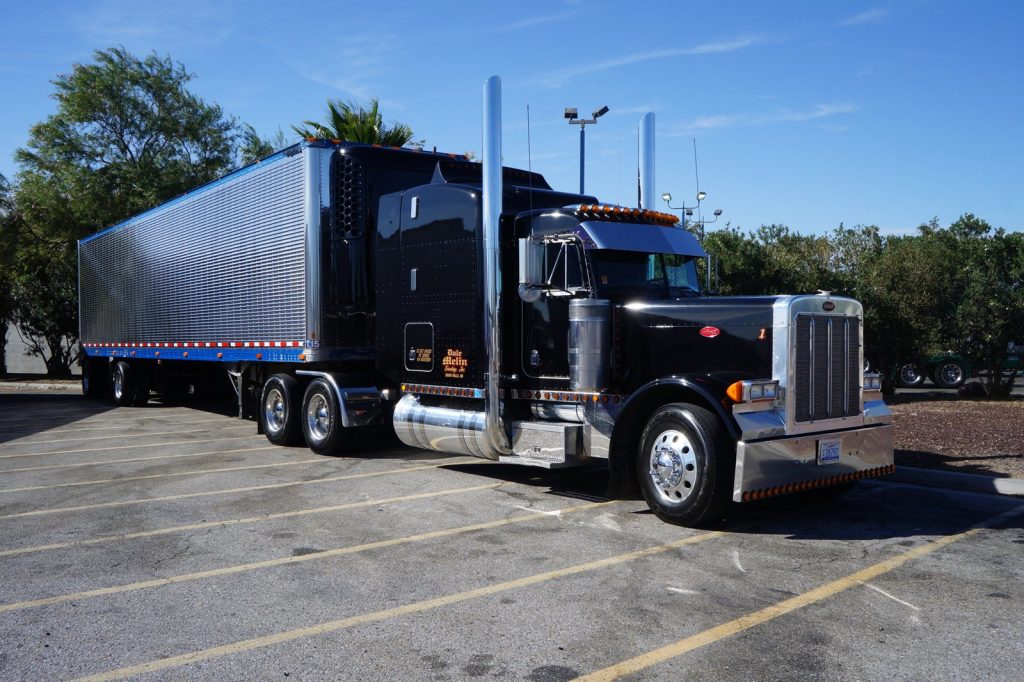
HENDERSON, Nevada, September 27 — The trucks were supposed to do the work. Investors put up the money, the pitch went, and the freight would move itself into their bank accounts. Federal prosecutors say it didn’t work that way.
Kristopher Lunsford, a Henderson resident, has been charged in a federal indictment with six counts of wire fraud and two money laundering charges over a semi-truck investment scheme that raised more than $105 million, according to the indictment. Hundreds of people bought leases expecting passive income from commercial trucking operations, investigators allege.
Participants typically invested between $25,000 and $40,000 for each vehicle, according to the federal indictment, and were promised guaranteed weekly payouts ranging from approximately $1,000 to $1,250. Lunsford represented that he would purchase equipment, hire drivers, secure insurance, and operate each unit. Under the arrangement, customers performed no work while expecting profits generated through freight activity.
A bigger case in the civil courts
The criminal case is not the only one. The U.S. Securities and Exchange Commission filed a separate civil action against Lunsford, AKL Transport, and Southern Truck Leasing. Regulators claim those defendants raised at least $127 million between May 2023 and May 2025 — a broader period that begins months before the criminal indictment’s timeline, which starts in December 2023.
Many participants lived around Tampa, Florida, although the program reached people nationwide. The SEC describes an operation covering approximately 765 investors across the country.
The businesses represented that they owned and operated approximately 2,000 trucks, and customers expected $1,250 weekly for each vehicle across a five-year investment term. Regulators calculated that promised return at about 260% annually. Their complaint contends the claimed fleet size “was materially overstated.” The businesses also represented that investor funds would purchase discounted commercial semi-trucks, and that the operation would find drivers, source cargo loads, obtain insurance, and maintain equipment.
Participants believed transport fees charged to carriers generated their returns, according to regulators. The SEC instead claims new deposits funded earlier payouts through a Ponzi-style structure.
Where the money went, by two sets of numbers
The Department of Justice claims Lunsford and others solicited more than $105 million from December 2023 through May 2025. Investigators contend approximately $75 million from newer participants went toward earlier payouts. More than $25 million funded personal enrichment, including real estate, sports cars, jewelry, and luxury purchases.
Only approximately $2 million supported business expenses and operations, according to prosecutors. The SEC’s broader civil case arrives at different totals.
Regulators claim roughly $52 million, about 40% of deposits, went toward earlier investors. They also accuse Lunsford of misappropriating approximately $33 million for personal use. Spending included nearly $10 million in cash withdrawals and roughly $6.2 million for travel, bars, and nightclubs.
The two tracks now run in parallel — a criminal wire fraud and money laundering case, and a civil action seeking to account for a far larger pool of money across a longer stretch of time. What to watch next is whether the civil and criminal timelines are reconciled in court, and how the roughly 765 investors named in the SEC complaint are treated as both cases proceed.




