
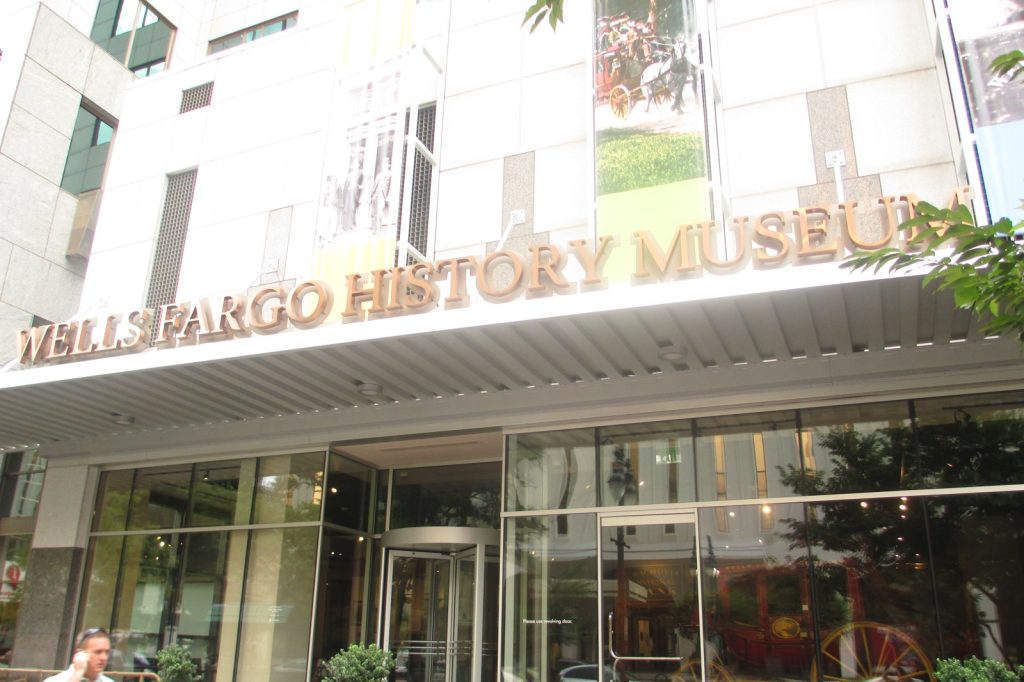
The final Wells Fargo History Museum in San Francisco permanently shut its doors on February 28, 2025, marking the end of a corporate museum network that once spanned twelve cities across the United States. The closure concludes a trajectory that began in 1927, when the company established the Wells Fargo History Room in San Francisco.
Initially restricted to employees, the space opened for public tours eight years later in 1935. At its peak, the museum system included locations in multiple American cities, with the San Francisco flagship occupying two floors of the company’s longtime headquarters. Visitors to the San Francisco museum could view original stagecoaches—authentic vehicles that transported people, mail, and gold across rugged Western terrain—alongside gold nuggets, mining artifacts, and exhibits on the Pony Express and telegraph systems.
Historic banking items and photographs documented the company’s evolution from a frontier express service into a national financial institution. The contraction began in 2020, when Wells Fargo closed eleven of its twelve museums.
Only the San Francisco location remained operational for another five years. That wave of closures effectively dismantled a collection of corporate museums that had been built over decades. The exhibits offered a tangible link to the development of the American West.
Gold nuggets and mining artifacts illustrated the role of mineral wealth in regional growth. Pony Express displays connected visitors to a brief but legendary chapter of history—a mail service that operated for only 18 months yet became a lasting symbol of the frontier era.
Corporate history museums are uncommon, requiring companies to fund non-revenue-generating operations indefinitely. Wells Fargo maintained its museum for nearly a century, from a private room in 1927 through public operations starting in 1935, until the final closure. The loss is significant for those interested in Western banking and transportation history.
The museum provided a physical connection to an era when stagecoaches represented the fastest means of moving money across the continent. Telegraph exhibits demonstrated how communication speed increased, and banking artifacts showed institutional change over time.
Photographs and videos cannot replicate the experience of standing beside an original stagecoach and observing the wear on its wood and iron components. The museum offered that direct encounter. Now it is gone.
The stagecoaches, gold nuggets, and Pony Express relics are presumably in storage or on loan, but they are no longer on public display. The two floors of the headquarters that housed them sit empty of visitors.
The company that began with a history room in 1927 now has no history museum at all.




