
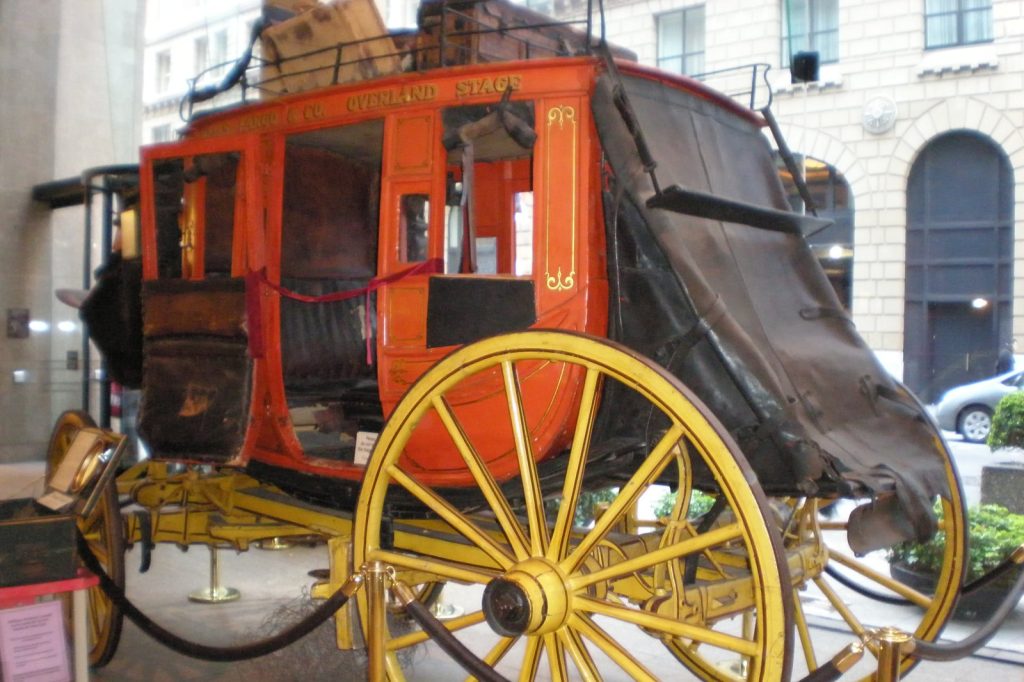
The announcement, when it came in late 2024, arrived quietly: Wells Fargo would close its San Francisco history museum in early 2025, a decision landing 90 years after the History Room it grew from welcomed the public in 1935. For the city’s history circles, the careful question that followed was less about the building than about everything inside it, and whether a collection built over generations stays visible after the doors shut.
The institution had deep roots. The original History Room was established at the bank’s 30 Montgomery Street branch in 1927 and opened to the public eight years later, then moved to 420 Montgomery Street in 1962. In 1978 Wells Fargo created a full History Department staffed with academically pedigreed historians, among them the late Robert J. Chandler, hired that year fresh from a doctorate at UC Riverside and retired only in 2010, after 32 years as a bank research historian. A major 1986 expansion and redesign rebranded the Montgomery Street room as the Wells Fargo Museum, the flagship of what became a 12-museum enterprise.
What is encouraging, for those watching the trend line, is that the closure surprised no one who had been paying attention. Wells Fargo shuttered the other 11 museums in September 2020, with a spokesperson saying at the time that “museums do not align with our go-forward strategy as a company.” From a hard-nosed financial view, as one historical organization put it, running a free, double-height museum in choice street-level real estate on Montgomery Street for 60 years was almost madness; only the timing of the last domino was in question.
The careful reading here is to note the distinction: what was on public display was only a fraction of the larger Wells Fargo collection, which reaches well beyond corporate documents into artifacts of 19th-century San Francisco, California and the United States. Closing the museum does not by itself threaten those items; it mainly pushes them into storage or toward other display spaces. The real opportunity, observers argue, is for the bank to decide openly what of the collection to keep and what to relinquish, and there is precedent: when the other museums closed in 2020, Wells Fargo ultimately donated significant portions of those holdings to local museums and historical societies with compatible missions.
The most pointed stake involves Emperor Norton, the eccentric 19th-century San Francisco figure. For many years one of his promissory notes, signed 12 June 1878, sat in a glass case at the museum beside a small scrap of paper bearing his signature; the note itself was a bond form printed by Charles Murdock, and until the closure anyone could walk in on a weekday to see it. The collection also holds an extremely rare hand-painted 1877 statuette of the Emperor by Herman J. Brand, of the kind Norton himself kept in his room at the Eureka Lodgings. The Emperor Norton Trust, which raised the alarm, argues the bank should donate such items to San Francisco institutions: the notes to the public library’s San Francisco History Center, which conserves ephemera, has room for researchers and already holds Norton material, and the statuette to the San Francisco Historical Society, housed near the Eureka’s former site. The California Historical Society, which owns several Norton notes, is a harder case: for 15 months its San Francisco galleries and its North Baker Research Library had sat closed and in limbo, with no donations coming in and no near-term reopening plan.
The worry is not loss but orphaning. Once artifacts reach the auction market, the provenance trail tends to go cold and becomes “inside info” known mainly to collectors and dealers, with the items themselves effectively “disappeared.” The Trust asked for one thing above all: that any dispensation of the Norton artifacts, whether donated or sold, be a matter of public record.
Sources
- Whither the Emperor Norton Memorabilia in the Wells Fargo Collection? | The Emperor Norton Trust
- Wells Fargo Museum San Francisco: Gold Rush History (Perm…




