
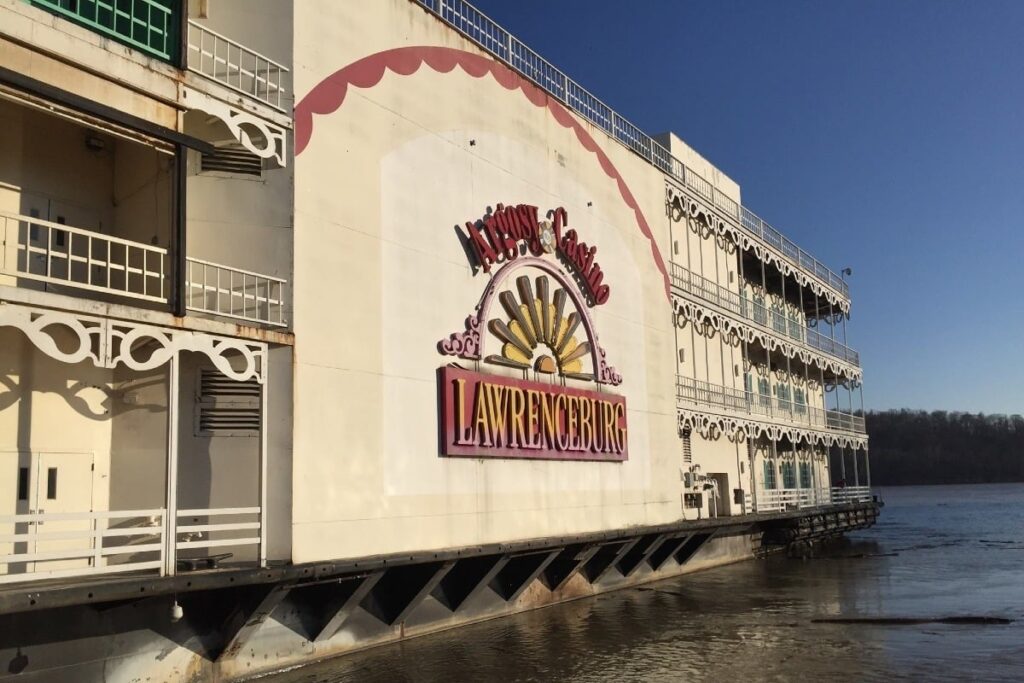
A 408-foot vessel that once reigned as the world’s largest riverboat casino has been intentionally submerged off the Alabama coast, marking the latest addition to the state’s artificial reef system. The Argosy VI, which operated in Lawrenceburg, Indiana, along the Ohio River until 2009, was sunk on July 1 in a controlled operation. The four-level boat, which boasted capacity for up to 4,407 people and more than 1,700 slot machines at its peak, now rests on the Gulf floor, where it will gradually transform into a marine habitat.
The Alabama Department of Conservation and Natural Resources oversaw the sinking. Video footage captured the massive vessel slowly taking on water before disappearing beneath the surface.
The department has prior experience with such projects: it sank a 271-foot retired coastal freighter in 2013 and a 250-foot former research vessel in 2018. Each artificial reef addition creates new underwater structures that attract fish and support marine life.
From Riverboat Landmark to Underwater Reef
The Argosy VI’s journey from a floating casino to an artificial reef reflects the broader history of riverboat gambling in the United States. Riverboat casinos emerged in the late 20th century as states sought to expand legal gambling while navigating regulations that often confined such activity to navigable waters. Indiana legalized riverboat gambling in the early 1990s, leading to the launch of several vessels, including the Argosy VI, which became a prominent fixture in Lawrenceburg along the Ohio River.
These floating entertainment venues typically featured multiple decks with gaming floors, restaurants, and event spaces, and were designed to operate as mobile attractions. For communities across the Ohio River valley, the Argosy VI was far more than a gambling destination.
It served as a landmark where families celebrated milestones and visitors from across the region gathered for entertainment. The vessel, one of the earliest and most recognizable symbols of the riverboat era in the Greater Cincinnati area, operated until 2009. Its sinking into Gulf waters represents the close of a chapter tied to the region’s social and economic history.
Ecological and Economic Impacts in the Gulf
The transformation of the Argosy VI into an artificial reef carries implications for both marine ecosystems and local communities. The Alabama Department of Conservation and Natural Resources’ artificial reef system attracts fish, which in turn supports local fishing families and small businesses that depend on healthy waters.
This includes Filipino communities working in Gulf Coast fisheries and tourism, who benefit from the renewed marine ecosystem the reef creates. As the structure settles into the Gulf’s underwater landscape, it will slowly become covered with coral and other marine growth, providing habitat for generations of sea life. The sinking highlights the shifting lifecycle of large commercial assets: once a hub of activity and commerce, the Argosy VI now serves an environmental conservation purpose.
For the families across the region who once walked its decks, the vessel’s final role is a testament to how former industrial structures can find new life underwater, supporting the ecological and economic vitality of the Gulf Coast.




