The Mechanics of a Low-Cost Empire
Samsic, the family-owned French facilities group, has built a €4.1 billion business on 155,000 employees across 27 countries. Two of those employees died within six weeks of each other this summer, and the pattern behind both deaths points to the same mechanism: safety costs pushed down the chain, and deregulation that lets them stay there.
The company was founded in Brittany in 1986 by Christian Roulleau and is still controlled by the family, now through a holding company called F.F.R. Roulleau handed day-to-day direction to his son-in-law, Thierry Geffroy, in January 2019. The core business is facility management: cleaning, security, green spaces, maintenance, logistics, reception and temporary staffing. Samsic describes itself as France’s second-largest cleaning company, its seventh-largest security firm and its eighth-largest staffing company.
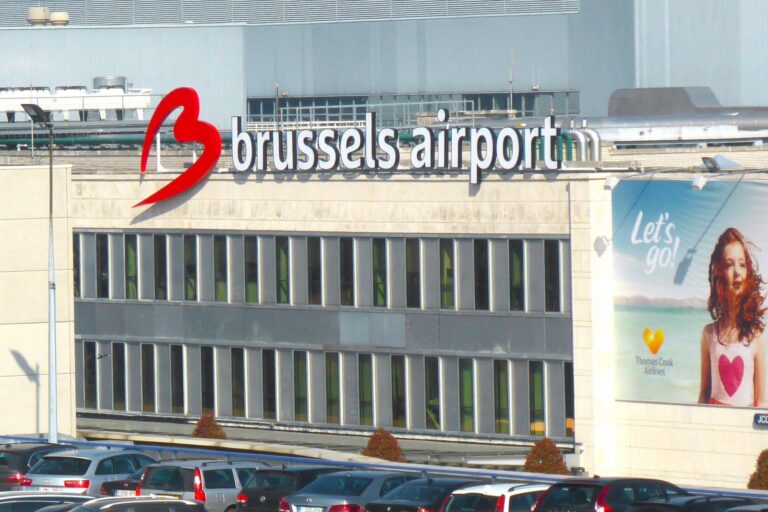
Aviation is the smaller vertical, but it is the one growing fastest and the one where the model’s costs are most visible. Samsic Airport employs roughly 8,000 people, generates €460 million in revenue and operates at 33 stations, from Paris-CDG and Orly to Montreal, Toronto, Vancouver, Chicago O’Hare and San Francisco, plus Doha, Lisbon, Zagreb and Belgrade. North America accounts for more than 30 percent of Samsic Assistance’s revenue. Division revenue has grown by roughly 250 percent since 2021, and the group targets a 35 to 40 percent North American share by the end of 2027.
Two Deaths, One Playbook
On August 24, Oscar Robayo, 39, a ramp agent for Samsic Assistance Canada, was crushed by the nose gear of a French Bee Airbus A350 during a routine pushback at Montreal-Trudeau. Reporting by the World Socialist Web Site, based on interviews with Samsic employees and a whistleblower’s account, established that Robayo was made to work without the extension cable that would have kept him at a safe distance from the aircraft. Ramp equipment was in what employees described as a state of generalized disrepair. Safety complaints had been raised repeatedly, and ignored by both Samsic and government regulators.
Six weeks earlier, on July 13, Hafida Drici, 53, a CGT delegate with twenty years’ service, was crushed by a runaway bus on the tarmac at Paris-Charles-de-Gaulle. She worked for Samsic Assistance Shuttle, another subsidiary of the same group. Drici had stepped out of a stationary bus to greet a colleague when the vehicle began to move and pinned her against another bus. L’Humanité reported that the bus was a 2008 model from the company’s retired fleet, returned to service after newer buses broke down. Brake defects had been reported to the Drieets, the French labour inspectorate, during a month-long strike in April 2026. The same brake warning that appeared on the bus used in Drici’s death had been ignored.
The catch is that neither death fits the “isolated accident” framing that followed each. The same company, the same cost discipline, the same complaints logged and not acted on, in two countries on two continents within six weeks.
How the Canadian Entry Was Financed
Follow the money into Canada and the mechanics become clearer. Samsic used the pandemic downturn in airport employment, plus favourable federal regulatory changes, to expand rapidly at most of the country’s main airports. In February 2023, an Aéroports de Montréal committee of airline representatives re-awarded the ground-handling licences at Montreal-Trudeau. Swissport was dropped, with roughly 195 jobs eliminated. The licences went to two newcomers, Menzies Aviation and Samsic Assistance, plus a renewal for the incumbent TSAS, a subsidiary of Avjet. Workers had to reapply for their jobs at lower wages, losing seniority and benefits. Samsic began operations at the airport in May 2023.
The ground for that kind of subcontracting was laid in the 1990s, when the Liberal government allowed nonprofit airport authorities to take over operations at Canada’s major airports and subcontract ground services to third parties. The semi-privatisation pushed labour costs off the balance sheets of the airport operators and onto contractors competing on price.
Ottawa’s later attempt at correction illustrates how deregulation survives its own reforms. After years of complaints from unions and workers about deteriorating conditions and safety, Justin Trudeau’s Liberal government announced a reform to section 47.3 of the Canada Labour Code, presented as protection against low wages. The 2021 change nominally required a subcontractor to pay the same remuneration as its predecessor after a service contract changed hands, a process known as “contract flipping.” But the rule was made all but irrelevant by the government’s refusal to order a new subcontractor to respect seniority rights. Wage parity on paper, no protection for the experience that keeps a ramp safe.
The equipment tells the same story. A cable that keeps a worker clear of a moving aircraft is a small line item. A 2008 bus pulled out of retirement because newer buses broke down is a capital expense deferred. Multiply those deferrals across 33 stations and the savings are real; so is the exposure carried by the people on the tarmac.
The Family Balance Sheet
Samsic’s expansion has been debt-funded. Through F.F.R., the Roulleau family holding company, the group borrowed aggressively in the form of bonds and loans to buy up competitors. That is the financial engine behind the 250 percent growth in the airport division since 2021 and the North American push. A leveraged roll-up needs margin, and in labour-intensive services margin comes from wages, staffing levels and maintenance schedules.
There is nothing hidden about the arithmetic. The group’s €4.1 billion in 2025 revenue rests on 155,000 employees, most of them low-paid and many of them working at client sites where the contract goes to the lowest bidder. The aviation division’s €460 million is a fraction of group revenue but a disproportionate share of the reputational and legal risk, because airport work puts people next to aircraft, buses and heavy equipment every shift.
On October 6, aviation workers from across Canada voted to establish the Aviation Workers Rank-and-File Committee and to launch an independent workers’ inquiry into Robayo’s death. That inquiry is now the most concrete accountability mechanism in play on the Canadian side. In France, the brake defects reported to the Drieets during the April strike are a matter of record, as is the warning that reappeared on the bus that killed Drici.
Read together, the two files describe a company that treats safety complaints as a cost of doing business and regulators as a variable to be managed. The group’s own positioning, second in French cleaning and seventh in security, is a statement about scale in low-margin, labour-heavy markets. The airport division is where that scale meets the sharpest physical risk, and where the deferred cable and the unretired bus become a line in a coroner’s report rather than a saving on a spreadsheet.
The next marker is the Canadian workers’ inquiry set in motion on October 6. Its scope covers the death of one ramp agent at Montreal-Trudeau. The French file, with a documented brake warning and a bus brought back from retirement, sits alongside it.
Sources
- Samsic’s global operations: A lucrative business based on government deregulation and risking workers’ lives
- Arkéa–B&B Hotels
- Charnwood Lifeline
Photo: Emmanuel Ikwuegbu / Unsplash (Unsplash License)