WTI crude fell more than 7% on hopes for a diplomatic resolution between the United States and Iran, and airline stocks rose across the board on the view that fuel costs would ease, according to Asakabu. The bottom line for investors: fuel is the single line item that decides whether record revenue turns into profit at American Airlines, Frontier and IAG this quarter.
American Airlines: Record Revenue, Fuel Up 67.5%
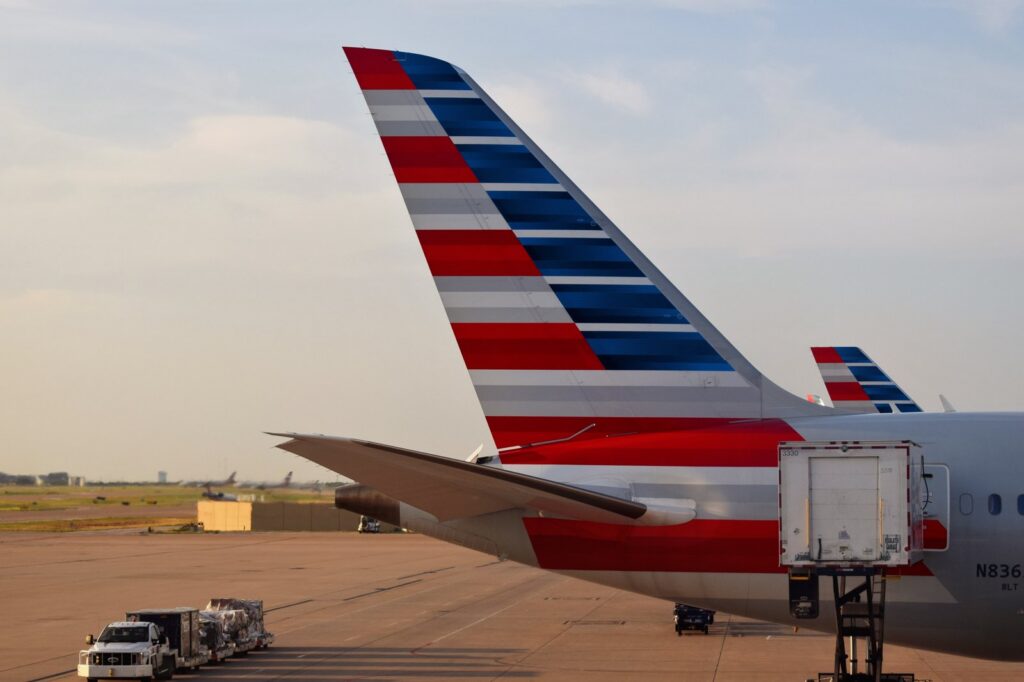
American Airlines posted record third-quarter revenue of $16.34 billion, edging past the $16.21 billion consensus, and an adjusted loss of $0.28 per share that beat expectations for a $0.36 loss. The figure that matters is fuel: expense jumped 67.5% year over year, wiping out much of the benefit from strong demand and pushing the carrier back into the red.
The damage shows below the top line. Fuel alone ran about $4.635 billion for the quarter, and the company swung to a net loss of $269 million, or a basic loss of $0.41 per share, according to Stockstotrade. EBIT margin sits near 2.2% and EBITDA margin only 6%. The balance sheet carries negative equity of about $4.2 billion, long-term debt near $25.9 billion and a current ratio around 0.5.
Demand is not the problem. Premium cabins and commercial tweaks are working, and the loyalty engine is doing more of the lifting. Co-branded Citi/AAdvantage card spending rose 10% in the third quarter, and American flagged more upside from an expanded Citi partnership. From 2027, the Citi/AAdvantage Platinum Select and Business cards will add richer earn rates, protections and perks, alongside an annual fee increase from $99 to $150.
Management plans slower growth and a hard focus on unit revenue into 2027, and remains open to airline M&A with what the company describes as a disciplined but opportunistic strategy. Morgan Stanley, Freedom Broker and Bernstein all cut price targets but kept positive ratings, citing strong revenue trends against stubborn fuel headwinds. The stock has ground higher from roughly $11.65 in mid-October 2026 to about $13.10, a controlled range rather than a breakout.
Frontier: A 53% Revenue Jump, Tempered by Fuel
Frontier Airlines offers the sharpest turnaround story in the group. Third-quarter revenue surged 53% year over year, driven by fare hikes and network changes, but higher fuel costs offset much of the gain. The stock remains a speculative buy with a base case target of $8.94 and 39% upside potential, per Seeking Alpha’s Aerospace Forum, which flags elevated fuel prices and uncertain demand as key risks limiting near-term earnings visibility.
Fleet optimization and loyalty initiatives are expected to drive cost savings and incremental revenue, though execution risk remains. For a carrier whose model depends on keeping unit costs below legacy rivals, every dollar on the crude price feeds straight into the case for or against the turnaround.
IAG: A Global Network Feels Every Twist in Crude
International Consolidated Airlines Group is the clearest example of how a global passenger and cargo network with heavy fuel use feels every twist in crude prices. IAG runs British Airways, Iberia, Vueling and Aer Lingus, with British Airways producing about €17.3 billion of revenue, Iberia €8.1 billion, Vueling €3.3 billion, IAG Loyalty €3.0 billion and Aer Lingus €2.5 billion, on top of a market value of roughly £17.8 billion.
The fleet pipeline is the offset. The ongoing expansion and modernization of the IAG fleet, including a large pipeline of new long-haul aircraft and the transition to 737s at Vueling, is expected to lower fuel and maintenance costs per seat and support group operating margins and earnings, according to the Yahoo Finance screen that highlighted the stock. Investors will note that IAG Loyalty already generates €3.0 billion in revenue, roughly a sixth of British Airways’ total, which cushions the group as fuel swings.
Why Loyalty Is the Profit Pillar Now
Across all three carriers, the card and loyalty businesses are doing work that ticket sales cannot. American’s AAdvantage ecosystem is a growing profit pillar beyond ticket sales, and the 2027 card refresh targets stronger loyalty and better economics. IAG Loyalty’s €3.0 billion revenue line sits alongside the group’s airlines rather than inside them. For readers, the practical effect is that the points and perks attached to a credit card are increasingly where an airline’s margin is made, which is why card fee changes matter as much as fare changes.
The crude move is the near-term swing factor. WTI’s 7% drop on US-Iran diplomatic hopes lifted airlines while energy stocks fell 3.96% in the S&P 500 on November 2, according to Asakabu. The same dynamic hits Asian carriers: ANA Holdings saw final profit decline for the April-September period as it could not offset higher fuel costs with price hikes, the same structure that benefits US airlines when crude falls.
What to Watch Next
The Tokyo Stock Exchange is closed for Culture Day on November 3, and US midterm elections fall between the crude move and the next trading session, leaving airline exposure to be priced on November 4. For American, the next marker is the 2027 card refresh and management’s unit revenue push; for Frontier, it is whether fuel costs stop eating the 53% revenue gain; for IAG, it is how quickly the new long-haul aircraft arrive to cut cost per seat.
Sources
- EVA Air
- 3 Airline Stocks Retail Investors Are Watching As Oil Prices Swing
- American Airlines AAL Stock Balances Earnings Beat And Fuel Pain
- American Airlines Stock Balances Fuel Pain With Card-Driven Upside
- Morning Stocks 11/03 (Tue): Will the Crude Oil Plunge Provide a Tailwind for Airlines? Semiconductors are Sluggish | Japan Airlines, INPEX, Nippon Ham, and 14 Other Stocks|朝株
- Frontier Airlines: The Turnaround Is Working, But Fuel Costs Remain A Risk (NASDAQ:ULCC)
Photo: Radomianin (CC BY-SA 4.0)