The Arab Air Carriers’ Organization expects its members to lose €3.82 billion, equivalent to $4.3 billion, during 2026. Its forecast covers 39 carriers in the Middle East and North Africa.
AACO released the projection as airline leaders met in Doha for the organization’s annual general meeting. The calculation assumes the United States and Israel do not resume large-scale attacks on Iran. Renewed attacks and Iranian retaliation against US allies would make the outlook worse.
Demand, capacity and fuel move together
The association expects passenger demand to fall 10.3% this year after the industry’s strong post-pandemic recovery. Member airlines plan to offer about 4.7% less capacity than last year, with passenger cabins averaging a 77% load factor. Cargo traffic is forecast to contract 5.2%.
Fuel presents another pressure. It is expected to consume 37.3% of AACO members’ operating costs, up from 27.9% in 2025. Across the global industry, the comparable shares are 31.4% and 25.4%, respectively.
Royal Jordanian CEO Samer Majali offered a less hopeful assessment than executives predicting a rapid rebound.
“I’m worried that we will continue like in the last six months,” Majali said. “[The cost of] fuel is the biggest damage, and people are not traveling into the region,” he said. “The uncertainty just continues.”
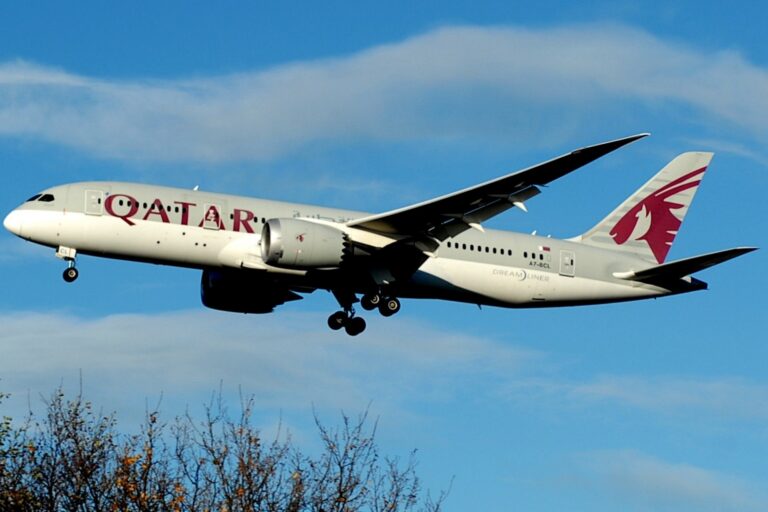
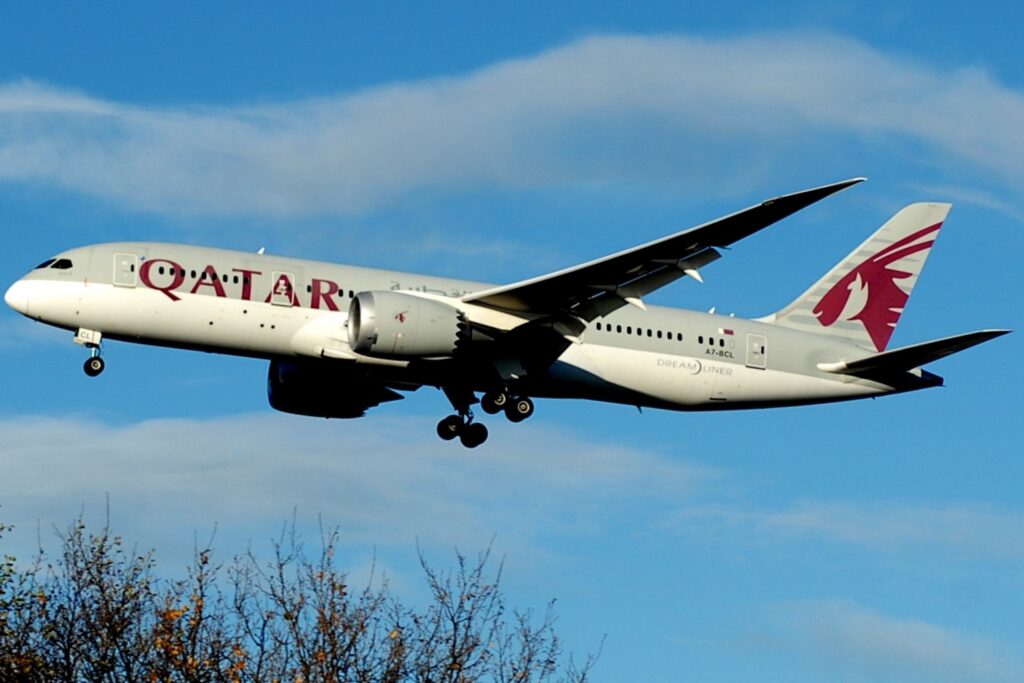
Air Arabia CEO Adel Ali nevertheless expects demand to recover when the conflict ends. Production at Qatar Airways, Emirates and Gulf Air has nearly regained pre-war levels, although profitability remains lower.
Extra fuel and circuitous routes
Airspace closures and diversions have become recurring operating problems. Airlines routinely instruct pilots to carry substantial extra fuel in case they must divert or return to their departure airport.
When the first attacks came, Royal Jordanian aircraft stayed 200 km (108 nm) from missile tracks as sections of national airspace closed and reopened. Majali said lessors and aircraft insurers had raised no issues, even at the conflict’s first peak.
Business responses differ by carrier. Gulf Air is short of capacity for an efficient connecting operation and wants more long-haul aircraft. Over 70% of its passengers make connections in Bahrain. Royal Jordanian continues to build connections through Amman.
Oman Air has taken another route as it reshapes its business. Connecting passengers moving through Muscat now account for just 20%, down from more than 50%.
A dispute over European carbon charges
The Doha meeting also adopted a resolution opposing expansion of the European Union’s Emissions Trading System. At issue is its proposed extension by 2029 to flights leaving the European Economic Area for third countries within a 5,000-kilometre radius of Frankfurt Airport.
Abdul Wahab Teffaha, AACO’s secretary general, said the proposal raises sovereignty concerns and could conflict with the Chicago Convention. He also warned that Arab airlines might pay twice if ETS charges and the existing CORSIA offsetting framework do not recognize each other.
“This is extra-territoriality, trespassing on the sovereignty of others,” Teffaha said.
The EU introduced ETS proposals in 2005. Aviation entered the system on 1 January 2012, but its application to flights to and from non-European countries was suspended later that year.
Global profit, regional losses
AACO expects the worldwide airline industry to remain profitable in 2026, but at a slower pace as energy costs and disruption squeeze margins. Its projected global net profit is around $23 billion, or €20.5 billion. Excluding the COVID-19 period and its aftermath, that would mark a 12-year low.
Results within the Arab group will depend heavily on hub locations and exposure to conflict-affected markets. European expansion remains part of carriers’ plans despite those risks.
Qatar Airways is increasing flights to London Heathrow and Frankfurt. Emirates began a daily Helsinki service in October, adding Finland to a Nordic network that already includes Copenhagen, Oslo and Stockholm.
Emirates Deputy President and Chief Commercial Officer Adnan Kazim said the airline is continuing fleet retrofit work supported by $7 billion, or €6.2 billion, of investment.
Sources
- Arab Air Carriers' Organization
- Arab Airlines Forecast Fast Bounceback If Peace Returns To Middle East | Aviation Week
- Arab airlines to record a collective net loss of €3.82 billion in 2026
- Qatar Airways Hosts Arab Air Carriers’ Organization’s 59th Annual General Meeting
- Dubai and Middle East flight disruption: British Airways resumes Dubai route while airlines continue Saudi suspensions
- AACO forecasts $4.3bn loss for Arab airlines in 2026
Photo: riikkeary (CC BY-SA 2.0)