
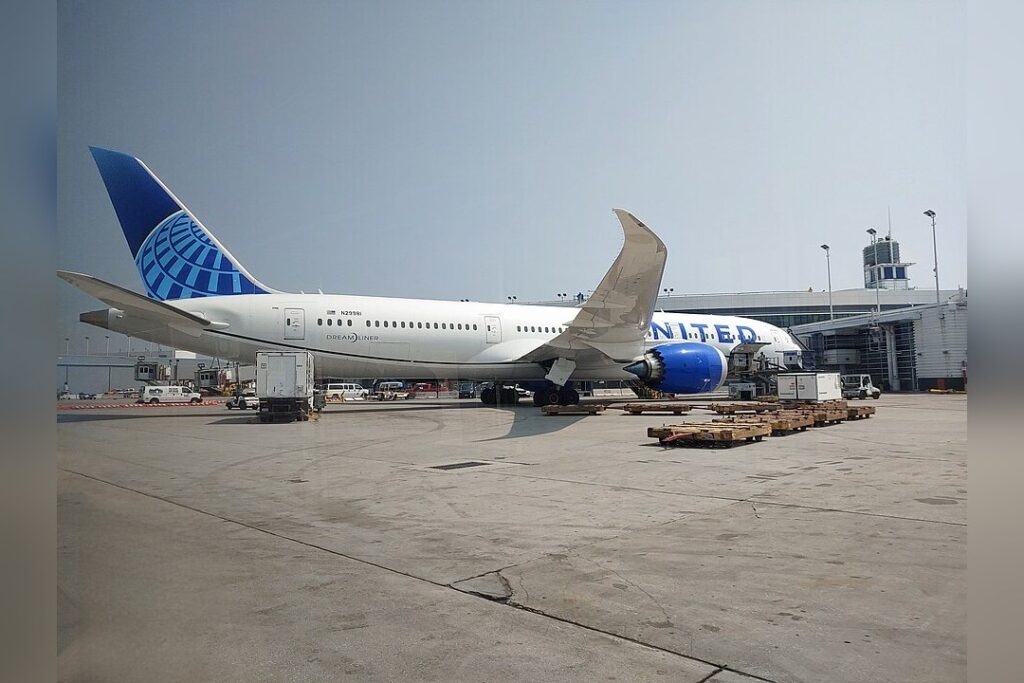
U.S. airline fares rose 25.5% in July from a year earlier. United Airlines Holdings stock has not followed. Shares closed at $114.83 on August 26, up only 2.69% so far this year, while Delta Air Lines has gained 20.64%.
The 25.5% figure covers fares across U.S. carriers, not United’s own ticket prices. United CEO Scott Kirby told Reuters he expects more gradual increases in the first half of 2027 if demand holds. He calls the rises a catch-up: airport fees are up roughly 60% since COVID, and maintenance costs are “off the charts.” He also told investors that “airfares are down still 13% in real terms compared to where they were in 2019.” American’s Robert Isom made a similar point. “The price of air travel remains a bargain,” he said.
What United is reporting
Second-quarter revenue came in at $17.672 billion, up 15.99% from a year ago. Revenue per available seat mile rose 12.1%. Chief Commercial Officer Andrew Nocella said the airline saw “minimal to no negative impact on demand from higher price points.”
Fuel is the drag. Management believes it can recover 80% to 90% of the fuel increase in the third quarter and all of it by the fourth. That is a target, not a promise.
The valuation gap
United trades at 11 times forward earnings. Delta trades at 13. Set against United’s own 2026 earnings-per-share guidance of $9 to $11, the stock looks priced for doubt.
Delta’s premium has reasons behind it. Its diversified revenue streams made up 61% of the total, and it reaffirmed full-year EPS of $6.50 to $7.50 while lifting its dividend 15%. United carries $26.5 billion in debt, though it says it is “right on the precipice” of investment-grade metrics. The discount reflects that leverage and fuel exposure as much as its pricing.
Analysts’ average price target for UAL is $161.28.
American, the weaker case
American Airlines Group closed at $13.84, down 60.37% over ten years. Second-quarter revenue grew 16.28%, yet the airline guided full-year EPS to a range of negative $0.65 to positive $0.65. Shareholders’ equity stands at negative $3.972 billion against roughly $34.7 billion in total debt. Isom conceded that “the current fuel curve has dampened our near-term expectations.”
The reading from 24/7 Wall St. is that United is the cheapest of the three carriers actually earning money at scale, but the discount is a bet on fuel. If Kirby gets the 2027 pricing he describes, the multiple looks too low. If jet fuel stays near $4, the market has priced UAL about right.




