
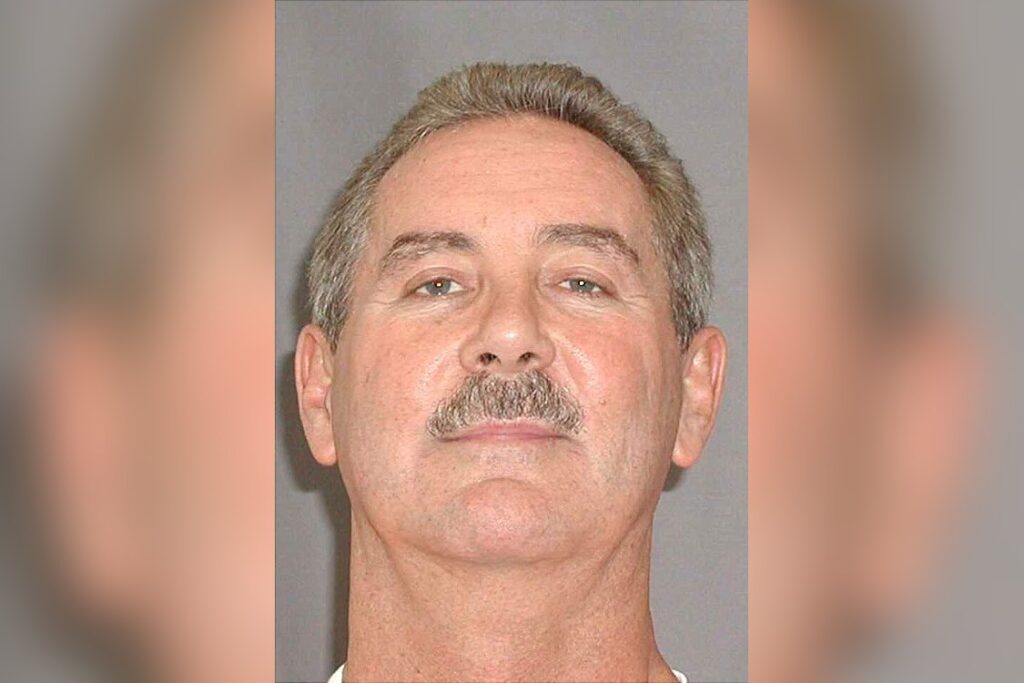
When federal agents raided the Houston offices of Stanford Financial on February 17, 2009, they treated the place as a crime scene and told staff not to leave fingerprints. Allen Stanford, according to CNBC, had already tried to run. He called a private jet owner and tried to charge a flight to Antigua on a credit card. The company wanted a wire transfer, so he stayed.
He now serves 110 years in federal prison for a Ponzi scheme the Securities and Exchange Commission put at $7 billion in certificates of deposit.
From Waco gym to Caribbean bank
Robert Allen Stanford was born on March 24, 1950, a fifth-generation Texan who grew up in Mexia. He graduated from Baylor University in 1974 with a finance degree. His first business, a bodybuilding gym in Waco, failed.
Real estate was kinder. After the Texas oil bubble burst in the early 1980s, he and his father bought depressed Houston property and sold it years later as the market recovered. They made a fortune. When his father retired in 1993, Stanford took over a company that by then had 500 employees.
In the 1980s he moved to the Caribbean. With Stanford Finance he started Guardian International Bank on Montserrat in 1985, then moved it to Antigua during a British crackdown on Montserrat’s offshore banking and renamed it Stanford International Bank.
The fraud unravels
By early February 2009 the SEC, the FBI, the Florida Office of Financial Regulation and FINRA were questioning the bank’s unusually high returns. A former executive told the SEC that Stanford had presented hypothetical investment results as real history in sales pitches. Stanford claimed his certificates of deposit were as safe as, or safer than, government-insured accounts.
The SEC charged him on February 17 with “massive ongoing fraud.” Ten days later it amended the complaint to call it a “massive Ponzi scheme” and said the bank’s financial statements, including its investment income, were “fictional.” A federal judge froze the assets, put the companies into receivership and ordered Stanford to surrender his passport. Agents found him on February 19 at his girlfriend’s house near Fredericksburg, Virginia, and served the civil papers. Governments moved in on his businesses too: the Eastern Caribbean Central Bank took over the Bank of Antigua, and Venezuela took Stanford Bank Venezuela.
Stanford denied wrongdoing. His companies were well run, he said in April, until the SEC “disemboweled” them. He surrendered to the FBI on June 18, 2009, and pleaded not guilty a week later.
Years of delay, then a verdict
The road to trial was messy. He was hospitalized in September 2009 after another inmate beat him at a detention facility in Conroe. A judge found in 2011 that an addiction to anti-anxiety drugs had left him unfit to stand trial. He filed a $7.2 billion counter-claim against the FBI and SEC in February 2011. In May, prosecutors dropped seven charges, leaving 14. On December 22, 2011, Judge David Hittner found him competent.
The trial opened January 24, 2012. On March 6, after three hours of deliberation, the jury convicted him on all counts except one count of wire fraud.
Prosecutors asked for 230 years, calling him “a ruthless predator.” His lawyers asked for 31 to 44 months. On June 14, 2012, Hittner sentenced him to 110 years, which virtually guarantees he dies in prison, and ordered him to forfeit $5.9 billion. He called it “one of the most egregious frauds ever presented to a trial jury in federal court.” Stanford spoke for the first time at sentencing, denied swindling anyone and blamed “Gestapo tactics” by regulators.
Aftermath
In April 2013 Judge David Godbey ordered him to disgorge $6.7 billion and pay a $5.9 billion fine, and banned him permanently from the securities industry. His appeal was filed in September 2014 and rejected in October 2015. His earliest possible release date is March 13, 2103.
Regulators did not escape scrutiny. A March 2010 report by the SEC’s inspector general found the agency had failed to uncover the scheme. Leroy King, former head of Antigua’s Financial Services Regulatory Commission, was extradited to the United States in November 2019, pleaded guilty to obstruction charges and was sentenced to 10 years in February 2021.




