
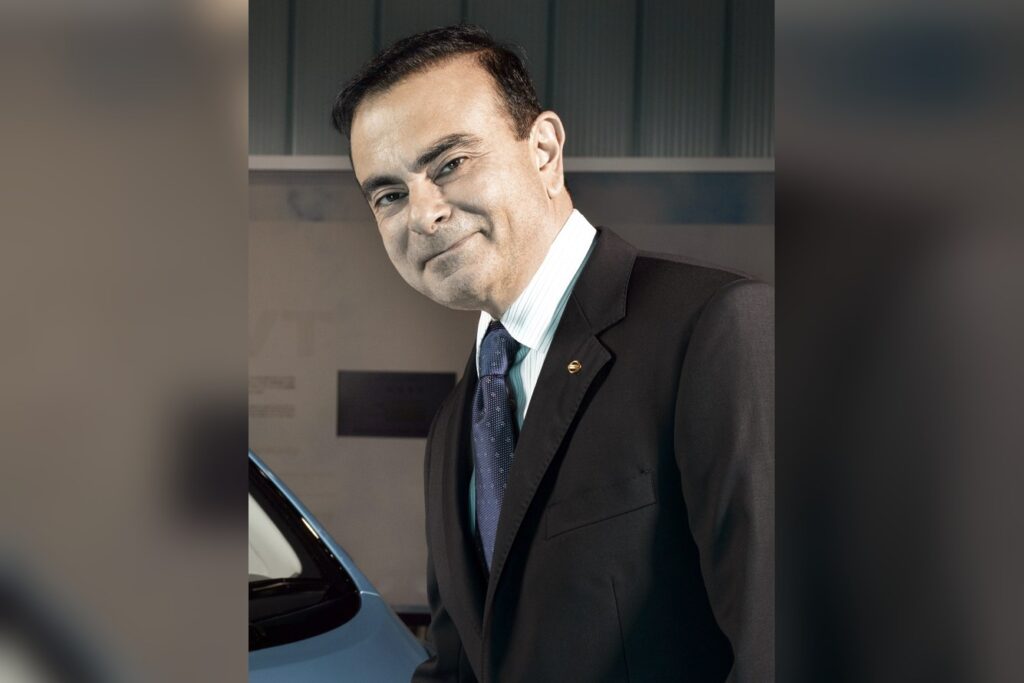
“The 30 minutes waiting in the box on the plane, waiting for it to take off, was probably the longest wait I’ve ever experienced in my life.” That is how Carlos Ghosn remembers 10.30pm on a cold December night in 2019, bundled inside a large music equipment case on a private jet in Osaka, with the plane due to leave at 11pm.
Ghosn had been the man who saved Nissan. He was chairman of the Japanese carmaker and of France’s Renault, and he ran the three-way alliance that also included Mitsubishi. His cost-cutting at Nissan was controversial at first, but it was ultimately seen as having rescued the company, and he became one of the most recognisable executives in the industry. He was arrested in November 2018 after Nissan alleged he had understated his annual salary and misused company funds. He denies it.
A year of custody and bail
He was taken to the Tokyo Detention Centre. “All of a sudden I had to learn to live without the watch, without the computer, without the telephone, without the news, without the pen – nothing,” he told the BBC. For more than a year he alternated between custody and house arrest in Tokyo. He posted 1bn yen (about $8.9m) in bail in April 2019, lived under a 24-hour camera outside his house and was barred from travelling abroad. No trial date was set, and the fear was that it could take years. Japan has a 99.4% conviction rate, and he faced a further 15 years in prison if convicted.
What tipped him was a bail condition that kept him from any contact with his wife, Carole. He started looking for a way out. Ghosn insists he was “collateral damage” in a fight back by Nissan against the growing influence of Renault, which still owns 43% of the Japanese company.
How he got out
Reports from NHK, the Wall Street Journal and the Financial Times pieced together a plan that took weeks or months to build. On 29 December, NHK said, CCTV showed Ghosn leaving his house and walking about 800m to a nearby hotel in the middle of the afternoon. There he met two men, thought to be Americans. The three took a train to Osaka and checked into a hotel near Kansai international airport. Two hours later the two men left with two large containers, and no camera captured Ghosn, which suggested he was inside one of them.
Ghosn tells it his own way. To avoid being recognised, he swapped his executive suits for casual clothes and went to shops he had never visited. “It should be a normal day where I have a normal walk with normal clothes, normal attitude and all of a sudden, everything change,” he said. A music equipment box seemed the most logical hiding place because there were so many concerts in Japan at the time. Two men posing as musicians carried him from the hotel to the airport. He reckons he was in the box about an hour and a half, though it felt like “one year and a half.”
The private jet took off on time. It stopped in Istanbul, where he changed planes, and landed in Beirut shortly after 04:00 local time on 30 December. His wife was there. In a statement he declared: “I have escaped injustice and political persecution.” His lawyer, Junichiro Hironaka, said he was “dumbfounded” and wanted to ask Ghosn “How could you do this to us?”
An early Lebanese TV report that paramilitaries disguised as a band had smuggled him out in an instrument case was later judged inaccurate. Ghosn himself says he arranged the escape alone and that his wife had no part in it. Several reports say Carole Ghosn was a major figure behind the plan, and Mr Hironaka said the couple spoke for more than an hour on 24 December. Private security operatives were reported to have helped, in teams spread across several countries.
Passports and politics
How he entered Lebanon was a puzzle. He holds Brazilian, French and Lebanese passports, and his legal team said it held all three when he left. A spokesperson told the Financial Times he used a French passport to enter Lebanon. Ghadi Khoury of the Lebanese foreign ministry said he came in on a French passport and a Lebanese ID.
Lebanon denied any part in the escape. Ghosn grew up there, owns property there and has appeared on a postage stamp. Japan was angry all the same: one politician asked whether he “had the support of some country,” and a former governor of Tokyo accused Lebanon of direct involvement. Interpol issued a red notice on 2 January, but Japan and Lebanon have no extradition treaty. France said it would not extradite a citizen. Turkey opened an investigation into the Istanbul stopover and, according to local media, arrested seven people: four pilots, a cargo company manager and two airport workers.
By July 2021 Ghosn was still in Beirut, living in exile under armed guard. His former Nissan colleague Greg Kelly, who denies charges of helping disguise Ghosn’s earnings, remained under house arrest in Tokyo.
Sources
- Carlos Ghosn: How did the Nissan ex-boss flee from Japan?
- Ex-Nissan boss Carlos Ghosn: How I escaped Japan in a box




