
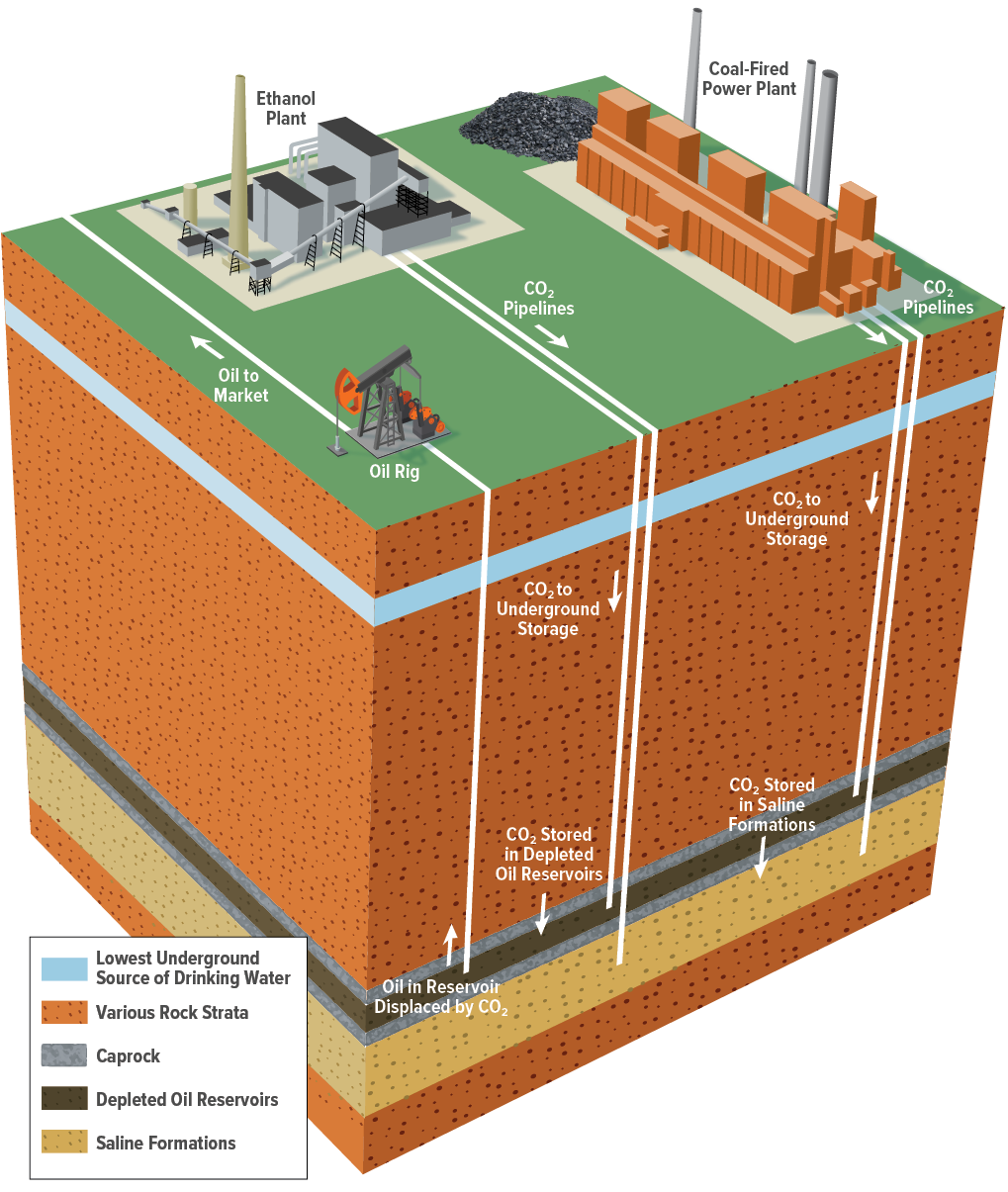
Carbon capture and storage (CCS) is a crucial process in the quest to reduce greenhouse gas emissions, involving the separation of carbon dioxide (CO2) from industrial installations or natural sources before its release into the atmosphere. This process is then followed by the transportation of CO2 to a long-term storage location, typically a deep geological formation. The application of CCS has been particularly notable in large point sources such as natural gas processing plants.
The utilization of captured CO2 has also been significant, with around 80% of the CO2 captured annually being used for enhanced oil recovery (EOR). EOR is a process where CO2 is injected into partially depleted oil reservoirs to extract more oil, with the majority of the CO2 being left underground afterwards. This dual role of CCS, in both storing and utilizing CO2, has led to it also being referred to as carbon capture, utilization, and storage (CCUS). The history of CCS technologies dates back to the mid-20th century, when oil and gas companies first began using these processes to purify natural gas and increase oil production.
The discussion around CCS as a strategy to mitigate greenhouse gas emissions gained momentum from the 1980s and especially in the 2000s. However, despite the growing interest, the implementation of CCS projects has faced significant challenges. A review conducted in 2022 found that approximately 70% of announced CCS projects had not materialized. The failure rate was particularly high in the electricity sector, exceeding 98%. This disparity between announced projects and actual implementation highlights the need for a more nuanced understanding of the challenges and opportunities associated with CCS.
As of 2024, CCS was operational at 44 plants, marking a significant milestone in the development and deployment of this technology. The operationalization of these plants demonstrates the potential of CCS to contribute to a reduction in greenhouse gas emissions. Moreover, the ongoing development of CCS technologies is expected to play a critical role in the transition towards a cleaner and more sustainable energy mix. The application of CCS in various sectors, including industrial processes and power generation, is likely to be a key area of focus in the coming years.
The use of CCS for EOR has been a significant application of this technology, with the majority of captured CO2 being utilized for this purpose. The process of injecting CO2 into oil reservoirs not only enhances oil recovery but also ensures that a substantial portion of the CO2 is stored underground, thereby reducing emissions. This dual benefit of CCS, in enhancing oil recovery while reducing emissions, underscores its potential as a critical component of a comprehensive strategy to address climate change.
Looking ahead, the future of CCS will likely be shaped by advances in technology, evolving regulatory frameworks, and shifting economic landscapes. As the world continues to grapple with the challenges of climate change, the role of CCS in reducing greenhouse gas emissions is likely to remain a topic of significant interest and debate. With ongoing research and development aimed at improving the efficiency and reducing the costs of CCS technologies, it is essential to monitor progress in this field and assess its potential to contribute to a more sustainable energy future. The coming years will be crucial in determining the extent to which CCS can be scaled up and integrated into global efforts to mitigate climate change, making it an area worth watching closely.