
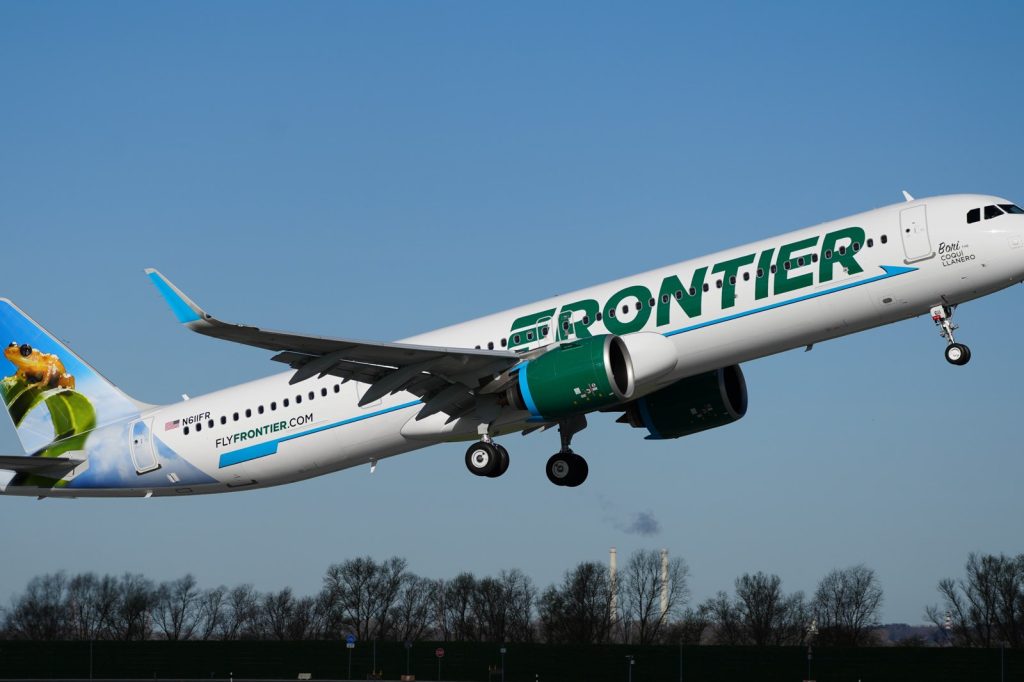
A fatal event unfolded at Denver International Airport on May 8, 2026, involving a Frontier Airlines Airbus A321neo. During its takeoff sequence, the aircraft struck and killed a person on the runway. The collision triggered an engine fire, forcing the crew to abort the departure.
The subsequent emergency evacuation resulted in injuries to 12 passengers. The aircraft involved is an Airbus A321neo, a narrow-body, single-aisle jet belonging to the A320neo family, which also includes the A319neo and A320neo variants.
Airbus designates the A321neo as the longest-fuselage narrow-body model currently in commercial service. Its seating capacity ranges from 180 to 220 passengers in a standard two-class layout, with a high-density configuration accommodating up to 244 individuals. Introduced in December 2010, the A321neo was developed as a successor to the A321ceo, incorporating new engine options and standard sharklet wingtips. Operators can choose between CFM International LEAP-1A or Pratt & Whitney PW1100G-JM powerplants.
These engines deliver a 20% improvement in fuel efficiency per passenger, extend the aircraft’s range by 500 nautical miles (930 km; 580 mi), or increase its payload capacity by 2 tonnes (4,400 lb). U.S. Transportation Secretary Pete Buttigieg has stated that the safety of the flying public remains the foremost priority.
The Federal Aviation Administration (FAA) has initiated an investigation, deploying a team of experts to collaborate with Frontier Airlines and Airbus in determining the accident’s cause. Frontier Airlines has confirmed its full cooperation with the investigation, emphasizing that passenger and crew safety is its primary concern. CEO Barry Biffle has extended condolences to the family of the deceased individual.
The National Transportation Safety Board (NTSB) has also launched a separate investigation, led by Chair Jennifer Homendy. The NTSB will work alongside the FAA, Frontier, and Airbus to identify the root cause and issue recommendations aimed at preventing future occurrences.
Officials from the U.S. and allied nations are closely monitoring the situation. NATO Secretary-General Jens Stoltenberg has underscored the critical nature of aviation safety and the necessity of international collaboration to avert similar tragedies. The AUKUS alliance—comprising the U.S., Australia, and the United Kingdom—has likewise stressed the importance of safety protocols in the aviation industry.
Quad leaders, including U.S. administration officials, Australian Prime Minister Anthony Albanese, Indian Prime Minister Narendra Modi, and Japanese Prime Minister Fumio Kishida, have reaffirmed their dedication to safeguarding the flying public. U.S. Senator Ted Cruz, a member of the Senate Committee on Commerce, Science, and Transportation, has stated that the committee will closely oversee the investigation to ensure any safety issues are resolved.
Despite the incident, Airbus maintains a strong safety record. The A321neo has undergone rigorous testing and received certification from both the European Union Aviation Safety Agency (EASA) and the FAA for commercial operations. The event serves as a stark reminder of the ongoing need for vigilance, cooperation, and investment in aviation safety measures.




