
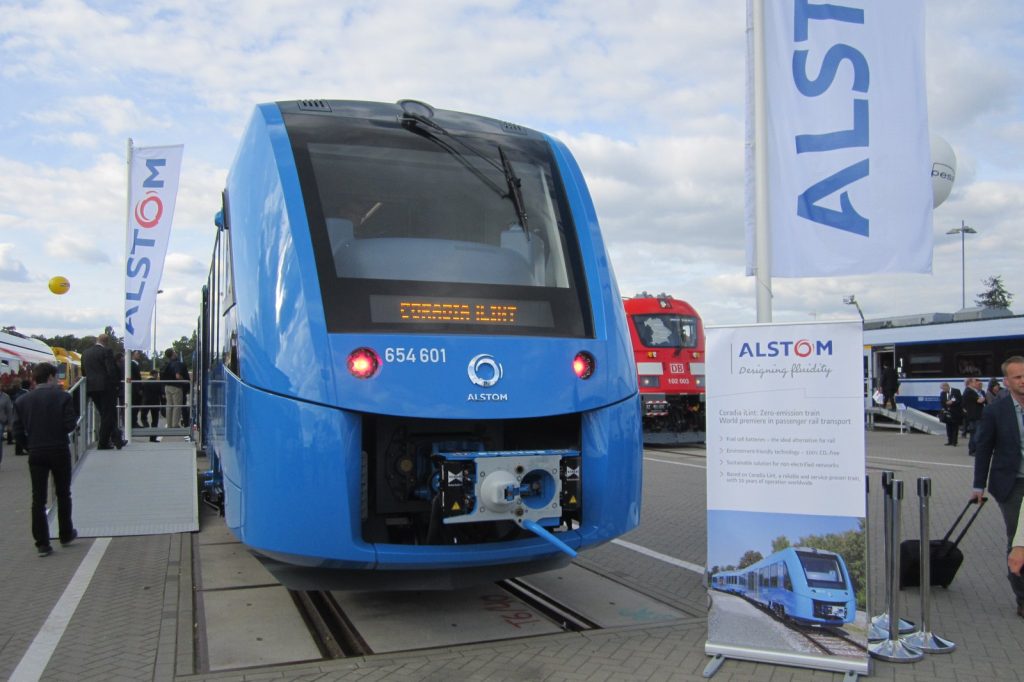
The train is an old diesel unit with a new heart. Indian Railways took a diesel electric multiple unit and converted it to run on hydrogen fuel cells, and the result is now being tested on the Jind to Sonipat route in Haryana. What comes out of it is water vapour.
The Indian Embassy in the UAE put the train in front of a wider audience when its official page shared a video of what it called India’s first “Swadeshi,” or homegrown, hydrogen-powered train. The post describes a next-generation train meant to cut emissions sharply and run with near-zero smoke.
How it works
Hydrogen stored on board combines with oxygen from the air, and that reaction makes electricity. The electricity drives traction motors, much like an electric train, but there are no overhead wires and no diesel combustion. Water vapour and heat are the by-products. Batteries store excess energy and help with acceleration and regenerative braking.
The numbers are specific. The fuel-cell system is rated at 1,200 kW, or 2,400 kW in total with the two power cars. The train runs in a 10-coach layout, two power cars and eight passenger coaches. It can reach 120 km/h in trials, but service speed is set at up to 75 km/h. Range is around 250 km per refuelling cycle.
The Integral Coach Factory in Chennai handled manufacturing, and the project falls under the Atmanirbhar Bharat initiative, with technology collaboration from global partners.
Why Jind
Haryana was picked as the pilot corridor partly because Jind has a dedicated hydrogen storage and refuelling facility. A hydrogen plant there produces around 420 to 430 kg a day and can store up to 3,000 kg. Indian Railways has put safety systems in place, including PESO-approved storage and dispensing licences.
The route also fits a wider plan to use hydrogen on non-electrified or difficult-terrain sections. If the pilot works, the technology could spread to lines where full electrification is hard or too costly. Electrification remains India’s main rail strategy, and hydrogen is emerging as a complement for niche and heritage routes.
The hurdles are real. Full climate benefits depend on green hydrogen, storage and compression are complex, and the train still has to be tested across varied climates. India joins Germany, Japan, China and the United States among countries exploring hydrogen rail.




