
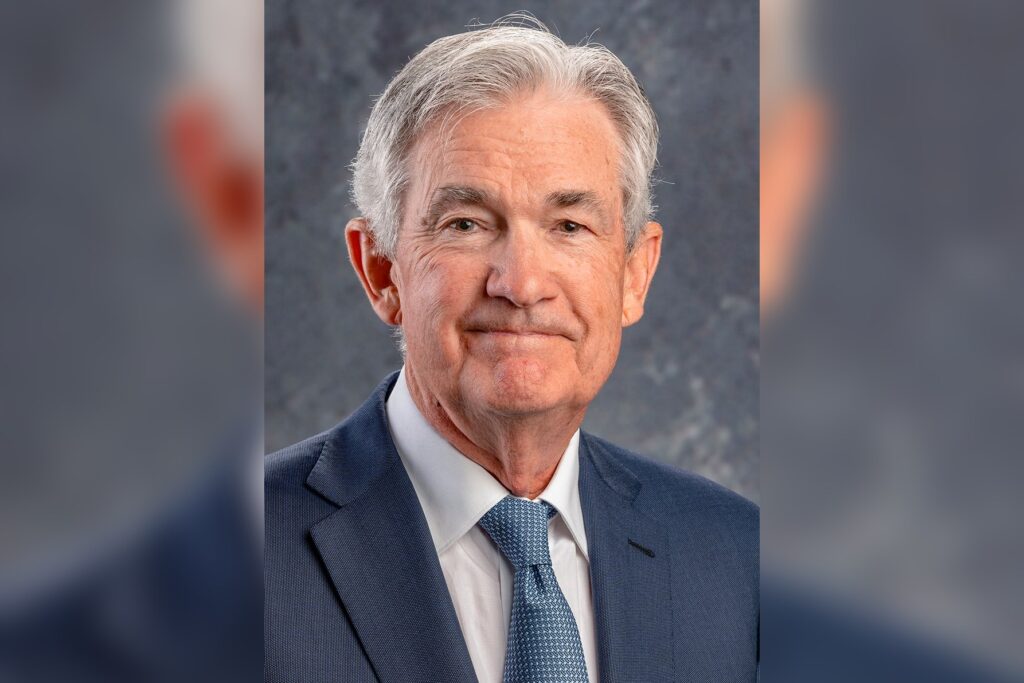
“We crossed a lot of red lines that had not been crossed before.” Jerome Powell said that in 2020, as the Federal Reserve cut interest rates to nearly zero and rolled out emergency lending to keep markets from seizing up. It is the sentence that best sums up his years as chair.
Powell was born February 4, 1953, in Washington, D.C., and grew up in Chevy Chase, Maryland, the second of six children. His father was an attorney who represented steel companies in union talks. His mother was a mathematician and statistician. He went to Georgetown Preparatory School, took a bachelor’s degree in politics at Princeton in 1975, and earned a law degree from Georgetown University in 1979, where he edited the Georgetown Law Journal.
From Wall Street to the Treasury
He did not start out as an economist, and never became one. After law school Powell moved to New York, clerked for a judge, worked at several law firms and drifted into investment banking. He spent 1984 to 1990 at Dillon, Read & Co. He married Elissa Leonard in 1985; they have three children.
Nicholas Brady, the firm’s former chairman, became Treasury secretary under Presidents Ronald Reagan and George H.W. Bush, and Powell followed him to Washington in 1990. He served as assistant secretary for financial institutions and later as undersecretary for domestic finance, until 1993. Then it was back to the private sector, including eight years as a partner at the Carlyle Group, the private equity firm. Investopedia dates that stint from 1997 through 2005. From 2010 to 2012 he was a visiting scholar at the Bipartisan Policy Center, working on federal and state fiscal questions.
President Barack Obama appointed him to the Federal Reserve Board of Governors in 2012; Powell was sworn in for a full term in June 2014. The Washington Post, as quoted by Britannica, said he had built a reputation as a consensus builder who preferred to work behind the scenes. Investopedia notes he was the first Fed chair in more than 40 years without a Ph.D. in economics, and that he sometimes cycled to work.
Two terms as chair
President Donald Trump nominated him to lead the Fed in 2017. The Senate Banking Committee voted 22-1 in his favor on Dec. 5, 2017, with Elizabeth Warren the lone dissent, and the full Senate approved him 84-13 on Jan. 23, 2018. He took office on Feb. 5, 2018. Britannica put his net worth at the time between $19.7 million and $55 million, making him the richest Fed chair since the 1940s.
The friendship with the White House did not last. Powell oversaw a first rate increase of 0.25 percentage points shortly after taking over, and Trump criticized it publicly, arguing it would slow growth. The president discussed removing him. Powell said the increases were needed to head off inflation and that he would not resign if asked.
Then came COVID-19. In the spring of 2020 Powell reversed course, cut rates, set up emergency loan programs and bought corporate debt. Stocks and housing boomed afterward, and critics said the Fed’s policies mainly shielded the wealthy. “The Federal Reserve is always creative about helping Wall Street and corporations during crises, but workers get left behind,” said Sherrod Brown, then the top Democrat on the Senate Banking Committee.
Biden renominated Powell in November 2021, and he was sworn in for a second term in May 2022. Inflation was soaring by then. Warren, who had cast the lone committee vote against him in 2017, called keeping him “dangerous” because he had deregulated Wall Street. The Senate confirmed him anyway. To bring prices down, the Fed raised rates 10 times over 15 months across 2022 and 2023. By the summer of 2023 price increases had slowed, but Powell warned that inflation could reaccelerate if policy eased too quickly. A year later, with inflation just above 2%, he conceded: “It will be some time before people regain their confidence.”
Pressure after the 2024 election
Trump’s 2024 victory revived the old tension. At a news conference Powell said the election would have “no effect” on near-term rate decisions. Asked whether he would step down if the president asked, he answered “No,” adding that a president’s ability to fire or demote him is “not permitted under the law.”
His second term as chair ran through May 15, 2026. His seat on the Board of Governors carries a term that expires on Jan. 31, 2028.
Sources
- Jerome Powell | Biography, Federal Reserve, & Political Pressure | Britannica Money
- Who Is Jerome Powell? | Investopedia




