Pratt & Whitney Canada says its new PT9 turboprop delivers 33% more power at altitude and burns 20% less fuel than current engines in its class. Those are the headline numbers. The surprise is how the engine arrived: Transport Canada certified it on Oct. 1, and the company only showed it to the world this week at the NBAA-BACE business aviation show in Las Vegas.
That order is highly unusual. Engines normally debut before they are certified, not after.
A gap between two product lines
The PT9 is a clean-sheet design in the 1,700 to 2,300 shaft horsepower class. Pratt & Whitney Canada, part of RTX, has long dominated turboprops with the PT6 family, which dates to the 1960s, and the larger PW100 series. The PT9 sits in the gap between the top of the PT6 range and the bottom of the PW100 family. It is the company’s first all-new turboprop in decades.
The engine borrows materials and technology from the PW800 turbofan and the recently developed PW127XT regional turboprop. Like the PT6, it uses a reverse flow combustor, and a 19-inch-wide barrel section is meant to allow low-drag airframe integration. The company declined to say more about the architecture, including whether it has a free power turbine. FAA documents indicate its high pressure rotor shaft is closest to that of the PW307 turbofan.
Maintenance costs get attention too. The PT9 uses stiffer, harder alloys than the PT6, some additively manufactured parts and fewer life-limited parts. A monitoring system reads more than 300 engine parameters.
Five years out of sight
The program ran five years in near secrecy and logged 14,000 test hours on 12 test engines. The only hint came in 2025, when FAA regulatory documents referred to a new-centerline turboprop, and the company declined to comment at the time.
Satheeshkumar Kumarasingam, president of Pratt & Whitney Canada, said the PT9 is “not a replacement” for the PT6. “We still feel that the PT6 has many years ahead of it, but we have leaped into this new power range in this model,” he said. He credited the spending to “disciplined investment from RTX” and to customers who asked for something in the 2,000-shaft horsepower range.
The launch also lands as GE Aerospace pushes its Catalyst turboprop into the same market.
Customers and hybrids
No aircraft has been named. Pratt said only that the engine suits “diverse airframe types.” Kumarasingam said, “We are pretty confident of signing one or two customers.” Assembly will take place at the company’s Lethbridge, Alberta, plant, and he estimated about 18 months to serial production, depending on customer engagements.
The design leaves room for later hybrid-electric use, and future variants may power electric aircraft or hybrid thermal-electric systems. Kumarasingam said the PT9 has no link to the thermal engine concepts in the company’s hybrid-electric demonstrator, a modified Dash 8 with a 2-megawatt system, which is nearly ready to run in a test cell before flying next year.
Sources
- P&W Canada unveils secretive new PT9 turboprop
- P&WC Takes Wraps Off Newly Certified PT9 Turboprop | Aviation Week
- 10 Most Over-the-Top Airline First Class Luxuries in 2026
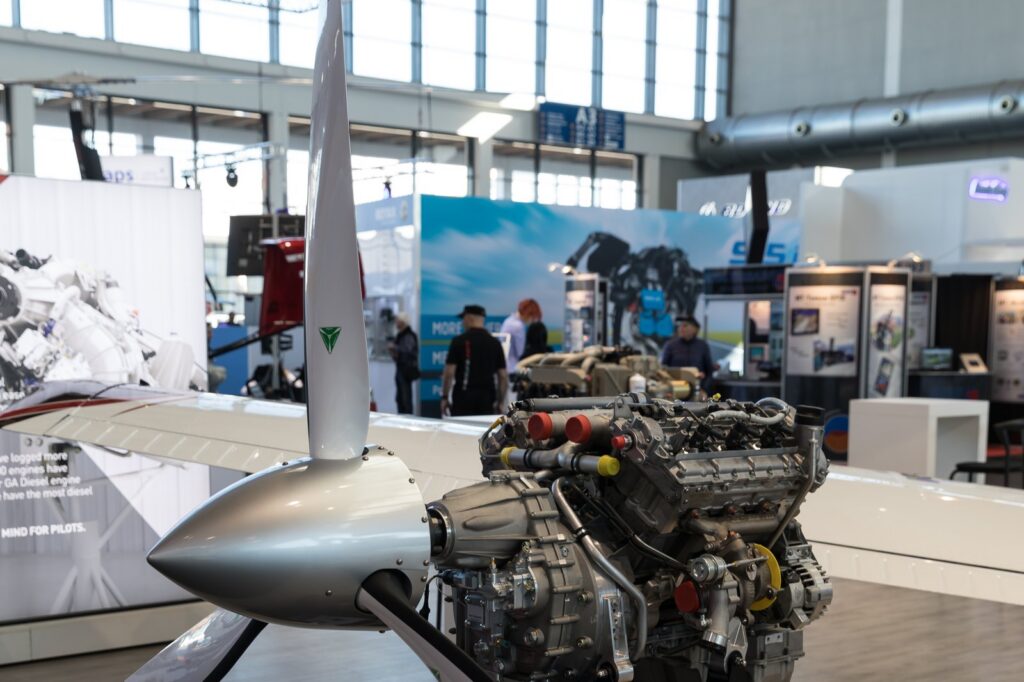
Photo: Matti Blume (CC BY-SA 4.0)