
View original document (0.5 MB)
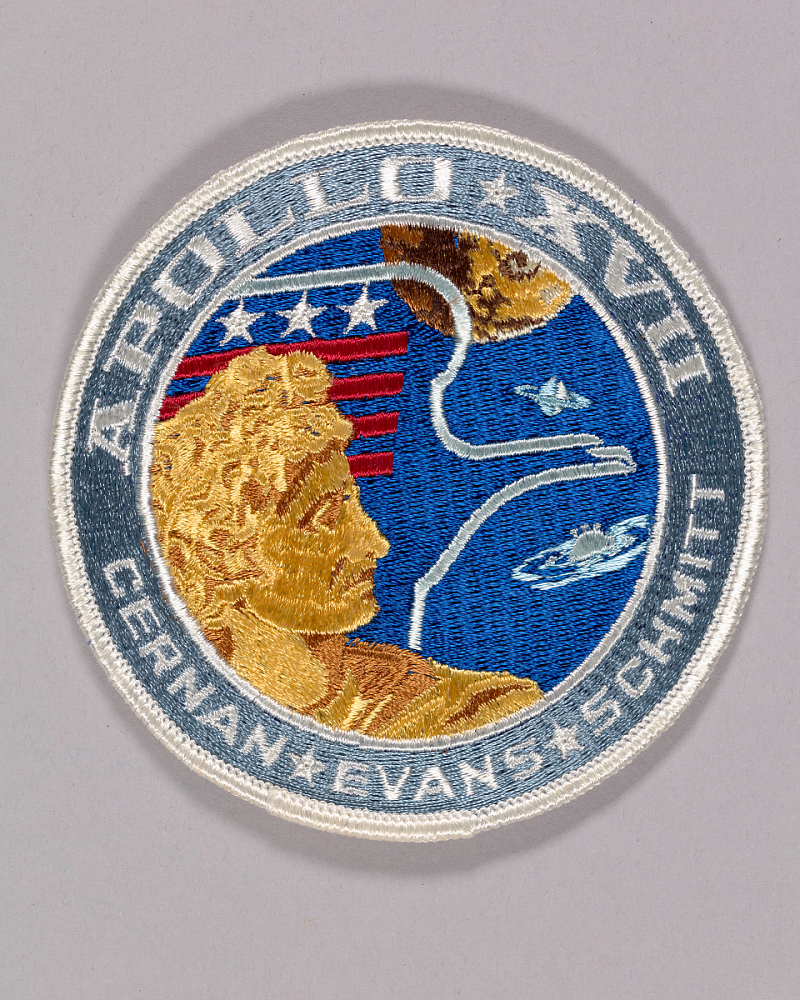
Newly released NASA records from the Apollo 17 mission reveal that astronaut Harrison Schmitt reported seeing persistent light flashes during the 1972 lunar voyage, including what he described as a flash on the lunar surface itself. The document, titled “NASA-UAP-D6, Apollo 17 Technical Crew Debriefing, 1973,” was released by the U.S. Department of War under the PURSUE archive on May 8, 2026, and is now available for public review.
According to the official description accompanying the release, Apollo 17 was the ninth crewed U.S. mission to the Moon and the sixth to land astronauts on the lunar surface. The document is an excerpt from the Apollo 17 Technical Crew Debriefing conducted on January 4, 1973. In it, Lunar Module Pilot Harrison Schmitt describes a phenomenon that occurred throughout the flight.
“We had light flashes just about continuously during the whole flight when we were dark adapted,” Schmitt is quoted as saying on page 24-4 of the debriefing. “I had one which I thought was a flash on the lunar surface.” The astronaut further detailed his experience during a specific experiment: “That one period of time when we had the blindfolds on for the ALFMED [Apollo Light Flash Moving Emulsion Detector] experiment there were just no visible flashes, although that evening, that night, before I went to sleep, I noticed that I was seeing the light flashes again.”
The report of light flashes by Apollo astronauts is not unprecedented in spaceflight history. NASA scientists have long studied the phenomenon, which is commonly attributed to cosmic rays passing through the eyes of astronauts, causing visual sensations even when their eyes are closed. The ALFMED experiment referenced by Schmitt was specifically designed to study these light flashes by having astronauts wear a blindfold and a special detector to record the events.
Government Context and Document Release
The document’s release marks a significant step in the U.S. Department of War’s PURSUE initiative, which aims to declassify and make public records related to unidentified aerial phenomena. The NASA document is one of several released under the program, which draws from various government agencies. The official summary of the Apollo 17 record offers limited detail beyond the technical debriefing excerpt, noting only that the incident date is listed as 1973 and that no specific incident location was provided.
The record’s official summary states: “Apollo 17 was the ninth crewed U.S. mission to the Moon, and the sixth to land Astronauts on the lunar surface. This document is an excerpt from the Apollo 17 Technical Crew Debriefing on January 4, 1973, in which astronaut Harrison Schmitt reported seeing light flashes.” The summary does not provide any additional analysis or interpretation of the reported flashes.
Broader Context of NASA’s UAP Studies
Per a Wikipedia summary of the NASA Unidentified Anomalous Phenomena Independent Study Team, the agency has taken a formal interest in such phenomena in recent years. Wikipedia’s entry on the topic notes that “the NASA Unidentified Anomalous Phenomena Independent Study Team (UAPIST) was a panel of sixteen experts assembled in 2022 by the United States National Aeronautics and Space Administration (NASA) and chaired by David Spergel to recommend a roadmap for the analysis of unidentified anomalous phenomena (UAPs) by NASA and other organizations.”
This context places the Apollo 17 light flash reports within a broader, ongoing government effort to understand unexplained aerial or space-based phenomena. While the Apollo 17 document does not classify the light flashes as UAPs, its release under the PURSUE archive suggests the government considers such historical astronaut reports relevant to the study of anomalous phenomena.
The document itself does not provide any explanation for the flashes Schmitt described, nor does it connect them to any external objects or craft. The astronaut’s account is presented as a straightforward report from the mission debriefing, with no additional commentary from NASA or the Department of War.
What Remains Unanswered
The Apollo 17 document raises several questions that remain unanswered by the released materials. The record does not specify whether the light flash Schmitt reported on the lunar surface was later analyzed or explained by NASA scientists. The document also does not indicate whether the ALFMED experiment data from Schmitt’s session provided any correlation between the flashes he reported and cosmic ray events.
Additionally, the official description is vague about the selection criteria for this particular document’s release. It remains unclear whether the Department of War considers Schmitt’s light flash report to be a UAP-related incident or simply a historical astronaut observation included in the archive for completeness.
Readers should watch for future PURSUE releases, which may include additional Apollo mission documents or other NASA records that could provide further context for Schmitt’s observations. The Department of War has indicated that more records will be made public as part of the ongoing declassification effort, potentially shedding light on how the government has historically analyzed such astronaut reports.